
Gaikindo Chief Reveals Unexpected View on EV Incentives
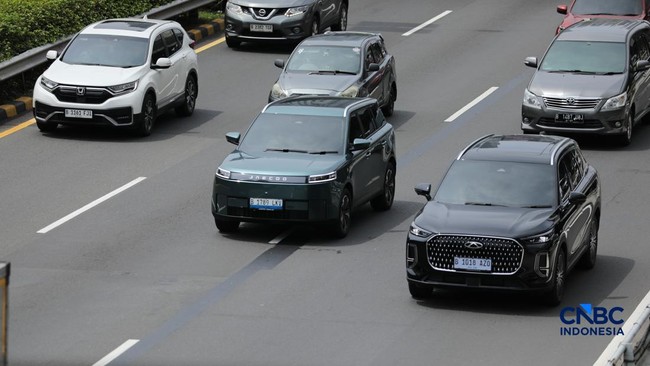
The Chairman of the Association of Indonesian Automotive Industries (Gaikindo), Putu Juli Ardika, stated that regulatory updates have been a key factor in the continuous development of Indonesia’s automotive industry over the past decade. He noted that various government policies have successfully promoted the growth of energy-efficient vehicles in the domestic market.
“Regarding regulations, the automotive industry is indeed heavily supported by them. Based on these regulations, we have achieved quite good development. For example, in the early 2000s, we were introduced to the Low Cost Green Car (LCGC) or Affordable Energy-Efficient Motor Vehicle programme. It was a very good programme where low-emission vehicles were given incentives,” Putu said at the St Regis, Monday (13/7/2026).
This programme served as the initial foundation for the growth of the energy-efficient vehicle segment in Indonesia. The introduction of various LCGC models caused the affordable vehicle market to expand rapidly, becoming a pillar of national car sales.
“As a result, in 2013, vehicles like the Agya and others achieved a market share of 24% of total car sales. We were quite successful, Indonesia was quite successful, and the industry players were very good at pushing this forward,” Putu explained.
Following the LCGC phase, the government broadened its policy towards low carbon emission vehicles by offering fiscal incentives for electrified vehicles. The scheme includes a 0% Sales Tax on Luxury Goods (PPnBM) for Battery Electrified Vehicles, while hybrid and plug-in hybrid vehicles enjoy rates of around 4% to 9%, significantly lower than conventional vehicles.
“This has been very supportive of the development of electrified vehicles in Indonesia. If we look at the data, the market share was only 1.2% in 2022, rose to 12% in 2024, and by July 2026 it has reached 26%,” Putu noted.
Amidst the improving national automotive market, the discourse on reissuing the Government-borne Value Added Tax (PPN DTP) incentive is still under evaluation. However, Putu believes the current market conditions are very different from the pandemic era when such stimulus was necessary to maintain demand.
“The PPN DTP incentive was provided during the COVID-19 period because the situation was very specific. Now, with such a good market recovery, I think it is better to set it aside for now. If it is given later, we will be grateful. But currently, automotive producers are competing fiercely on price,” Putu stated.
He advised the public not to postpone vehicle purchases while waiting for certainty on new incentives. Inter-brand competition has already made prices more competitive through various discount programmes and attractive offers from manufacturers.
“Even without the incentive, especially since that incentive is only for Battery Electrified Vehicles, not other types, the prices are already very affordable. Do not wait for it; it is better to buy now. I guarantee it will not make much difference, because producers are already providing many discounts and facilities to consumers,” Putu concluded.