
Gadi Eisenkot, Netanyahu’s Main Challenger in Israel’s Election
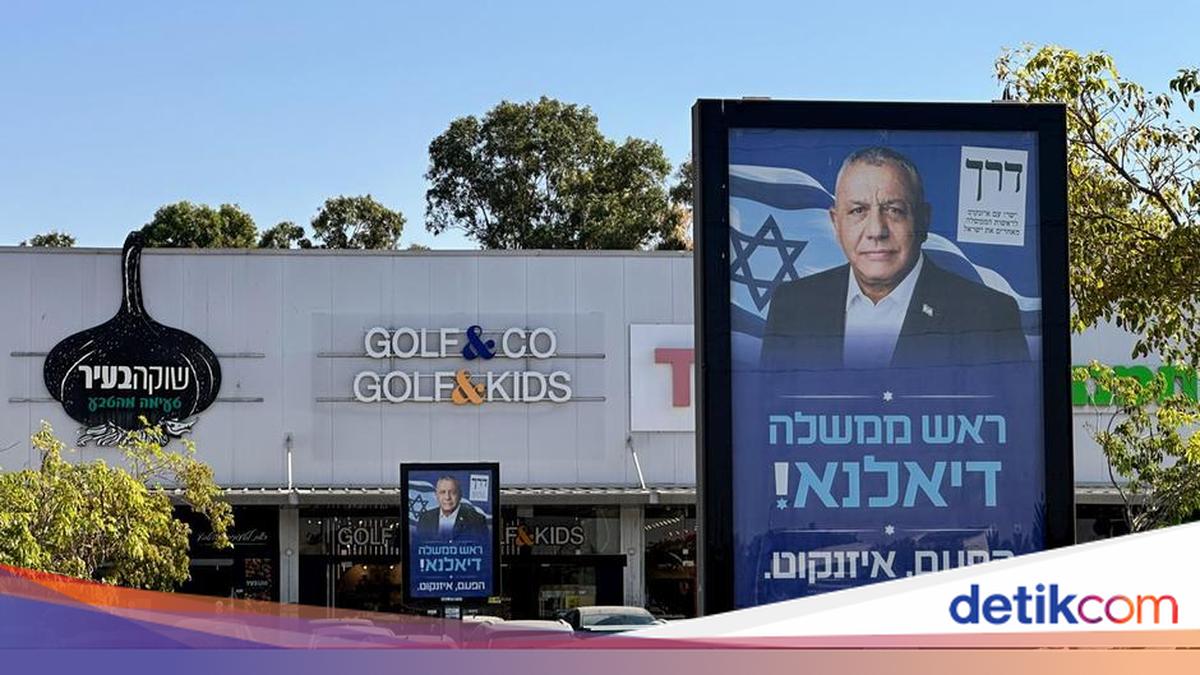
Ahead of Tuesday’s election (27 October), party advertisements greeted people arriving by train in the outskirts of Sderot, a city in western Israel.
Campaign posters bearing a range of slogans promoted the right-wing Likud and the far-right Otzma Yehudit. But one poster was more visible than the rest: that of the liberal Yashar party.
Its slogan, “Rosh Memshala Dialna”, combines the Hebrew term for “prime minister” with words meaning “one of our own” in Moroccan Arabic.
There is a strong reason why Gadi Eisenkot’s campaign in Sderot and other communities on Israel’s socio-political periphery focuses on his Moroccan heritage.
Eisenkot’s Mizrahi background
Sderot, in the Negev Desert about 75 kilometres (45 miles) south of Tel Aviv and just one kilometre from the Gaza border, has a large Moroccan Jewish community. In recent decades, the city has become a symbol of Moroccan Jewish culture in Israel, reflected in the country’s music, cinema and politics.
Historically, Sderot has been considered a stronghold of Israel’s right, particularly for Prime Minister Benjamin Netanyahu’s Likud. In 2022, Likud won more than 40% of the vote in Sderot, compared with 23% nationally. Other parties in Israel’s far-right coalition also received substantial support in the city at the last general election.
This pattern reflects a deeper historical divide in Israel between Ashkenazi Jews, of European descent, and Mizrahi Jews, who mainly trace their origins to the Middle East and North Africa. An estimated half of Israel’s Jewish population is Mizrahi, amounting to around four million people.
Mizrahi Jews have faced discrimination and neglect since Israel’s early years. These inequalities continue to shape the country’s social and economic realities, as well as its political debate.
The issue has taken on particular prominence in the 2026 election campaign. Eisenkot, Netanyahu’s main challenger, is of Moroccan descent and grew up in Eilat, a city with a large North African Jewish population. Eisenkot’s Yashar party accuses Likud of sidelining its Mizrahi politicians. One campaign slogan, “Netanyahu: Let Mizrahi people give interviews”, mocks this alleged neglect.
During a live television broadcast, right-wing journalist Yinon Magal, one of Netanyahu’s most vocal supporters, claimed Eisenkot was controlled by an elitist Ashkenazi group and called him a “monkey”.
Netanyahu, who is of European descent, condemned the remarks.
Daniel Ben-Simon, an award-winning Moroccan-born Israeli journalist and former member of parliament, told DW that Magal’s comments may have compelled Eisenkot to embrace his cultural roots. But, he said, the gesture still has historical significance.
“People did not use terms such as ‘Dialna’ proudly,” Ben-Simon said, referring to Eisenkot’s use of the Arabic expression meaning “one of our own” on his campaign posters. He said Israeli society had long sought to erase the Arab identity of North African Jews.
Eisenkot’s embrace of his identity is a way to “break out of the framework” imposed by society. “By using a term like that, you are creating a new identity: an Israeli-Moroccan identity,” Ben-Simon said. “Eisenkot is the first to make it possible to express this dual identity while still feeling that you belong where you are.”
Israel’s historical divisions
After Israel was founded, the ruling socialist Mapai party, led largely by Ashkenazim, pursued discriminatory policies towards Mizrahi Jews. Mizrahim were often expected to “become like Europeans” rather than retain their own culture, heritage or Arabic language.
The inequality was also material. In the country’s early decades, immigrants from Europe often obtained better housing and jobs, while many Jews from Arab-speaking countries were sent to Ma’abarot, temporary transit camps often located in remote areas with limited infrastructure.
Many of these camps later developed into “development towns”, which continued to receive less funding than central parts of Israel. This contributed to poverty. Sderot, in the south, is one of the best-known development towns.
For many Mizrahim, limited access to jobs, education and infrastructure symbolised their long-standing exclusion by the Mapai elite. Likud, founded as a right-wing alliance in 1973, effectively capitalised on this discontent under Menachem Begin.
Mizrahi support for Begin helped bring about the event known as the Mahapach, or upheaval, when Likud defeated the socialist camp for the first time and took power. Since then, Mizrahim have often been associated with Likud, although the party has never had a Mizrahi leader.
Sderot’s changing demographics
Over the past two decades, Sderot’s proximity to Gaza has made it a target of frequent rocket attacks by Hamas militants. During the Hamas-led terrorist attack of 7 October 2023, the city was particularly badly affected. More than 50 people were killed.
In the three years since the attack, the city’s population has grown by about 5,000, bringing it to 40,000. Many young families have made it their home, motivated either by idealism or by government benefits and incentives.
Walking around the city, it is hard to miss the growing dominance of the religious-nationalist community. Its members tend to vote for the far-right Religious Zionism party led by Bezalel Smotrich, a key member of Netanyahu’s coalition. Although votes for Smotrich and his party effectively support Netanyahu’s political bloc, the prime minister’s own Likud party could lose support in Sderot.
Regardless of the election result, Sderot’s image as a city of Moroccan Jews is unlikely to change soon. Ben-Simon said Eisenkot’s election could offer an opportunity to reshape the identity of Moroccan Jews in Israel in the future.
“Relations between cities such as Sderot and their Moroccan cultural roots will grow stronger as a result of an Eisenkot victory,” Ben-Simon concluded.