
G7 Urges Lebanon Ceasefire, Welcomes US-Iran Peace
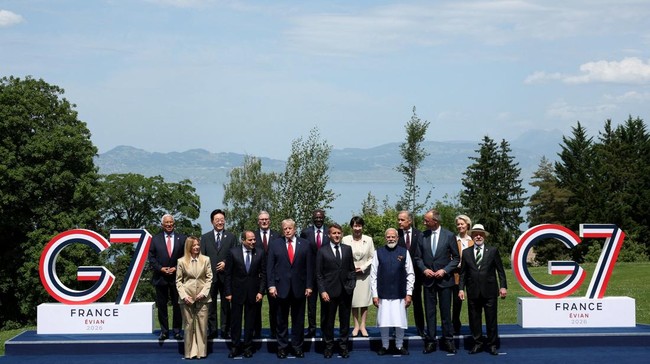
A meeting of Group of Seven (G7) leaders has produced several outcomes, including a call for an immediate ceasefire in Lebanon. They also welcomed a temporary agreement between the United States (US) and Iran, which is hoped to pave the way for ending the prolonged conflict in the Middle East region. In a joint statement following the G7 summit in Evian-les-Bains, France, the leaders stressed the importance of a diplomatic resolution to ease regional tensions. “We underline the need for negotiations to address the threat posed by Iran in the region and to ensure that country never acquires nuclear weapons,” read the G7 leaders’ statement. The meeting also served as a forum for US President Donald Trump to present the agreement reached between Washington and Tehran to America’s key allies: the United Kingdom, Canada, France, Germany, Italy, and Japan. The deal is expected to be officially announced on 19 June and will open the way for negotiations towards permanent peace after a war that has killed more than 7,000 people. While welcoming the diplomatic step, several G7 countries still harbour concerns regarding Iran’s nuclear programme and Tehran’s influence in the region. However, they stated they are ready to assist in implementing the agreement, including supporting the security of shipping lanes after the Strait of Hormuz is reopened as planned. The memorandum of understanding signed by the US and Iran this week reportedly extends the ceasefire announced in April by 60 days. This period will be used by both parties to negotiate a more permanent peace agreement. However, several key issues remain unresolved. The Iranian government remains in power, stocks of highly enriched uranium have not been surrendered, ballistic missile capabilities are still maintained, and Tehran’s support for militia groups in the region has not been halted. Trump stated the agreement guarantees Iran will not possess nuclear weapons, while US officials said further discussions will cover the fate of Iran’s uranium reserves. One of the biggest issues still looming over the peace process is the situation in Lebanon. The G7 urged a “robust and immediate ceasefire” and the disarmament of Hezbollah. Iran insists that permanent peace must include a cessation of hostilities in Lebanon and the withdrawal of Israeli forces from occupied territories. Tensions over Lebanon have also sparked differences in views between Washington and Tel Aviv. Trump openly criticised Israel’s handling of the conflict. “I am not happy with the way Israel has handled this situation,” Trump said at the G7 meeting. On the economic front, the peace deal could potentially provide a major boost for Iran, which has been burdened by international sanctions for decades. The memorandum includes a reconstruction fund worth US$300 billion, to be funded by Gulf states if Iran meets the agreed conditions. The prospect of the Strait of Hormuz reopening has also pressured global oil prices. The price of Brent crude fell further to below US$80 per barrel. Addressing the risk of energy supply disruptions during the conflict, G7 leaders committed to accelerating the diversification of global energy supply routes to reduce dependence on the Strait of Hormuz and to strengthening their respective energy reserves.