
G7 Summit Opens in Evian, Dominated by Iran and Ukraine Crises
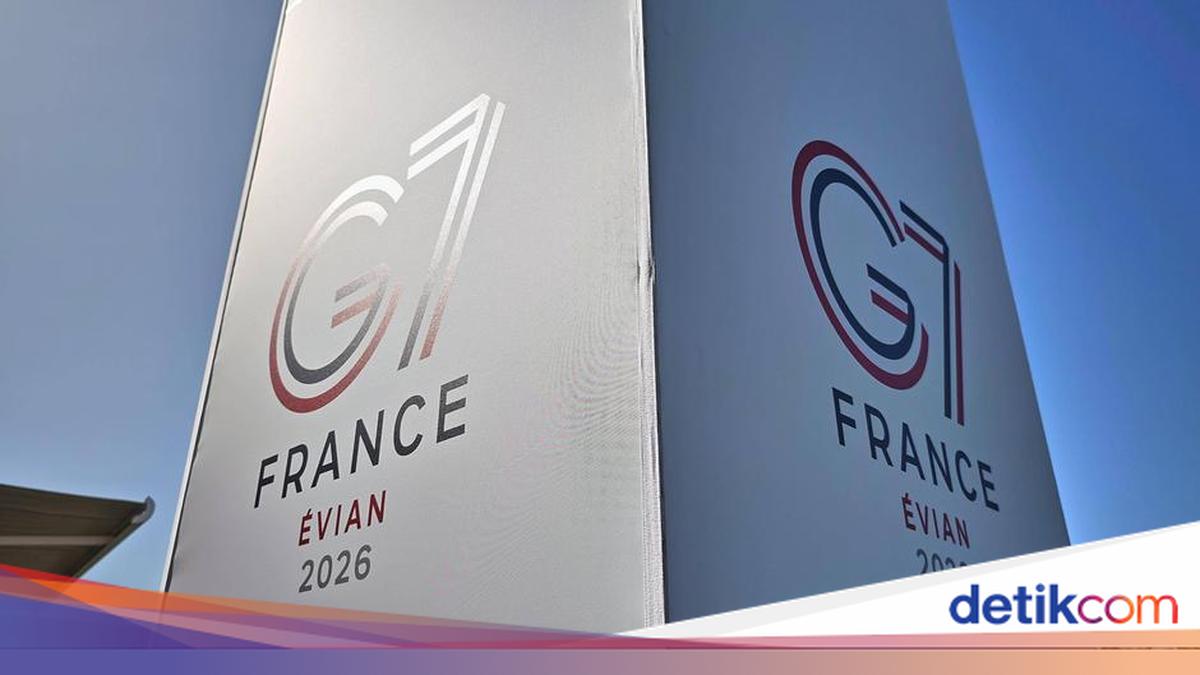
Leaders of the G7, representing some of the world’s wealthiest nations, gathered in Evian-les-Bains, France, for a three-day summit dominated by discussions on the wars in Ukraine and Iran. Russia’s invasion of Ukraine, a G7 agenda item for over four years with no end in sight, is now overshadowed by the security and economic fallout from the Iran conflict, which erupted after the United States and Israel attacked the country on 28 February. The nearly 15-week war has rocked global markets as Iran blockaded the Strait of Hormuz, a strategic chokepoint through which roughly 20 per cent of the world’s oil supply normally passes. The disruption has cut off access to oil, gas, and fertiliser, driving up prices for everything from food to household goods across many nations.
In addition to the leaders of Canada, Germany, Italy, Japan, the United Kingdom, and the United States, French President Emmanuel Macron invited the leaders of Egypt, Qatar, Ukraine, and the United Arab Emirates. Brazil, India, Kenya, and South Korea were also invited to discuss critical mineral supply chains and growing global economic instability. Although Iran was expected to dominate the agenda on the first day, Tuesday’s discussions were set to focus on the situation in Ukraine and its impact on European security. Ukrainian President Volodymyr Zelenskyy was scheduled to arrive in Evian to add urgency to discussions on the possible resumption of peace talks between Russia and Ukraine, backed by the US and European allies.
The European Union stressed that sanctions are not a bargaining tool. A newly announced preliminary deal between Washington and Tehran offered a glimmer of hope in Europe that the ‘very costly’ confrontation could be ended and the strategic Strait of Hormuz reopened. ‘Implementation is the priority,’ European Commission President Ursula von der Leyen said in Evian ahead of the G7 summit, where the deal was expected to be discussed extensively. Although Germany, France, the UK, and Italy, known as the E4, have expressed willingness to lift sanctions on Iran, von der Leyen insisted that such a step would depend on measurable changes on the ground and stressed there are strict conditions before sanctions are eased. ‘We have a sanctions framework that responds to two main things: human rights violations and weapons of mass destruction,’ she said. ‘The principle of sanctions is that we need real change on the ground before we can consider lifting them. Sanctions are imposed to change behaviour.’
Von der Leyen, alongside European Council President Antonio Costa, represented the European Union at the summit and set the tone for discussions at the Hotel Royal even before the heads of state and government arrived. The Commission President added that any easing of restrictions would require credible and verifiable progress. ‘If behaviour changes credibly and verifiably, sanctions can be ended, but the reverse is also true,’ she said. ‘As long as there is no change in behaviour, you cannot lift sanctions imposed for human rights violations and weapons of mass destruction.’ At the G7 summit, one of the key questions was what exactly US President Donald Trump expects from his European partners to help secure and maintain the deal with Iran.
Regarding Ukraine, attention was focused on whether the Iran-US deal could create new momentum for peace talks between Russia and Ukraine. Much was likely to depend on whether Trump re-engages diplomatically and whether European countries can secure a meaningful position in the negotiation process. In Brussels, the open question remained whether the EU has a convincing strategy to persuade Washington that its involvement is essential for any long-term settlement. The G7 summit officially opened on Wednesday evening with a packed agenda dominated by efforts to revive the Russia-Ukraine peace process, amid uncertainty over Trump’s attendance before he finally arrived on time at the Hotel Royal in Evian. Germany, France, and the UK pushed for a new approach involving the United States more closely, while President Zelenskyy was scheduled to join the meeting.
At the same time, the EU officially relaunched Ukraine’s accession talks, which had been stalled for more than two years. European Council President Antonio Costa called it a ‘historic step’, while Commission President von der Leyen asserted, ‘Kyiv has done its homework, now it is the EU’s turn.’ Von der Leyen assessed that Ukraine remains in a strong position, while sanctions pressure on Russia continues to mount. ‘Now the challenge is to turn the pressure on Russia into a negotiating table,’ became the prevailing tone ahead of the G7 leaders’ discussions. Attention turned to Trump: whether he would support the European strategy to pressure Moscow or offer his own path to peace, especially after his latest phone call with Russian President Vladimir Putin. However, before the summit began, Trump reignited transatlantic tensions by threatening to impose 100 per cent tariffs on French wine and champagne if Paris does not repeal its 3 per cent digital tax on US technology firms. ‘If they keep doing it, I will have no choice but to impose 100 per cent tariffs on all champagne and all wine from France,’ Trump told the New York Post. The threat sparked alarm among French exporters who rely heavily on the US market.