
G20 Trade Ministers Reject Use of Food as Geopolitical Pressure Tool
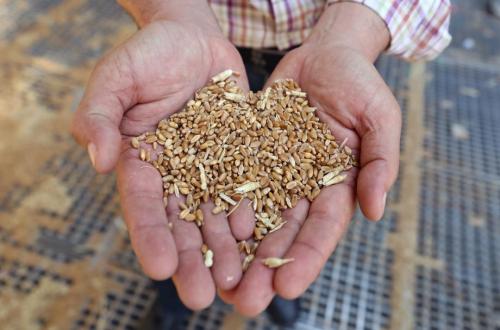
The Trade Ministers at the G20 forum have agreed to reject attempts to use food as a pressure instrument in geopolitical relations. This agreement was one of the key outcomes of the G20 Trade Ministers’ Meeting (TMM) held in Milwaukee, Wisconsin, USA, a few days ago.
Indonesian Trade Minister Budi Santoso stated that food is directly linked to human survival and therefore should not be used as a tool to pressure other nations within geopolitical relations. This stance was presented by Indonesia alongside other G20 members during the meeting, which addressed several global trade issues.
“G20 Trade Ministers reject efforts to turn food into an instrument of geopolitical pressure. Food is related to survival, and attempts to exert pressure through food cannot be justified,” said Budi Santoso.
In addition to food security, the G20 Trade Ministers discussed various global trade concerns, including excess capacity, forced labour practices, and the Most Favoured Nation (MFN) principle within the World Trade Organisation (WTO) system.
Regarding the discussion on excess capacity, Indonesia is advocating for assessments that consider the specific conditions of each sector. Budi emphasised that high production capacity, surges in exports, or trade imbalances do not automatically indicate structural excess capacity.
“Every assessment regarding excess capacity must be based on specific evidence for each individual sector. Every sector possesses different production cycles, supply chain structures, market coverage, and technologies,” Budi noted.
Indonesia is promoting a three-pronged approach to managing the issue of excess capacity. First, conducting a diagnosis before determining intervention measures by comprehensively considering the conditions and characteristics of each sector.
Second, protecting markets without creating tensions. According to Budi, trade remedy instruments can be utilised by WTO members to respond to harmful trade practices in a transparent and rules-based manner.
Third, encouraging transformation through cooperation. Addressing excess capacity is seen as requiring collective action and an environment that supports the process of structural transformation.
Source: jawawa.id (https://jawawa.id/newsitem/g20-trade-ministers-reject-use-of-food-as-geopolitical-pressure-tool-1791161645)
Originally published by Republika (https://ekonomi.republika.co.id/berita/tmer7a423/menteri-perdagangan-g20-tolak-penggunaan-pangan-untuk-tekanan-geopolitik), translated from Indonesian