
G20 Rejects Use of Food Commodities as Political Threat Tool
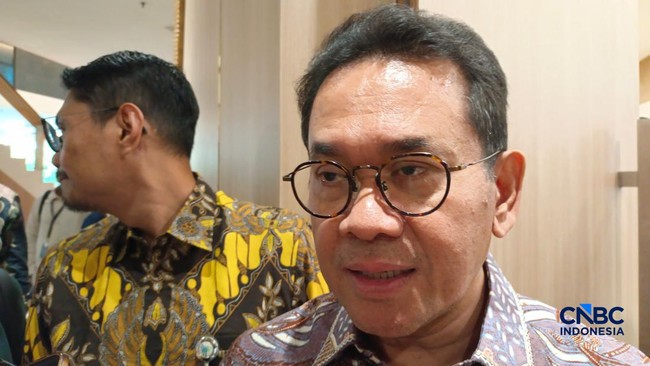
Indonesian Trade Minister Budi Santoso stated that G20 Trade Ministers reject various attempts to use food as a means of pressure in geopolitical relations. This stance is the result of the G20 Trade Ministers’ Meeting (TMM) held in Milwaukee, Wisconsin, USA, from 30 September to 1 October 2026.
“G20 Trade Ministers reject efforts to turn food into an instrument of geopolitical pressure,” said Budi, as quoted from a press release on Sunday (4/10/2026).
The Minister, affectionately known as Busan, explained that the rejection from G20 member trade ministers stems from the fact that food commodities are closely linked to basic human needs, and therefore cannot be used as an instrument to threaten other nations during geopolitical tensions.
“Food is related to survival, and attempts to exert pressure through food cannot be justified,” said Minister Busan following the meeting.
Furthermore, the G20 Trade Ministers’ meeting discussed other issues, including excess capacity, forced labour practices, and rules regarding the World Trade Organisation’s (WTO) Most Favoured Nation (MFN) tariffs, which require collaboration and joint action while respecting the differing policy principles and economic orientations of each country.
When discussing excess capacity, Busan emphasised the need to consider supply and demand dynamics, capacity utilisation levels, market behaviour, and the fundamental factors driving production.
According to Busan, high excess capacity, export surges, or trade imbalances do not automatically indicate that structural excess capacity is occurring.
“Any assessment regarding excess capacity must be based on specific evidence for each sector. Every sector has different production cycles, supply chain structures, as well as market and technological scopes. Excess capacity must refer to analytical and evidence-based findings, not political labels,” said Busan.
Indonesia promotes three approaches in addressing the issue of excess capacity. First, diagnosing before determining remedial steps. Assessments of excess capacity must comprehensively account for the conditions and characteristics of each sector. Second, protecting without creating tension.
In this regard, trade remedies play a vital role in facilitating WTO members to respond to harmful trade practices transparently and based on rules.
Regarding the discussion on MFN, Busan stated that the WTO needs to maintain and enforce the MFN principle within the multilateral trading system. In doing so, aspects of certainty and non-discriminatory treatment in international trade can be preserved.
Busan also emphasised the importance of MFN in simplifying tariff negotiations and maintaining the certainty and value of negotiated market access commitments. He assessed that the weakening of MFN could impact Special and Differential Treatment (SDT) within the trading system.
“The MFN principle must continue to be maintained, at least until there is another system or principle that can provide better benefits. The hope is that this principle is not just a rule on paper, but can truly be implemented by the countries involved,” said Busan.
Meanwhile, regarding the discussion on forced labour, Minister Busan stated that Indonesia reaffirms its commitment to the abolition of forced labour as an essential part of protecting workers’ rights and dignity. Such protection efforts must be oriented towards legitimate goals and must not become a political instrument to pressure other nations.
“Protecting workers’ rights must remain a real commitment, not a political instrument for control and subordination. No country should gain a competitive advantage through forced labour. However, no country should gain strategic influence by defining, judging, and imposing sanctions for alleged violations by other parties based solely on its own provisions,” said Busan.
Indonesia has demonstrated its commitment to the abolition of forced labour through the ratification of nine out of ten fundamental conventions of the International Labour Organisation (ILO).
This commitment is also realised through Minister of Trade Regulation Number 9 of 2026, which regulates the prohibition of importing goods produced through forced labour.
Indonesia has also shown the same commitment in the Comprehensive Economic Partnership Agreement with the European Free Trade Association (Indonesia-EFTA CEPA), as well as with the European Union (I-EU CEPA), by including provisions for the abolition of forced labour.
Source: jawawa.id (https://jawawa.id/newsitem/g20-rejects-use-of-food-commodities-as-political-threat-tool-1791071491)
Originally published by CNBC Indonesia (https://www.cnbcindonesia.com/news/20261003211211-4-773085/tok-g20-tolak-komoditas-pangan-jadi-alat-ancaman-politik), translated from Indonesian