
Furore Over Tax on Sanitary Pads as Woman Files Constitutional Court Challenge
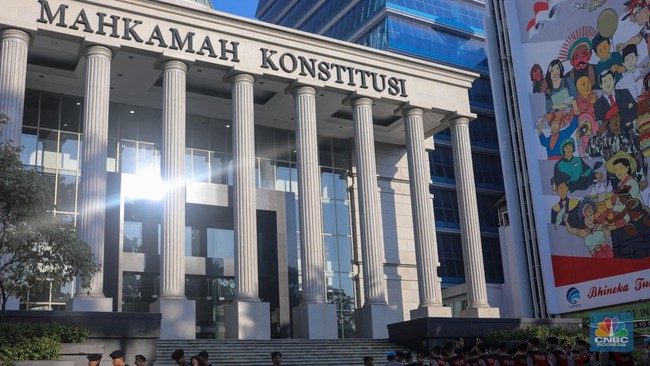
Jakarta, CNBC Indonesia — An Indonesian citizen, Berita Matondang, has petitioned for a judicial review of Article 16B paragraph 1a(j)(1) and its explanatory note in Law No. 7 of 2021 on the Harmonisation of Tax Regulations against the 1945 Constitution. The case was registered with the Constitutional Court on Monday (2 November 2026).
In her petition, she said one constitutional issue was that menstrual pads are not explicitly listed among taxable goods exempt from value-added tax (VAT). She also argued that there is no adequate legal guarantee that the identification of basic necessities required by the public is based on objective, rational and proportionate criteria, including consideration of menstrual hygiene needs arising from women’s biological processes.
“The absence of such a legal guarantee could mean that essential needs related to human biological functions do not receive equal consideration when tax-incentive policies are determined,” the petitioner wrote, according to the petition cited on Monday (2 October 2026).
The constitutional question raised by the petitioner is whether the criteria for determining which basic necessities qualify for VAT relief provide fair legal certainty when applied to unavoidable biological needs directly related to human hygiene and health.
She said sanitary pads are needed to manage menstruation hygienically. Demand for these products is not simply a matter of consumer choice or preference, but is linked to a recurring biological process. This, she argued, gives menstrual hygiene products objective characteristics that should be considered when deciding whether they are essential goods eligible for tax relief.
“The petitioner understands that the state has the authority to determine which goods receive VAT relief, taking into account state revenue, administrative capacity and the public interest. However, that authority does not remove the obligation to implement tax policy rationally and fairly,” she said.
“When relief is granted to goods classified as basic necessities, the criteria should take account of relevant needs, including menstrual hygiene needs arising from biological processes and related to health and cleanliness,” she added.
The petitioner also compared Indonesia’s tax treatment of sanitary pads with that of several other countries. Malaysia, for example, applies a zero per cent sales tax to sanitary pads, tampons and panty liners.
In her application, she asked the Constitutional Court justices to grant the petition in full and rule that Article 16B paragraph 1a(j)(1) of Law No. 7 of 2021 is unconstitutional and has no binding legal force unless interpreted to require the objective, rational and proportionate consideration of essential needs related to human biological processes, including menstrual hygiene products, when deciding which basic necessities qualify for VAT relief.
She also asked the court to rule that the explanatory note to the article is unconstitutional and has no binding legal force unless interpreted to mean that its list of basic necessities is not exhaustive and that other goods with essential characteristics, including menstrual hygiene products, may also be considered. She further requested that the ruling be published in the State Gazette.
“If the Constitutional Court justices reach another conclusion, the petitioner asks for a ruling that is fair (ex aequo et bono),” she said.
Source: jawawa.id (https://jawawa.id/newsitem/furore-over-tax-on-sanitary-pads-as-woman-files-constitutional-court-challenge-1793627491)
Originally published by CNBC Indonesia (https://www.cnbcindonesia.com/news/20261102195126-4-781693/heboh-pembalut-kena-pajak-warga-beraksi-gugat-ke-mahkamah-konstitusi), translated from Indonesian