
Furniture Traders in Manggarai Struggle and Resign Themselves to Fate
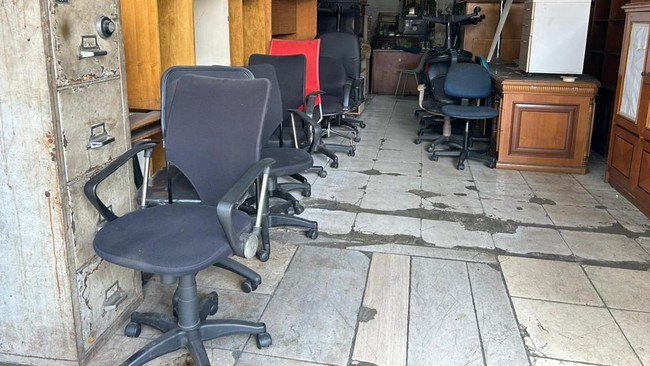
Amidst conditions of economic uncertainty, numerous traders across the country have begun to resign themselves to their circumstances. This is driven by a recent decline in public purchasing power.
This trend has led to staff reductions, including at second-hand furniture stores in the Dr. Saharjo area, Manggarai, South Jakarta. Observations at the location on Thursday (2/7/2026) showed active employees busy transporting and tidying furniture. Furthermore, staff members are now performing multiple roles, acting as informants for potential customers, checking item conditions, and conducting repairs.
This shift towards multitasking is closely linked to the recent drop in furniture sales, prompting several shops to implement operational and workforce efficiencies. For instance, Abdul, a second-hand furniture trader, noted that his turnover has decreased compared to the previous year, triggered by national economic uncertainty which has dampened public demand.
“Sales are down by about 50% for furniture traders. On some days, items sell, and on others, they don’t; at most, we might sell two or one item per day,” Abdul told CNBC Indonesia. He sells high-quality office chairs priced between Rp 750,000 and Rp 1.25 million, as well as standard office chairs priced between Rp 250,000 and Rp 450,000. He also provides chairs for cafes and universities at Rp 250,000 per unit, though university chair sales only peak during the new academic year. When demand is non-existent, Abdul says he can only accept the situation and trust that sustenance will come from elsewhere.
Despite offering various types of chairs and furniture, sales trends remain stagnant. Consequently, shop staff have been reduced from six employees to just two. Regarding wages, the shop offers two schemes: weekly, at approximately Rp 1.05 million, and daily, at around Rp 150,000 per person. “We cannot simply offer items directly anymore; sometimes customers turn to online platforms because they are cheaper and offer new products,” he explained.
Despite facing stiff competition from online stores, Abdul remains optimistic that there is still interest in purchasing furniture in person, as customers can inspect items directly and receive guarantees. Another trader in the same area, Angga, admitted that sales trends are unpredictable but continues to strive to provide the best stock. His cheapest chairs start at around Rp 200,000, and he can provide uniform brands for offices or companies. He noted that the quality of imported goods varies depending on availability.
Like surrounding shops, Angga operates with only one person: his employer, the shop owner.
At another furniture shop, a seller named Sandi actively markets various second-hand products sourced from defunct or unused offices. Sandi stated that the items he acquires are typically repaired or reconditioned for reuse, including replacing upholstery with new fabric. Sandi personally inspects every item, allowing him to offer a longer warranty of three months from the date of purchase.
Unfortunately, Sandi’s products remain difficult to sell due to the decline in public demand. “This year has dropped significantly compared to last year. The cheapest chair, which does not have armrests, is Rp 200,000,” said Sandi. Despite offering repair services starting from Rp 200, depending on the extent of the damage, Sandi currently manages his shop with only one partner.
Source: jawawa.id (https://jawawa.id/newsitem/furniture-traders-in-manggarai-struggle-and-resign-themselves-to-fate-1783338704)
Originally published by CNBC Indonesia (https://www.cnbcindonesia.com/news/20260706170942-4-748472/pontang-panting-pedagang-mebel-di-manggarai-sampai-akhirnya-pasrah), translated from Indonesian