
Furniture Industry Leaders Wary of Weak Rupiah, Preparing for Potential Layoffs?
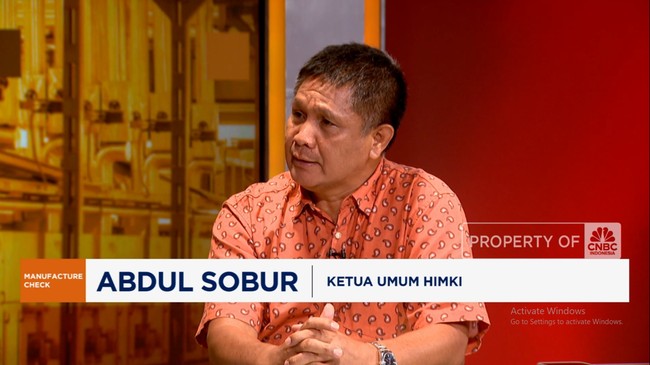
The depreciation of the Rupiah and various global challenges are beginning to raise concerns regarding the condition of the national furniture and craft industry. Nevertheless, business players believe that the current situation cannot immediately be concluded to result in a wave of mass layoffs.
The General Chairman of the Indonesian Furniture and Craft Industry Association (HIMKI), Abdul Sobur, stated that the potential pressure on labour cannot be ignored, given that this is a labour-intensive sector. “There is indeed potential pressure on the workforce, because this sector is labour-intensive and highly dependent on global export demand, domestic purchasing power, exchange rates, and raw material costs. HIMKI notes that this sector supports millions of direct and indirect workers, so any slowdown in orders will be quickly felt in factories, especially among SMEs and medium-sized industries,” Abdul Sobur told CNBC Indonesia on Monday (8/6/2026).
Amidst these various challenges, HIMKI assesses that the current industry condition is still in a phase of vigilance. Business owners are still attempting to maintain company operations while awaiting developments in market demand in the coming period. “We do not want to conclude too hastily that large-scale layoffs will definitely occur. A more accurate view is that the industry is currently in a very cautious phase. Companies will first withhold expansion, reduce overtime, increase production efficiency, and maintain cash flow,” he said.
He emphasised that layoffs are the last resort that business owners will choose if market pressure persists for a long period. “Layoffs are usually the final choice if pressure on orders, costs, and the market continues for a long time,” he added.
In the current situation, strengthening the industrial ecosystem is considered a vital factor for the national furniture industry to survive and increase competitiveness in the global market. Sobur noted that several countries have successfully developed robust furniture ecosystems. Furthermore, entrepreneurs are pushing for enhanced industrial competitiveness through a more integrated ecosystem, specifically by utilising Indowood to strengthen the upstream sector and IFEX to target the global market, ensuring the industry value chain operates more efficiently.
“China has succeeded because it built an ecosystem. Vietnam is growing rapidly because it built an ecosystem. Indonesia must do the same. Therefore, IFEX is not merely a product exhibition and Indowood is not merely a machinery exhibition. Both are strategic instruments to build the competitiveness of the Indonesian furniture industry from upstream to downstream,” Abdul Sobur asserted.