
Full Details of Europe's New "Bomb" Against Russia, Indonesia Implicated
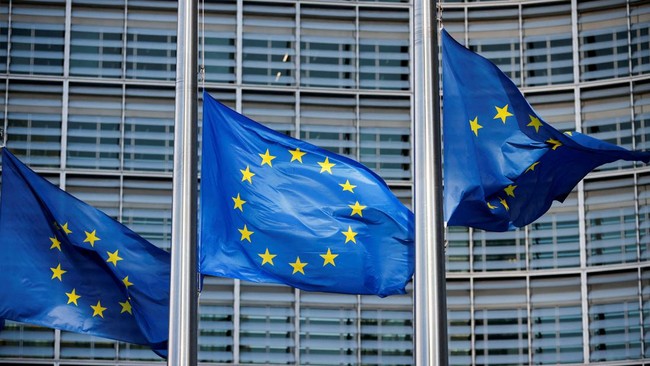
The European Union has tightened its pressure on Russia by approving the 20th sanctions package, targeting the energy, financial, trade, and propaganda sectors. This step is affirmed as part of the bloc’s commitment to supporting Ukraine amid a war that shows no signs of abating.
The European Commission states that this latest package is designed to push Moscow back to the negotiating table on terms acceptable to Kyiv.
“The European Union’s commitment to a free and sovereign Ukraine is unwavering,” reads the official statement from the Commission. “Every day of Russian attacks on Ukraine’s civilian infrastructure is an additional day of suffering for the Ukrainian people.”
This 20th sanctions package is said to have a strong focus on preventing sanctions evasion, as well as expanding pressure on Russia’s main revenue sources, particularly the energy sector. Additionally, the sanctions target financial services including crypto, trade, and propaganda media.
Here are the main details of the European Union’s latest sanctions package against Russia:
Energy Sector
36 new entities from Russia’s energy sector have been added to the sanctions list, covering activities from oil exploration, extraction, refining, to transportation.
The EU has added new entities in Russia’s shadow fleet network, including companies in third countries, one major maritime insurance company, and 46 additional vessels. The total number of vessels on the list now reaches 632, which are subject to port access bans and services.
However, 11 vessels have also been removed from the list for returning to compliance.
- Due diligence obligations have been imposed on sellers in the EU, along with a “no to Russia” clause in sales contracts to prevent vessels from being used in illegal networks.
Rules for vessel scrapping have also been introduced to reduce the shadow fleet.
Two Russian ports, Murmansk and Tuapse, have been added to the sanctions list, along with one port in a third country, namely Karimun Oil Terminal in Indonesia, due to its involvement in evading the oil price cap.
The EU is preparing a legal basis to ban the transportation of Russian oil in the future, in collaboration with the G7 and the Price Cap Coalition.
Provision of maintenance services for Russian LNG carriers and icebreakers is prohibited.
EU operators are permitted to terminate long-term contracts with Russian parties.
Financial Sector
An additional 20 Russian banks are banned from doing business with EU operators. The total number of affected banks now reaches 70.
Four banks in Kyrgyzstan, Laos, and Azerbaijan are subject to transaction bans for helping Russia evade sanctions.
A full ban on transactions with Russian crypto service providers has been imposed, including decentralised platforms.
The use of RUBx stablecoin and the digital rouble is prohibited due to their potential use in evading sanctions.
Cooperation with agents facilitating Russia’s international transactions to avoid sanctions is banned.
Five financial entities from third countries have been removed from the list after providing compliance commitments.
Trade Sector
Goods worth more than €365 million, from rubber to tractors, are banned from export to Russia.
Restrictions on military technology, including explosives, laboratory equipment, and high-performance lubricants.
Provision of cybersecurity services to Russia is restricted.
Metals, chemicals, and minerals worth more than €530 million are subject to import bans.
An import quota for ammonia has been set to cap incoming volumes.
Russian Military Industry
58 companies and individuals involved in military production, including drones, are subject to sanctions.
Global suppliers are targeted, including entities from China, the United Arab Emirates, Uzbekistan, Kazakhstan, and Belarus that supply dual-use goods.
Anti-Sanctions Evasion
The EU is cracking down on Kyrgyzstan for failing to prevent the re-export of goods such as machinery and telecommunications equipment to Russia used in drone and missile production.
Addition of 60 entities, consisting of 32 in Russia and 28 in third countries such as China, Turkey, UAE, and Thailand.
Additional Sanctions
- 120 new entities and individuals, including 33 individuals and 83 entities, are subject to asset freezes and travel bans. Targets include oligarchs, perpetrators of Ukrainian child abductions, propagandists, and those plundering cultural heritage.
Legal Protection for EU Companies
Courts in member states can now impose fines on Russian parties filing abusive lawsuits.
EU companies can seek compensation for adverse legal decisions in third countries.
Transactions with parties assisting in enforcing such decisions are prohibited.
Sanctions also target Russian parties exploiting unlawful takeovers of EU company assets.
Additional Measures
Mirror sites of media such as Russia Today and Sputnik will be blocked in the EU.
Acceptance of funding from the Russian government in research and innovation fields is prohibited.
Extension to Belarus
This package also incorporates several sanctions against Russia into the sanctions regime against Belarus, particularly in trade, finance, services, and legal protection.