
Fuel Subsidy Reorganisation: Chairman of Commission XI DPR Outlines Urgency
The Indonesian House of Representatives (DPR) Commission XI has asserted that the reallocation of fuel and energy subsidies must be urgently implemented. This is intended to safeguard the resilience of the State Budget (APBN) against the pressures of global oil price volatility.
The restructuring of subsidies is deemed necessary so that the massive burden of state expenditure can be allocated precisely to the intended targets, whilst simultaneously protecting the purchasing power of the public.
The Chairman of Commission XI, Mukhamad Misbakhun, revealed that the fiscal space of the state budget is limited amidst the uncertainty of global energy commodity prices. He emphasised that the government and the DPR must carefully consider macro assumptions and budget allocations to ensure that subsidies are not misdirected and do not burden the national finances.
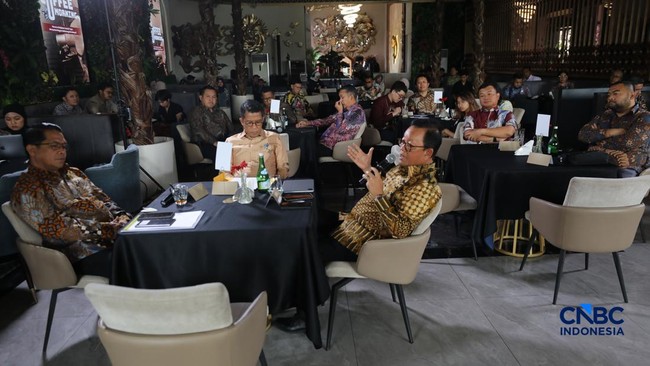
“First, I want to convey that our fiscal space is indeed limited. We have limitations, so when we decide on subsidies, we must consider how we allocate the space. The issue is how the APBN maintains resilience in the face of volatile price pressures,” Misbunch stated during a CNBC Indonesia Coffee Morning event titled “Formulating Precise Subsidy Policies: Can the State Protect the People’s Rights?”, as reported on Friday (25/09/2026).
Misbakhun explained that the macro assumption for oil prices in the state budget is set at US$70 per barrel. His office is calculating the resilience of the subsidy budget for fuels such as Pertalite and Solar to ensure fiscal space remains available until the end of the year.
“We are looking to see if there is still a gap when we average US$70 per barrel for one year. It turns out we still have a gap because, before the crisis, we experienced oil prices below US$70, and we are calculating that we can hold out until the end of the year if the average is maintained. This provides space for subsidies for Pertalite and then Solar,” said Misbakhun.
The restructuring of subsidies does not only cover fuel but also other energy commodities such as LPG and electricity, which absorb very large amounts of state expenditure. Improving the governance of subsidies is crucial to ensure that budget allocations do not suffer from leakages or incorrect targeting.
“However, we must ensure that the efforts to build precise subsidy governance do not fail, because the amount we spend on subsidies is very large, ranging from energy to transport, including food subsidies and so on,” he added.
He further noted that the allocation of the state budget for energy subsidies fundamentally aims to control inflation levels while maintaining public purchasing power. Such steps are vital to ensure that household consumption remains stable as a primary driver of national economic growth.
“Our goal in allocating the APBN is to prevent inflation, maintain public purchasing power, and provide a boost to economic growth. If it is eroded by inflation and reduces purchasing power, it will place pressure on economic growth,” he concluded.
Source: jawawa.id (https://jawawa.id/newsitem/fuel-subsidy-reorganisation-chairman-of-commission-xi-dpr-outlines-urgency-1790319168)
Originally published by CNBC Indonesia (https://www.cnbcindonesia.com/news/20260925113828-4-770875/subsidi-bbm-cs-ditata-ulang-ketua-komisi-xi-dpr-beberkan-urgensinya), translated from Indonesian