
Fuel Queues and the Risk of Shifting Consumption Amid Price Disparities
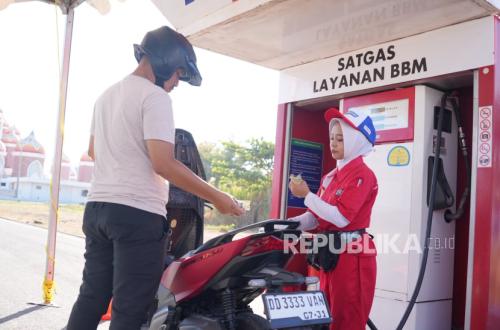
JAKARTA — Long queues of vehicles at several public fuel stations (SPBUs) in recent weeks have drawn public attention. The phenomenon, seen in Bali and several other areas, highlights the challenge of maintaining smooth fuel distribution.
Disruptions in Bali illustrate the problem. Delays in the arrival of fuel-carrying ships from Java temporarily reduced stocks in the region by around three to four days. The government and Pertamina then accelerated deliveries and added vessels to restore supplies.
Fuel queues, however, are not always linked to supply availability and operational constraints. The price difference between subsidised and non-subsidised fuel may also affect consumption patterns, particularly when economic pressures prompt consumers to seek more affordable fuel.
Energy analyst Ali Ahmudi Achyak said fuel queues should be viewed from two perspectives: changes in demand and distribution capacity. He said a widening price gap could encourage consumers to switch from non-subsidised fuel to fuel supported by the government.
“This phenomenon is very likely to be related to the price disparity between subsidised and non-subsidised fuel. When the gap widens, people will naturally reconsider their consumption choices in line with their financial circumstances,” Ali told Republika.
Such changes in consumer choices can affect supply planning. Consumers who previously used Pertamax, for example, may consider switching to Pertalite to reduce spending. If many people switch within a short period, demand for Pertalite could rise faster than expected.
Changes in consumer behaviour can throw those forecasts off. A public fuel station that previously had enough stock to meet daily needs may face a sudden surge in sales. If additional supplies do not arrive quickly enough to match the increase in demand, queues may form even when national fuel stocks remain available. This can happen anywhere while price disparities persist and consumers tend to seek cheaper products.
Ali warned that increased demand is not the only cause of queues. Delivery delays and limited stocks at particular locations can lead to similar conditions. “The issue is not only how much fuel is available, but whether it can be delivered to the right place, at the right time and in quantities that match people’s needs,” he said.
He said the public should understand the difference between national fuel reserves and the availability of fuel at individual stations. The two are related but describe different conditions. National reserves reflect fuel availability across the supply system, including stocks at storage facilities, refinery output, imports and ongoing distribution. Those figures do not necessarily show how much fuel is ready for consumers to buy at each station.
“Safe national fuel stocks do not automatically guarantee that every station will have enough fuel at all times,” Ali said.
He said the government and businesses needed to assess the issue comprehensively. Reviews should not rely solely on national reserves, but should also cover terminal stocks, delivery schedules, station inventories and consumption levels. A surge in consumption calls for distribution adjustments, delivery delays require logistical improvements, and shortages in particular areas need to be addressed with additional supplies. This approach is essential to ensure that responses to queues are not merely temporary, but also strengthen distribution reliability in the long term.
Price disparities and changing consumption patterns
Fuel distribution is becoming more complex as changes in energy prices affect consumer decisions. The government’s policy of keeping Pertalite prices stable is intended to protect people’s purchasing power, particularly among groups sensitive to increases in transport costs and everyday expenses.
Non-subsidised fuel prices, meanwhile, may be adjusted in line with global oil prices and the rupiah exchange rate. As the gap with Pertalite widens, some consumers have an economic incentive to consider cheaper fuel.
Oil and gas practitioner Hadi Ismoyo, a former secretary-general of the Indonesian Association of Petroleum Engineers (IATMI), said price disparities were a factor the government needed to monitor. In his view, an excessively large gap could encourage consumers to switch fuels and create opportunities for distribution irregularities.
“If the price disparity is too wide, there is a risk of misconduct by individuals and of consumers shifting from non-subsidised to subsidised fuel,” Hadi told Republika.
He said changing consumption patterns needed to be anticipated by adjusting stocks in areas where demand was rising. Without such action, consumers switching from Pertamax to Pertalite could add pressure to the distribution system.
The situation presents a particular challenge for national energy policy. The government needs to keep fuel affordable without compromising supply sustainability or the proper targeting of fiscal support. Hadi believes subsidised fuel prices should remain unchanged amid pressure on people’s purchasing power, but that this policy should be accompanied by better consumption controls and distribution oversight.
“Subsidised fuel prices should not rise because people’s purchasing power is weak,” he said.
One proposal put forward by Hadi is to direct vehicles with engine capacities of 1,500cc or more to use Pertamax. The aim is to reduce the potential for consumers to switch from non-subsidised fuel to Pertalite.
However, regulation based on engine capacity would require further study. Engine size does not always reflect the owner’s financial means. From a technical perspective, octane requirements are also determined by engine design and manufacturer recommendations. Any consumption controls should therefore take account of policy targeting, people’s financial circumstances and vehicles’ technical requirements.
Ali also cautioned that switching from Pertamax to Pertalite should not automatically be regarded as misuse. Some people need to adjust their spending, while some vehicles can technically use Pertalite.
“Not everyone switching to Pertalite is misusing the subsidy. Some people genuinely need to save money, and some vehicles are suitable for using that fuel,” said the executive director of the Center for Energy Security Studies (CESS).
Ali said pricing policy should consider people’s economic circumstances as well as the government’s ability to maintain continuity of supply. Higher consumption of fuel receiving subsidies or compensation can also affect budgetary requirements. The fiscal pressure depends on market-based prices, the subsidy and compensation mechanisms, and the actual volumes distributed.
Energy security and the challenge of import dependence
Beyond consumption and distribution, national fuel security continues to face the challenge of dependence on crude oil and fuel products from overseas. Hadi estimates that national fuel demand is around 1.63 million barrels per day. In his calculations, domestic refinery-product capacity, including the Balikpapan refinery development project, is about 1.28 million barrels per day.
He said meeting that capacity would require around 1.82 million barrels of crude oil per day, while domestic oil production stands at approximately 600,000 barrels per day. Based on Hadi’s estimates, Indonesia still needs to import around 350,000 barrels of fuel products and 1.2 million barrels of crude oil per day.
The gap between demand and domestic production capacity underscores the importance of strengthening energy security. Changes in global oil prices, disruptions to trade routes and rising procurement costs can affect the ability to maintain supplies and the cost of providing fuel.
In this context, the government’s efforts to maintain the price of certain fuels require careful management. Affordability for the public must go hand in hand with businesses’ ability to secure supplies.
Hadi stressed the importance of safeguarding Pertamina’s financial position so the company has sufficient room to procure crude oil and fuel. He also called for transparency over market-based prices, subsidy amounts, distribution mechanisms and efforts to prevent losses in the supply chain.
As a long-term measure, Hadi proposed that the government reconsider developing a programme to convert vehicles from fuel to gas. Using domestic gas, he said, could help reduce dependence on imported oil and fuel while supporting emissions control.
Energy ministry says national fuel reserves are secure
Amid queues in several areas, Coordinating Minister for Downstreaming and Energy Transition and Energy and Mineral Resources Minister Bahlil Lahadalia said national fuel reserves remained secure. He said Pertalite RON 90 reserves stood at around 16 to 18 days, while reserves of other fuel types averaged more than 20 days.
“Our national fuel reserves are above 16 days for Pertalite — 16 to 18 days for Pertalite RON 90. Apart from Pertalite RON 90, all other types average more than 20 days, in line with the national minimum standard,” Bahlil said when discussing fuel supplies in Bali.
The government said the distribution disruption in Bali was linked to delays in the arrival of fuel-carrying ships from Java. This temporarily reduced stocks in the region by around three to four days.
To speed up the recovery, the government coordinated with Pertamina to add transport vessels. The number of ships serving the route from Java to Bali was increased from three to seven.
Bahlil also asked Pertamina to increase Bali’s fuel reserves from around 11 days to 15 days. The increase is intended to strengthen supply resilience and provide a buffer against possible delivery disruptions.
Bahlil said stocks at Sanggaran Terminal amounted to around four to five days, while Manggis Terminal held more than 11 days’ worth. The differing conditions at the terminals highlight the importance of stock management and smooth distribution. Adequate supplies at one storage facility still require transport capacity to meet the needs of people in other areas served by the network.
“This was a technical incident within Pertamina’s internal logistics management, but whatever the cause, it is something we must take responsibility for together,” the Energy Minister said.
The government is also monitoring distribution challenges in other regions, including Kalimantan, Sulawesi and Sumatra. According to Bahlil, some areas still depend on river transport. When rivers become silted, fuel deliveries must be diverted by road, taking longer.
“In Kalimantan, Sulawesi and Sumatra, Pertamina’s president director said there are several areas where distribution is by river, but the rivers have become silted. Transport has therefore been diverted to road, and this takes time,” he said.
Pertamina strengthens supplies and service
PT Pertamina Patra Niaga is stepping up fuel deliveries and optimising service at public fuel stations in various regions. In a press release dated 28 October 2026, the company’s vice-president of corporate communications, Kitty Andhora, said its measures included speeding up distribution, adding tanker trucks, strengthening terminal and station operations, and coordinating with various stakeholders to ensure public energy needs were met.
“Pertamina Patra Niaga is continuing to intensify fuel distribution by strengthening supplies, optimising its fleet and adjusting distribution to on-the-ground needs. Coordination between fuel terminals, tanker trucks and stations is also being strengthened so supplies can arrive promptly and service to the public can be maintained,” Kitty said.
Distribution is being strengthened by adding vehicles and optimising terminal operations. In East Java, Pertamina Patra Niaga has added 41 tanker trucks under spot-charter arrangements, with a total capacity of 1,184 kilolitres (KL), placed several terminals on 24-hour operations and optimised service at 17 stations operating around the clock. In North Sulawesi, 11 tanker trucks with a capacity of 200 KL have been added under spot-charter arrangements, while operations at the Bitung Integrated Terminal have been extended to 24 hours. In Lampung, distribution has been reinforced with 20 additional tankers with a capacity of 320 KL, alongside the diversion of 120 KL of supplies from the Palembang Integrated Terminal.
Nationwide, Pertamina Patra Niaga is prioritising deliveries to stations under particular attention, diverting supplies from buffer terminals when necessary, and scheduling tanker trucks according to local needs and conditions. Monitoring continues until fuel has been received and unloaded at stations to ensure distribution runs smoothly.
“Each region faces different distribution challenges, from rising demand and long distances to difficult terrain and restricted vessel access to certain terminals. Responses are therefore tailored to local conditions, including by diverting supplies, speeding up deliveries and coordinating with local governments and relevant authorities,” Kitty added.
Alongside strengthening supplies, Pertamina Patra Niaga is continuing to improve distribution oversight and queue management at stations. It is also coordinating with local governments and law enforcement agencies to support smooth distribution and ensure fuel is supplied in accordance with regulations.
Source: jawawa.id (https://jawawa.id/newsitem/fuel-queues-and-the-risk-of-shifting-consumption-amid-price-disparities-1793865149)
Originally published by Republika (https://ekonomi.republika.co.id/berita/to0oig522/antrean-bbm-dan-risiko-pergeseran-konsumsi-di-tengah-disparitas-harga), translated from Indonesian