
Fuel Price Hike Seen as Opportunity to Accelerate EV Adoption, Says Association
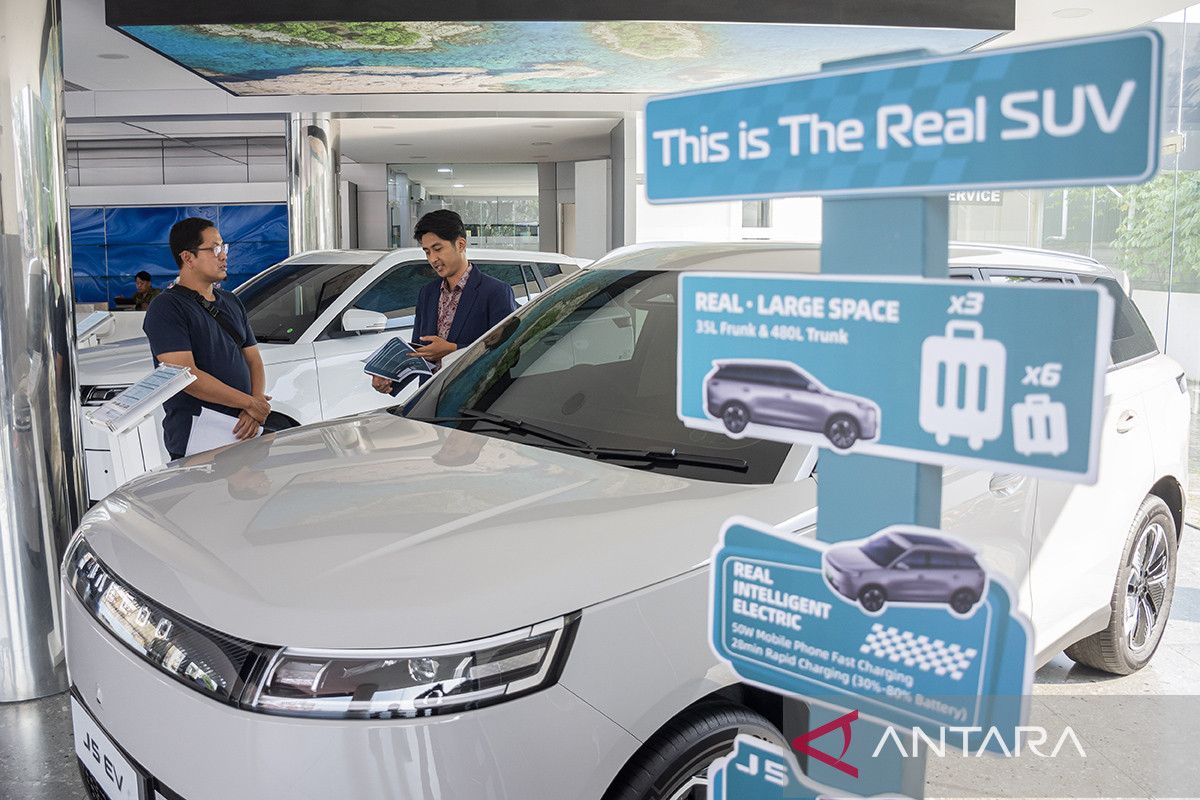
The Indonesian Electric Motorcycle Industry Association (AISMOLI) believes the increase in fuel prices and strong public support present an opportunity to accelerate the mass adoption of electric vehicles (EVs) in the country. AISMOLI Chairman Budi Setiyadi stated that the significant fuel price hike of around 37 percent, effective 10 June 2026, deepens the cost pressures already felt daily by users of two-wheeled and four-wheeled vehicles. Simultaneously, the weakening of the rupiah against the US dollar ensures that every litre of imported fuel becomes more expensive in rupiah terms, thereby increasing the subsidy burden on the state budget (APBN).
“This condition creates an opportunity as the most opportune momentum to accelerate the mass adoption of electric vehicles in Indonesia,” he said. According to him, every electric vehicle unit that successfully transitions today is one unit that permanently exits dependence on fuel, widening fiscal space and reducing the APBN’s exposure to global energy price volatility. Citing research from INDEF (2025), Budi added that nearly 20 percent of household expenditure is allocated to vehicle needs, including purchase, maintenance, taxes, and fuel, making it the expenditure component most sensitive to energy price changes.
Therefore, various forms of support for the public at this moment, when cost pressures are most acutely felt, will yield a much greater adoption impact per rupiah spent by the state. “In this situation, we are ready to support the government’s commitment to driving the electric vehicle transition,” he said. AISMOLI is also ready to invite all policymakers to jointly seize this momentum to realise various policies ensuring the growth of the national electric vehicle ecosystem on a foundation of consistent and predictable policy.
According to Budi, public support for the use of electric vehicles in Indonesia is currently very strong, with a survey in Jakarta, Surabaya, Bandung, Medan, and Makassar finding that 98 percent of respondents expressed support. Furthermore, the survey results cited by AISMOLI showed that 94.8 percent agreed that the government needs to actively encourage the acceleration of this transition. Among those who are already users, 96.8 percent stated the direct benefits felt include lower operational costs, easier maintenance, and lighter tax burdens. Among respondents who do not yet own an electric vehicle, 81.1 percent expressed willingness to switch if it proves to improve their quality of life in terms of health, environment, and economy. The findings also revealed that 89.2 percent hope the government mandates more affordable electric vehicle prices, and 95.8 percent support the government in encouraging more massive production of low-emission vehicles.
“The Indonesian people are ready, understand the benefits, and are anticipating the acceleration of the energy transition in the transportation sector,” said Budi. Meanwhile, AISMOLI Secretary General Hanggoro Ananta Khrisna stated that what the electric vehicle industry needs is a stable and predictable policy ecosystem. Certainty in the direction of fiscal policy and regulation in the medium and long term, from purchase support schemes and vehicle taxation policies to production standards, will determine the extent to which industrial investment can grow sustainably. “Without policy consistency, every wave of adoption that forms risks stalling when a programme ends or changes,” he said. He noted that the industry has fully prepared itself, with vehicle unit availability maintained, distribution networks active, and technical improvement proposals submitted to the government. What is needed now are short-term implementing technical regulations that provide immediate certainty, alongside medium-term policy commitments that create a conducive investment climate for the entire national electric vehicle industry supply chain. “With policy consistency, Indonesia has a real opportunity to build a globally competitive electric vehicle industry,” Hanggoro said.