
Fuel Price Hike Drives Surge in Electric Vehicle Sales
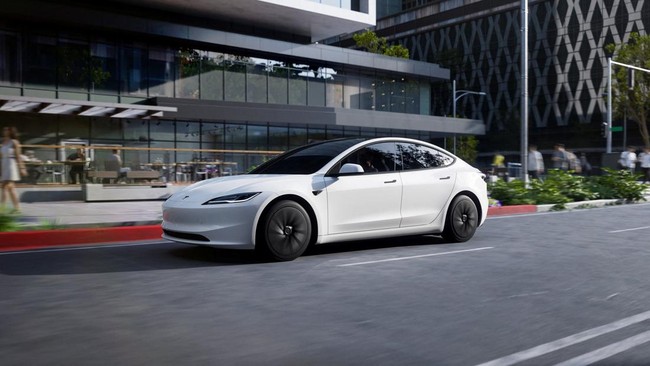
The rise in oil prices due to war in the Middle East has brought a boon for the electric vehicle (EV) industry. Tesla, which had recorded declining sales performance for two years, has finally recovered from its slump.
Tesla reported record EV deliveries that surpassed Wall Street estimates for the second quarter of 2026. The European market led Tesla’s performance in the three-month period. The stellar performance of Tesla’s automotive division provides a crucial cushion as CEO Elon Musk focuses on expensive ambitions in autonomous vehicle (AV) technology and artificial intelligence (AI).
Tesla’s recovery in Europe was aided by a surge in fuel prices, government incentives for EVs, the acceleration of corporate fleet electrification, and the easing of a consumer backlash related to CEO Elon Musk’s right-wing political views the previous year.
However, Tesla shares fell 7% in midday trading on Thursday local time. Analysts and investors suggested that market optimism had already been priced in following a 12% rise earlier in the week.
“I think the rapid growth in Europe is the main driver for Tesla right now. US sales still appear to be down, though the decline is not as severe as the overall US EV market. Meanwhile, China recorded slight growth,” said Seth Goldstein, a senior equity analyst at Morningstar. Goldstein had previously forecast a third consecutive annual decline for Tesla’s EV unit, but his assessment changed after the Q2 sales report. “I think a full-year decline is now very unlikely,” he said.
Last year, Tesla launched lower-specification, lower-priced variants of the compact Model 3 sedan and Model Y SUV, while also offering incentives and attractive financing options. “Their pricing and product strategy helped buyers overcome any qualms they might have had about Elon Musk personally,” said Sam Fiorani, vice president at research firm AutoForecast Solutions.
However, demand in the US, Tesla’s largest market, remained sluggish following the elimination of EV tax credits late last year. Analysts believe the removal of these incentives continues to weigh on sales figures, while model updates have driven stronger performance in the Chinese market. “We estimate Tesla’s US sales likely fell by at least 10% in the quarter,” said Freedom Broker senior analyst Dmitriy Pozdnyakov.
Tesla recently launched a six-seat variant of the Model Y in the US. An EV with three rows of seats and a longer wheelbase, called the Model Y L, has boosted Tesla’s delivery numbers in China and is expected to help restore demand in the US.
The company delivered 480,126 vehicles during the April-June period, a record for Q2 and an increase of roughly 25% year-on-year. This figure far exceeded the average analyst estimate of 402,776 vehicles, according to data from Visible Alpha. Tesla produced 451,758 vehicles during the quarter, meaning deliveries exceeded production by more than 28,000 units, allowing the company to reduce inventory built up during Q1.
Sales of the company’s China-made EVs increased this year, driven by production of an updated Model Y version, despite fierce competition from BYD and other domestic manufacturers. The company stated it will report its quarterly performance on 22 July after market close.
Tesla’s focus has expanded far beyond car manufacturing. The company is expected to allocate more than US$25 billion for capital expenditure in 2026, nearly three times the US$8.5 billion spent last year, to expand AI infrastructure, battery production, Cybercab manufacturing, and the development of the Optimus robot.