
Fuel, LPG and Electricity Subsidies in 2026 Estimated to Rise to Rp 227 Trillion
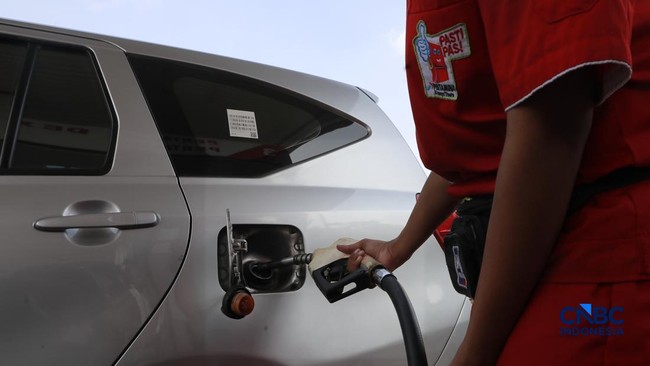
The government estimates that energy subsidies by the end of 2026 will rise to Rp 227.26 trillion. This figure is higher than the average annual energy subsidy realisation during the 2022-2025 period, which reached around Rp 174.73 trillion, or growth of 2.5% each year.
This was revealed in Book 2 of the Financial Note for the 2027 Draft State Budget (RAPBN), quoted on Tuesday (18/8/2026).
The Financial Note document details that the realisation of subsidies for certain types of fuel (JBT) and 3 kg LPG cylinders dominated, averaging Rp 104.28 trillion per year, while the average electricity subsidy realisation reached Rp 70.45 trillion per year, or growth of 12.9%, driven by increased consumption volume, a higher national electrification ratio, and the still-high cost of renewable energy supply.
“Targeted subsidy reform has been pursued gradually, including the implementation of targeted electricity subsidies for the 900 VA R1 household group since 2017, tariff adjustments for non-subsidised groups in 2022, and data collection and digitalisation of subsidised fuel and LPG distribution based on NIK and DTSEN since January 2024,” the document states.
“Under normal economic conditions, energy subsidies and compensation are encouraged to be more targeted, particularly for poor and vulnerable communities. However, the current distribution of energy subsidies and compensation is still not fully on target, so the role of the state budget in carrying out its distribution function still needs to be optimised,” the Financial Note continues.
“Therefore, more targeted energy subsidy and compensation policies need to be encouraged for a fairer state budget. However, efforts to promote targeted subsidies must always consider people’s purchasing power and the right momentum,” it adds.
In the medium term, the government is encouraging the transformation of commodity-based subsidies into subsidies based on beneficiary targets. Energy commodity prices are formed through market mechanisms according to economic prices without government intervention.
“The government plays a role in protecting the purchasing power and energy access of poor and vulnerable communities through the provision of assistance, either in the form of cash transfers or in-kind benefits,” the Financial Note states.
Based on policy evaluation for 2022-2026, the direction of energy subsidy policy in 2027 is focused on three matters:
First, continuing to provide fixed subsidies for diesel fuel and price-difference subsidies for kerosene, accompanied by volume control and supervision of eligible groups.
Second, continuing efforts to transform the targeted 3 kg LPG subsidy into a beneficiary-based scheme integrated with DTSEN, carried out gradually while considering data readiness, infrastructure, and the economic and social conditions of the community.
Third, electricity subsidies are provided to poor and vulnerable households in accordance with DTSEN, accompanied by tariff adjustments for non-subsidised customers. This is in line with the Integrated Social Assistance PRO-KESRA programme, which targets energy assistance for 87 million electricity subsidy recipient customers and 66.4 million 3 kg LPG subsidy recipient customers by 2029.
Source: jawawa.id (https://jawawa.id/newsitem/fuel-lpg-and-electricity-subsidies-in-2026-estimated-to-rise-to-rp-227-trillion-1787046769)
Originally published by CNBC Indonesia (https://www.cnbcindonesia.com/news/20260818142222-4-760308/subsidi-bbm-lpg-listrik-di-2026-diperkirakan-naik-jadi-rp-227-triliun), translated from Indonesian