
Fuel Crisis Worsens: Iranian Government Encourages Civil Servants to Work from Home
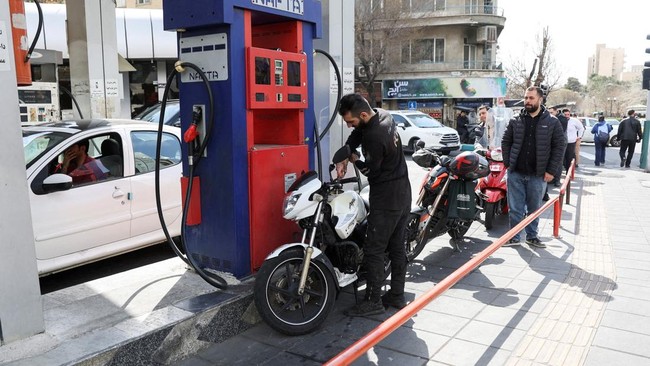
The Iranian government has begun implementing various energy-saving measures amidst a worsening fuel crisis and intensifying economic pressure. One of the policies introduced involves cutting working hours for government employees and encouraging some tasks to be performed from home.
From 23 September until the end of the current Iranian calendar year, which ends in late March 2027, office attendance for government employees is set from 08:00 to 13:00 local time. The remaining contractual working hours are to be fulfilled online from home.
Every government agency is also required to designate one day per week for employees and managers to use public transport when commuting to work. In recent days, several government ministers have even uploaded videos showing them using the metro to commute as part of the campaign.
To encourage the public to abandon private vehicles, metro and Bus Rapid Transit (BRT) services will be free of charge until mid-November. Meanwhile, ageing government vehicles will be gradually replaced with electric, gas-powered, or hybrid vehicles, though this replacement process is expected to take several years.
The reopening of universities is also expected to take place gradually and with limitations, with several lectures being moved to online systems according to government regulations. Government-related offices are also required to turn off heaters and lights after working hours, while schools, universities, healthcare facilities, and other operational services will follow separate arrangements to be announced later.
Iranian President Masoud Pezeshkian previously signed a directive on 12 September requesting government agencies to facilitate remote work for eligible employees. This move aims to reduce the government’s consumption of petrol, electricity, and natural gas. “We have begun shared consumption savings alongside the government,” said Pezeshkian, as reported by Al Jazeera.
This statement positions the work-from-home policy and various saving measures for civil servants as part of an effort aligned with the energy-saving measures the government has requested from the public. Iran is not facing energy issues for the first time; the resource-rich nation has repeatedly experienced crises due to mismanagement and ageing infrastructure.
However, additional pressure from conflicts involving the United States and Israel has forced the government to find more creative ways to address energy shortages. In early September, the Iranian government, facing financial strain, raised fuel prices for the third-tier quota, marking the second increase in less than a year. Under this policy, citizens must pay double for petrol consumption exceeding 110 litres per month, and imported vehicles and certain other car categories only have access to the most expensive fuel tier.
Production and consumption data highlight the immense pressure on supply. During the first five months of the current Iranian year, ending 22 August, petrol production averaged 122 million litres per day, while consumption reached 132 million litres per day, resulting in a daily deficit of approximately 10 million litres. This deficit remained consistent during the first half of the sixth month of the Iranian year.
The situation has worsened following a US maritime blockade of southern Iranian ports, implemented since July, which halted petrol imports that previously helped bridge the supply gap. The blockade has also hindered Iranian oil exports via supertankers through the Strait of Hormuz, further straining national foreign exchange reserves. Nevertheless, Iranian crude oil stored in open waters outside the blockade lines is still being gradually sold to China.
Attacks by the United States and Israel on oil and gas facilities, petrochemical companies, and major fuel depots have also impacted Iran’s energy production and distribution. Iranian Petroleum Minister Mohsen Paknejad stated in early September that most production capacity has now been significantly restored and the process is ongoing.
Amidst inflation that continues to squeeze much of the Iranian population, recent data from the Statistical Centre of Iran also shows the significant impact of the conflict on the economy. Iran’s real Gross Domestic Product (GDP) plummeted by 10.1% year-on-year during the period from late March to late June 2026. During the same period, oil and gas extraction fell by 26.4%.
When the oil sector is included, the industry and mining sector experienced a contraction of 14.7%. The construction sector fell by 6.4%, services as a whole shrank by 4.8%, while transport, warehousing, and communications plummeted by 17%.
The Iranian government has not disclosed how many employees are expected to be affected by the work-from-home policy, nor has it provided information on how these changes might affect the efficiency of public services. However, after decades marked by mismanagement, corruption, and inefficiency within various government-related organisations, some Iranian citizens view the policy as a reflection of a larger issue: state inefficiency.
Source: jawawa.id (https://jawawa.id/newsitem/fuel-crisis-worsens-iranian-government-encourages-civil-servants-to-work-from-home-1790178729)
Originally published by CNBC Indonesia (https://www.cnbcindonesia.com/news/20260923180950-4-770356/krisis-bbm-makin-parah-di-sini-pemerintah-dorong-pns-wfh), translated from Indonesian