
Fuel and Electricity Subsidy Reform: Indonesia Must Address Data Issues
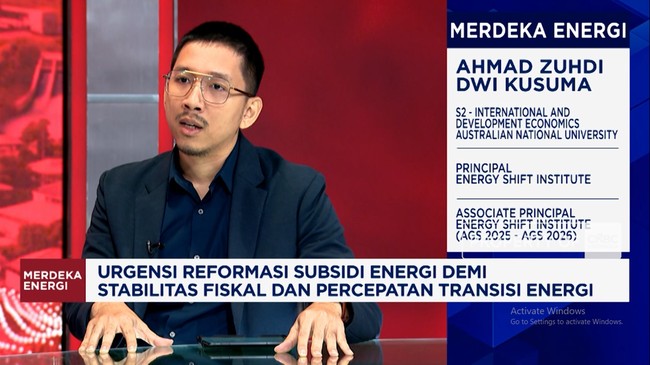
Jakarta, CNBC Indonesia - Global geopolitical uncertainty amid the Iran-United States conflict has impacted the surge in Indonesia’s energy subsidies, given the country’s status as a net importer of oil and fuel. By the end of June 2026, the realisation of energy subsidies and compensation had already reached Rp 233 trillion and is expected to be even larger in 2027.
Director of International Collaboration at INDEF, Imaduddin Abdullah, assessed that the rising risk of energy subsidies is inseparable from the state revenue and expenditure conditions within the State Budget (APBN). Considering Indonesia’s continued dependence on energy imports, the subsidy burden will be determined by global prices, the exchange rate, and domestic consumption.
When oil prices surge, followed by a weakening exchange rate and increasing consumption, the projected burden of energy subsidies and compensation could rise by Rp 200 trillion, potentially reaching Rp 526 trillion. On the other hand, the distribution of Indonesia’s energy subsidies remains poorly targeted, with 42 per cent missing the intended recipients. Furthermore, fossil energy subsidies limit the fiscal capacity to finance national development.
Principal of the Energy Shift Institute, Ahmad Zuhdi Dwi Kusuma, highlighted Indonesia’s dependency on fossil energy and noted that subsidy distribution is focused on commodities rather than on the recipients, making it difficult to achieve accurate targeting. Additionally, the strategy for distributing energy compensation lacks a clear direction, resulting in many ineligible citizens receiving the benefits.
Facing the substantial dependence on energy imports and the heavy burden of subsidies and compensation, Indonesia requires subsidy reform alongside an acceleration of the energy transition.