
Fuel and Airfare Hikes Drive Indonesia's Inflation Phenomenon, Here's the Data
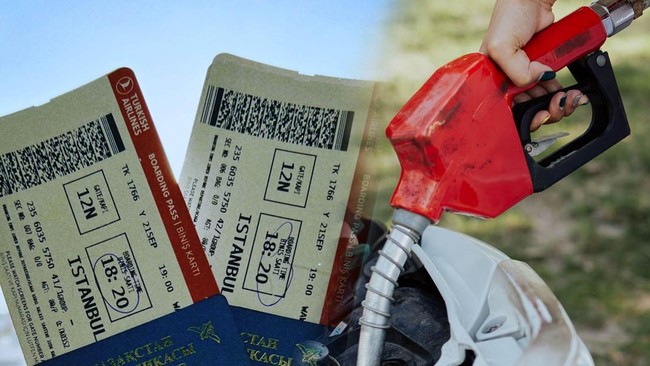
The Central Statistics Agency (BPS) has revealed the main causes of inflation in May 2026. Unlike periods of major religious holidays which are usually driven by surges in food prices, this time inflation was largely contributed by increases in the core group and government-administered prices, including non-subsidised petrol and air transport fares.
Head of BPS Amalia Adininggar Widyasanti stated that inflation in May 2026 remained relatively under control, despite coinciding with the Iduladha momentum.
“For May 2026, year-on-year (yoy) we experienced inflation of 3.08% and month-to-month (mtm) inflation was 0.28%. Compared to Idulfitri, inflation in May 2026 is relatively low,” Amalia said during the Regional Inflation Control Coordination Meeting at the Ministry of Home Affairs (Kemendagri) on Monday (15/6/2026).
According to her, historically, inflation during the Iduladha momentum tends to be lower than during the Idulfitri period. This pattern recurred this year.
“Because if we look historically, inflation during the Iduladha moment is usually always lower compared to inflation during the Idulfitri holiday. So the same thing happened this year, where inflation in May, when Iduladha fell, was relatively lower compared to the Idulfitri moment,” she explained.
Nevertheless, BPS recorded that several components still exerted pressure on monthly inflation. Amalia said the food and beverage group still contributed to inflation due to increased public consumption ahead of Iduladha.
“Some things to note are the causes of month-to-month inflation in May 2026, especially for the food and beverage group, because several foods contributed to the Iduladha celebrations during 2026,” she clarified.
However, when examined based on the components forming inflation, the largest contribution actually came from core inflation and the group of government-administered prices.
“For May 2026, if we look at inflation by components, there is the core component, the government-administered price component, and the volatile price component. And if we observe from this graph, the components that contributed significantly to inflation in May 2026 are the core inflation group and government-administered prices,” Amalia said.
“This means the contribution of inflation from the volatile food component was not as high as from the core component and the government-administered component,” she continued.
Based on her presentation, the core component in May 2026 experienced inflation of 0.22% with a 0.14% contribution to monthly inflation. Meanwhile, the government-administered price component recorded inflation of 0.52% with a 0.10% contribution. The volatile food component also experienced inflation of 0.22%, but its contribution was only 0.04%.
Amalia explained that core inflation was mainly triggered by price increases in several non-food goods and services, including cooking oil, mobile phones, laptops, and vehicle lubricants.
“Among the contributors for the core inflation component and the government-administered price component, for the core inflation component, the causes include the price of cooking oil, mobile phones, laptops, and lubricants, because fuel prices rose, causing engine oil lubricant prices to also increase,” Amalia explained.
Meanwhile, the group of government-administered prices faced pressure from rising energy and transportation costs.
“Additionally, for the government-administered price component, inflation was contributed by the rise in household fuel, petrol, especially non-subsidised, and air transport fares,” she said.
Amalia presented that the government-administered price component showed a strengthening inflation trend in recent months. The increase was in line with rising prices of household fuel, non-subsidised petrol, and flight fares, which became one of the drivers of inflation in May 2026.
On the other hand, the contribution of the volatile food group was recorded as not being as large as the other two components. Although several food commodities such as red chillies, shallots, tomatoes, rice, and green mustard greens still contributed to inflation, their impact was relatively more limited.
“For food commodities during May 2026, we know that their contribution to May inflation was not as high as the core component and the government-administered price component,” Amalia concluded.