
FTUI 62nd Anniversary: Engineering Innovation Key to Sustainable Industry
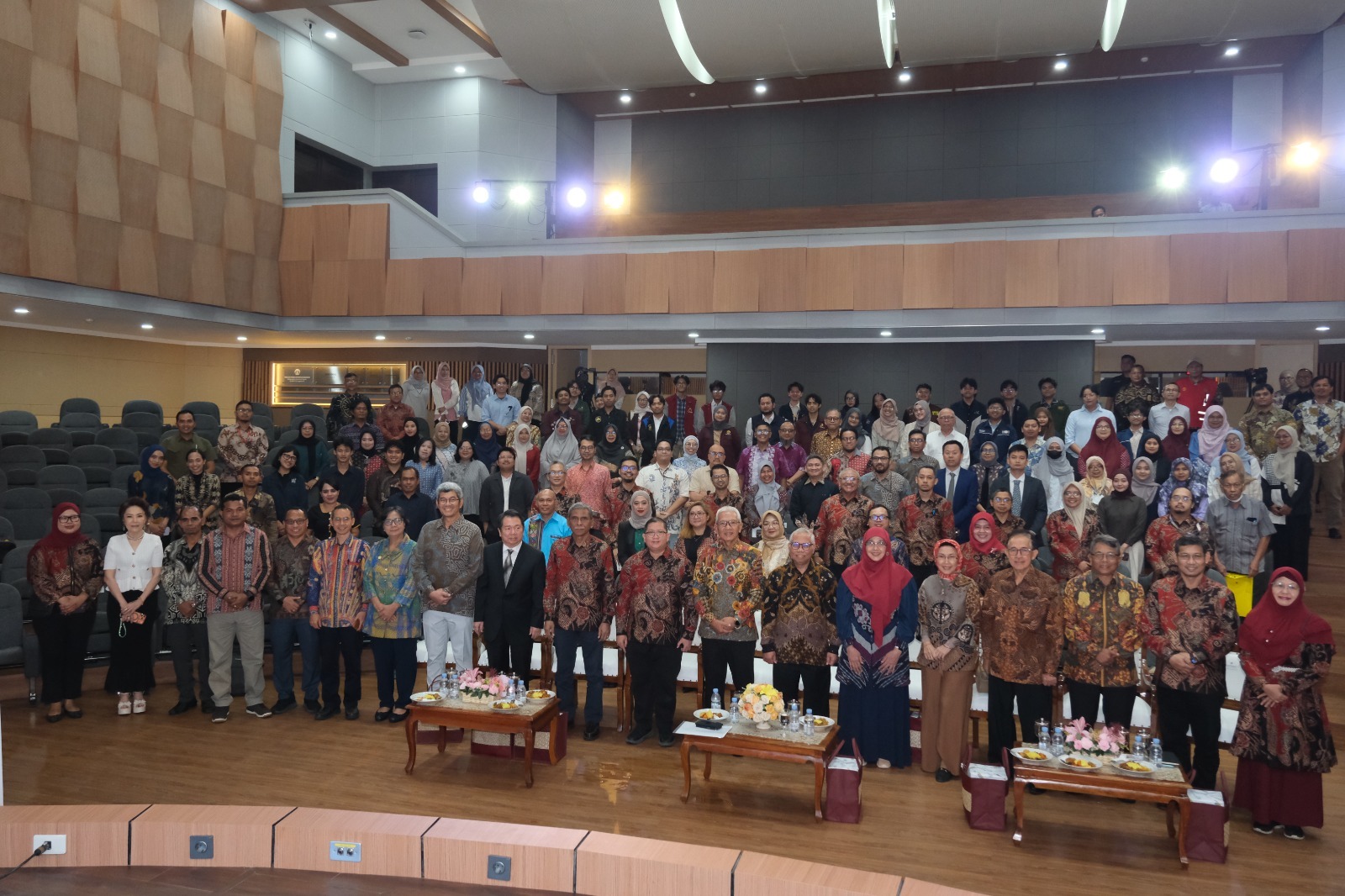
The Faculty of Engineering at the University of Indonesia (FTUI) held its 62nd Dies Natalis celebration at the Smart Auditorium Adikarsa Keteknikan, FTUI Depok Campus, on Friday (17/7). The theme ‘Engineering Innovation for Sustainable Industry and Future Society’ was championed as a manifestation of FTUI’s commitment to bridging adaptive engineering innovation with the needs of sustainable industry, aiming to deliver concrete solutions with a real impact on the welfare of society now and in the future.
UI Vice Rector for Academic Affairs, Prof Mahmud Sudibandriyo, officially opened the event, which was enriched by a public lecture from the Secretary of the Ministry of Investment and Downstreaming/Principal Secretary of BKPM, Mohamad Rudy Salahuddin. Mahmud expressed deep appreciation for FTUI’s long journey, now reaching 62 years, and stressed the importance of interpreting modern engineering activities as an adaptive instrument amidst global changes. ‘Engineering activities at FTUI today are required to deliver innovations that strengthen industrial competitiveness and sustainability aspects,’ he stated.
During the public lecture session, Mohamad Rudy Salahuddin presented material titled ‘National Industry Transformation through Downstreaming and Technological Innovation’. He revealed that the investment realisation performance in the first semester of 2026 showed that downstreaming consistently serves as the main growth engine, contributing around 30 percent or reaching Rp300.1 trillion. The policy does not merely pursue quantitative national economic growth targets but focuses on the quality of investment, which has absorbed 1.4 million direct workers and promoted inclusive economic distribution outside Java, reaching 50.2 percent.
To support energy resilience, food security, and resource-based sovereignty, the government is aggressively accelerating the National Downstreaming Roadmap, which covers dozens of strategic commodities. Rudy emphasised that the success of this roadmap relies entirely on technological mastery and scientific innovation. ‘The downstreaming agenda must not stagnate at the initial processing stage. The greatest added value actually lies in technological mastery, design, and scientific innovation. National downstreaming is impossible to succeed without the full involvement of universities,’ he asserted. He added that the government continues to encourage the strengthening of Triple Helix collaboration by offering aggressive fiscal incentives, such as a Super Tax Deduction of up to 300 percent for industries willing to fund applied research and development on campus.
In response, FTUI Dean Prof. Kemas Ridwan Kurniawan welcomed the initiative and stressed that the essence of the 62nd Dies Natalis theme is the commitment that innovations born from the campus must answer market needs and provide concrete benefits to society. He noted that in the midst of massive changes, the role of engineering higher education institutions has become far more crucial. ‘Campuses must no longer be merely passive places of learning, but must transform into birthplaces of solutions and spaces where science meets the real needs of industry,’ he explained.
Kemas also highlighted FTUI’s outstanding performance, which contributes to the University of Indonesia’s global reputation. This pride is marked by a drastic leap of 106 places to rank 262nd in the world in the QS World University Rankings by Subject for Engineering and Technology. This global reputation is further strengthened by the inclusion of FTUI academics in the prestigious World’s Top 2% Scientists list, affirming the excellence of UI’s engineering research quality at the international level. The agenda also included the symbolic distribution of FTUI Endowment Fund Scholarships to undergraduate students and the signing of strategic Cooperation Agreements with PT Biotech Indonesia, PT Siemens Energy Indonesia, and the University of Timor to accelerate the downstreaming of innovation and the implementation of the Tridharma of higher education.