
From Water Conservation to a Water Culture
Water is often only recognised as important when it becomes difficult to obtain. In reality, water is used every day without much thought regarding its origin or whether its sources will remain available for future generations.
Water does not simply appear from a tap. It results from a long natural process, starting from rain, catchment areas, rivers, reservoirs, springs, to groundwater. All these sources require time to recover. When the environment is damaged and water usage is uncontrolled, water availability becomes increasingly strained.
The challenge to be anticipated is not just how to obtain water when the dry season arrives, but more importantly, how to make water conservation a societal culture.
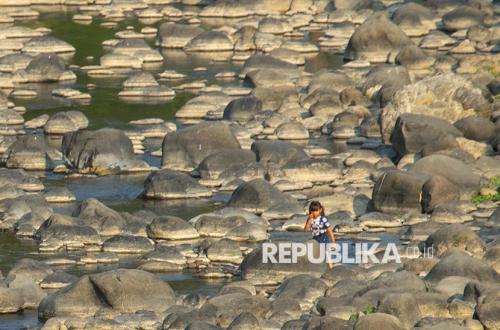
The dry season should serve as a reminder that water is not an unlimited resource. In 2026, the dry season occurred in most parts of Indonesia, with some areas experiencing forest and land fires. The Meteorology, Climatology, and Geophysics Agency (BMKG) also warned of regions experiencing drier conditions than usual. Such conditions should not merely be understood as weather information, but as a warning to use water more wisely.
The problem lies in the fact that current habits involve new movements only being initiated after a problem has occurred. When wells begin to run dry, the community starts searching for other water sources. When water shortages worsen, the Government provides clean water assistance. When drought becomes news, public attention only increases.
This mindset ought to be changed. We should not wait for wells to run dry to learn to save water. We should not wait for people to queue for water assistance to begin conservation. And we should not wait for drought to become a disaster to start acting. The essence is that water management should be conducted before a crisis occurs.
Not Just Water Scarcity
Water issues are not solely about the amount of available water. The problem relates to how water is used, who can access it, and how water sources are protected. Some segments of society still perceive water as something cheap and always available. Consequently, water usage is often inefficient.
Empirical evidence in daily life includes taps being left open, leaks not being repaired promptly, and water being used excessively. Water that is still usable for other purposes is often immediately discarded. These actions may seem small, but when performed by millions of people every day, the amount of wasted water is certainly not small.
On the other hand, not all members of society have equal access to clean water. For families with sufficient economic means, water shortages can be overcome by purchasing water. However, for low-income families, such conditions can become a serious issue.
The UN World Water Development Report 2026 shows that inequality in water access can affect health, education, livelihoods, and community safety. This means that water issues are also matters of social justice and human development.
Water Conservation Has Not Yet Become a Culture
There are several reasons why water-saving behaviour has not yet become a societal habit. First, public awareness is uneven. Many people understand that water must be saved, but have not yet made it a daily habit. Second, education regarding water lacks practicality. The public often hears the message “save water,” but does not always receive simple explanations on how to do so.
Third, campaigns often only appear during the dry season. When the rainy season arrives, attention towards water diminishes. In reality, water-saving behaviour should be practised year-round. Fourth, water education is not strong enough from an early age. Children need to be taught that water is a source of life that must be protected. They need to know more than just the water cycle in their lessons; they need to learn how to use water wisely. And fifth, water management still requires stronger cooperation between the government, the community, the business world, schools, and various social groups.
What needs to change is the way of thinking. This means it is not enough to merely talk about “saving water,” but it is necessary to build a “water culture.” Simply put, a water culture is a societal habit of using water according to need, not wasting water, protecting water sources, and understanding that water must be available not only for today but also for future generations. How can we build such a culture so that water conservation is no longer just a slogan?
This culture can start at home. At home, simple actions that every family can undertake include turning off taps when not in use, using sufficient water when bathing and washing, repairing leaks, and reusing water that is still suitable for certain purposes.
In schools, a water culture can be built through habituation. Students can be encouraged to check taps, maintain the cleanliness of water sources, create water-saving campaigns, and learn to calculate how much water can be saved through behavioural changes.
In offices and public facilities, water usage also needs attention. Leaks must be repaired immediately, and water use must be carried out efficiently.
Places of worship can also serve as spaces for community education. Messages about protecting water can be delivered as part of care for life and the environment.
In this way, water conservation will no longer be just a slogan.
What the Government Must Do
Changes in community behaviour require support from government policies.
Source: jawawa.id (https://jawawa.id/newsitem/from-water-conservation-to-a-water-culture-1788152197)
Originally published by Republika (https://analisis.republika.co.id/berita/tkm7am393/dari-hemat-air-menjadi-budaya-air), translated from Indonesian