
From Waste Piles to Industrial Energy
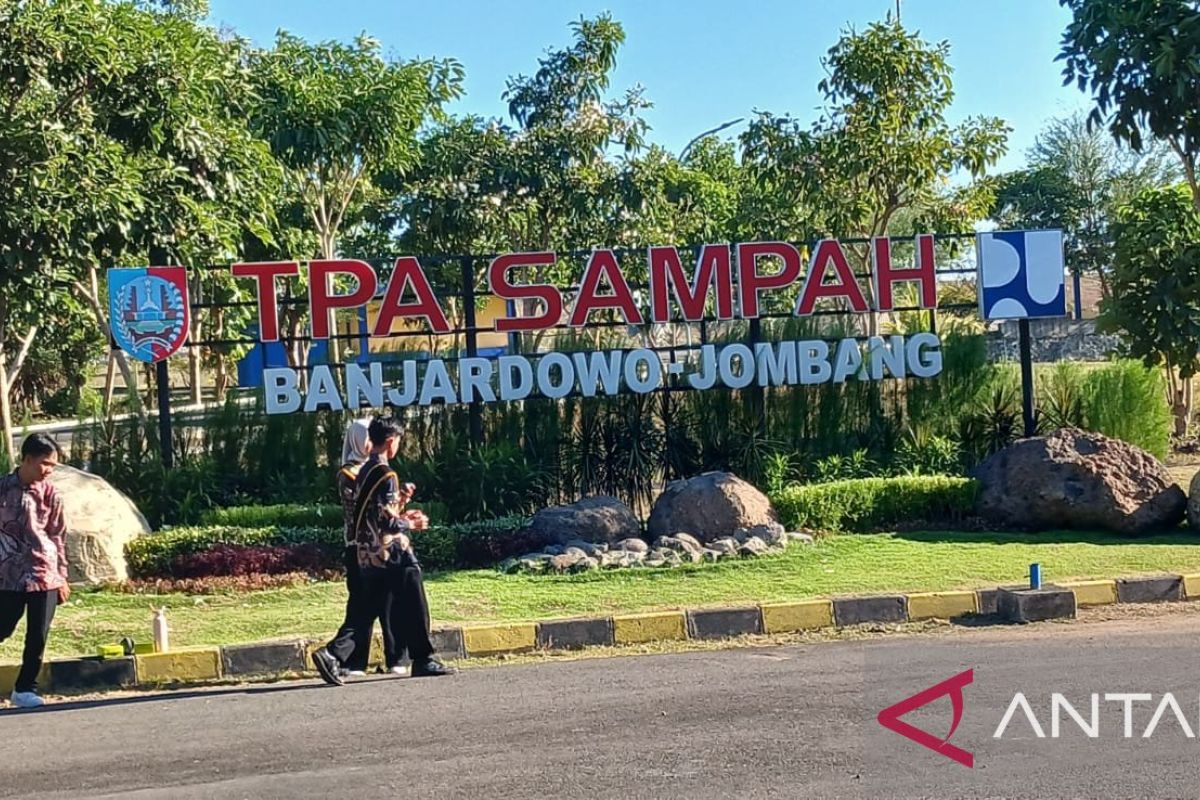
Jombang (ANTARA) - The roar of machinery occasionally breaks the atmosphere at the Banjardowo final processing site (TPA) in Jombang Regency. Among the heaps of rubbish arriving daily from all corners of the region, a number of officers sort through materials that can still be put to use.
For some people, a pile of rubbish may mark the end of an item’s life cycle. In Jombang, East Java, however, waste is beginning to be seen from a different angle: as an alternative energy source capable of delivering new benefits.
The Jombang Regency Government, through the local Environmental Agency (DLH), is developing refuse derived fuel (RDF) technology, which processes waste into an alternative fuel that cement factories can use to replace part of their coal consumption.
RDF is one solution to waste processing, which remains a major undertaking for Jombang Regency and indeed for the whole of Indonesia. Waste is processed into a product with commercial value.
The head of the Jombang Regency DLH, Miftahul Ulum, explained that the RDF technology makes use of plastic waste and various types of inorganic waste that previously had no economic value.
These materials come from sorting processes carried out by communities, waste banks, scrap traders, and Reduce-Reuse-Recycle waste processing sites (TPS3R) across Jombang Regency.
Under this programme, waste that previously ended up in the mountains of the landfill now has a second chance to become an energy source for the industrial sector.
The effort has not been a quick one. Over roughly the past year, the Jombang DLH together with the cement industry has carried out a series of trials to ensure the quality of the RDF produced meets the industry’s requirements.
The Jombang Regency DLH has already conducted trials processing waste into RDF, an alternative fuel for cement plants. The results have been checked by the cement factory, and from a calorific standpoint the output is good.
The test results show promising prospects. Nevertheless, the path towards large-scale production still requires additional facilities and equipment.
The Jombang DLH still needs shredding machines, drying machines, and equipment to separate organic from inorganic waste so that production can be carried out on a mass and sustainable scale.
Meanwhile, waste management in Jombang does not stop at RDF. Organic waste entering the Banjardowo landfill is also processed into compost to meet the needs of regional government parks, eco-schools, and the “eco pesantren” programme.
These steps form part of efforts to build a circular economy, in which waste is no longer viewed as residue to be discarded but as a resource that can be reused.
The various sorting and waste processing programmes involving the community are also beginning to show results. The Jombang Regency DLH has recorded a reduction in waste generation of around 20 to 27 tonnes per day.
That figure provides breathing room for the Banjardowo landfill, which is currently the only final processing site in Jombang Regency.
Environmental management at the site is carried out strictly. Leachate is processed through a special installation before being discharged into the surrounding environment, while a “controlled landfill” system is applied to reduce odours and other environmental impacts.
According to the DLH’s calculations, the capacity of the Banjardowo landfill is estimated to be able to accommodate waste for another eight years. However, that service life could be extended further if waste reduction programmes and RDF development run optimally.
Amid rising waste volumes, in step with population growth and economic activity, Jombang is attempting to offer a new perspective: that rubbish is not always the end of a story.
In the hands of technology and community awareness, some waste can instead begin a second life as energy that drives industry.
For the Jombang Regency Government, today’s visible results did not come about overnight. Waste processing facilities began to be built in 2020 and started operating in 2022. Various improvements have been made so that incoming waste does not all end up as landfill.
The government must also think hard about reducing the rubbish that piles up every day. Most of the waste comes from households, with the remainder contributed by the business sector and others. Every day, around 500 tonnes of waste is generated from various sectors, including households.