
From Warming Seas to Collapsing Ice
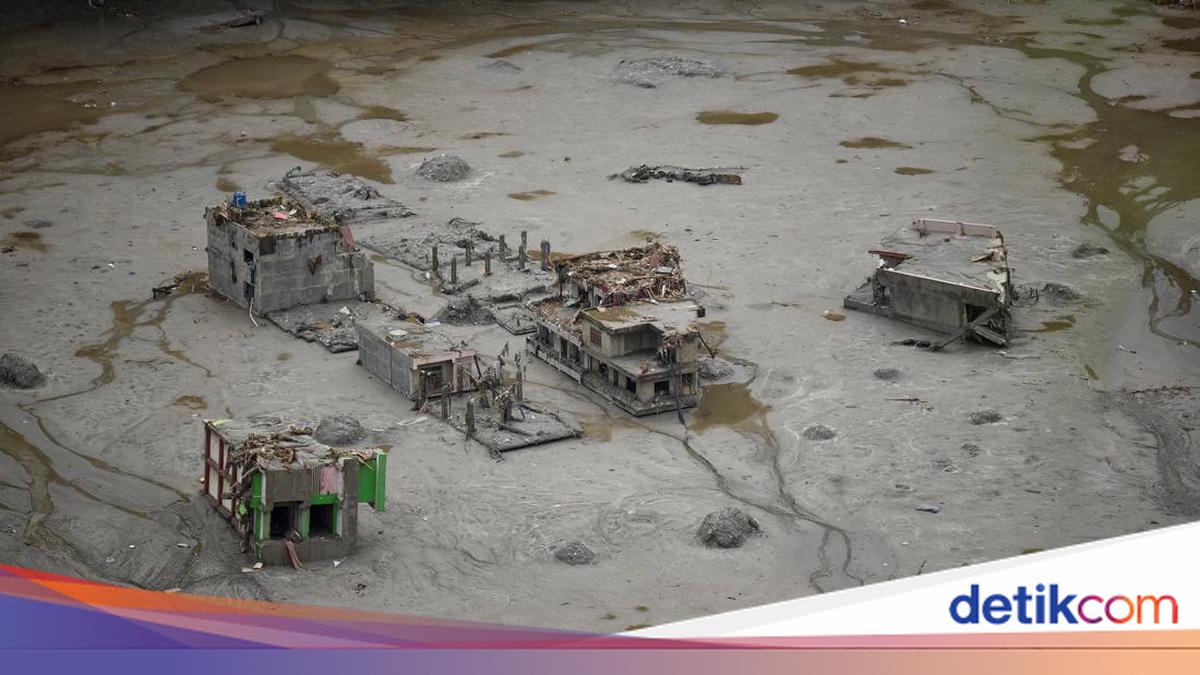
The massive flood that struck Nepal on 26 August 2026 brought a different narrative regarding climate disasters. There was no extreme rainfall sufficient to explain the arrival of the waves of water, mud, rocks, and ice that surged so powerfully from the Himalayan region. Subsequent satellite imagery analysis revealed something even more alarming: the base of a glacier collapsed from an altitude of approximately 5,200 metres, falling more than one kilometre into the valley, triggering ice and rock landslides.
Recent analyses even show that seismic signals, initially thought to be an earthquake, actually originated from this collapse. The Italian National Institute of Geophysics and Volcanology (INGV) explained that ice and rock material temporarily dammed the Lhende Khola River. When this natural dam burst, water, mud, rocks, and other materials were released in massive quantities towards downstream areas.
The Nepal event provides us with another way to understand global warming.
Until now, global warming has often been imagined simply: air temperatures rise, days feel hotter, and seasons become unpredictable. While all of that is true, the issue is actually far broader. Global warming is altering a massive system, ranging from the atmosphere above our heads and the oceans covering most of the Earth’s surface, to the ice sheets atop mountain peaks.
The ocean is one of the best places to observe these changes. Most of the excess heat resulting from Earth’s energy imbalance is stored in the oceans. The World Meteorological Organization (WMO) reports that global ocean heat content continues to rise. In fact, over the last two decades, the oceans have absorbed additional heat annually estimated at approximately 18 times the total annual human energy consumption worldwide.
In Asia, ocean heat reached record levels again in 2025. Marine heatwaves even covered more than 10 million square kilometres during the July-September 2025 period. Warming oceans are not merely an issue for fish, coral reefs, or fishermen. The ocean is a primary energy source for the atmosphere. The warmer the sea surface, the greater the potential for evaporation. A warmer atmosphere is also capable of holding more water vapour. Under favourable atmospheric conditions, this combination of energy and moisture can intensify extreme rainfall and provide fuel for tropical storms.
However, we must be cautious in stating that global warming automatically increases the number of cyclones. Climate science is not that simple. What is becoming clearer is that warmer oceans provide an environment that allows certain cyclones to bring heavier rain and reach greater intensities.
We have recently seen a very close example. The WMO noted Cyclone Senyar in 2025 as the first known system to reach tropical cyclone intensity in the Malacca Strait. This event impacted more than 10 million people in Indonesia and Malaysia.
While warming in the ocean manifests through ocean heat and atmospheric energy, the face of change in high mountains is different. In the Himalayas, it is the world of ice that is changing.
Glaciers in the high mountain regions of Asia continue to shrink. Rising temperatures not only accelerate ice melt but can also alter the stability of the mountain environment. Permafrost—ground and rock frozen for long periods—can thaw. The ice situated between rock crevices is also diminishing. Slopes that were previously relatively stable can become more fragile.
Scientists analysing the Nepal event warn that climate change is creating conditions that can make rocks and ice in high mountains increasingly unstable. However, they are also being cautious: there is not yet enough evidence to state that global warming directly caused the collapse of the Nepal glacier on 26 August.
This caution is important. Not every flood, storm, landslide, wildfire, or glacier collapse can simply be labelled as “caused by climate change.” Every disaster has its own mechanism and trigger. However, climate change is altering the fundamental conditions in which various natural processes occur. Like a large machine, we are increasing its operating temperature. Each component then responds differently.
A warmer atmosphere can increase the potential for heatwaves and extreme rainfall. Warmer oceans store greater energy and experience marine heatwaves. Melting land ice contributes to rising sea levels. Glaciers retreat. Permafrost thaws. The water cycle changes. In one region, extraordinary rainfall occurs, while other regions face prolonged droughts.
This is why global warming does not have a single face. Sometimes it arrives as sweltering air. Sometimes as extraordinarily warm seas. Sometimes as much heavier rainfall. Sometimes as storms gaining energy from warm waters. In the heights of the Himalayas, this change can manifest in forms we previously rarely imagined: ice and rock losing their stability.
The Nepal disaster ultimately reminds us of something fundamental. When the Earth’s average temperature rises, it is not just the numbers on a thermometer that change. What is changing is the very way Earth’s systems function.