
From Vladivostok to Indonesian Energy Independence
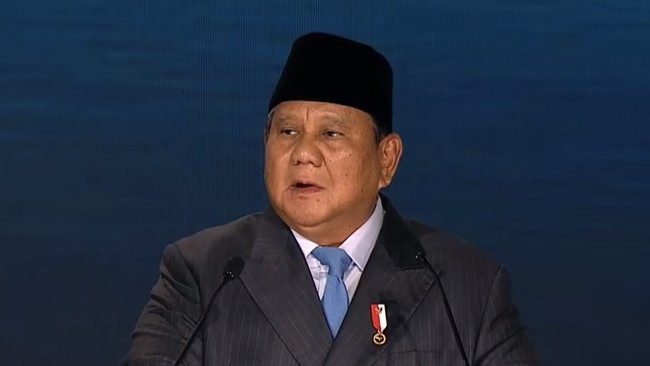
President Prabowo Subiability’s visit to Vladivostok, Russia, in early September 2026 carries significance far beyond a standard diplomatic agenda. His presence as a primary guest of honour at the 11th Eastern Economic Forum demonstrates that Indonesia is increasingly influential in the shifting global economic landscape, particularly within the Asia-Pacific region.
In his speech, President Prabowo presented a compelling idea: the Pacific Ocean is not a divider between Indonesia and Russia, but rather a highway connecting the two economies. This statement serves as an economic vision; geographical distance should not be a barrier when both nations possess complementary interests, resources, technology, and markets.
Indonesia possesses a large population, a growing market, rich mineral reserves, palm oil, fisheries, coffee, and renewable energy potential. Russia offers energy reserves, wheat, fertilisers, engineering capabilities, industrial technology, and extensive experience in nuclear energy development. A meeting of these two powers could open vast opportunities for cooperation, provided they are translated into concrete projects that benefit the public.
This meeting between President Prabowo and President Vladimir Putin marks the second encounter between the two leaders in 2026. The intensity of this communication suggests that Indonesia-Russia relations are moving towards a more strategic partnership, with President Putin even identifying Indonesia as a key partner in the Asia-Pacific.
Trade relations between the two nations are also showing positive development. According to President Putin, trade volume between Indonesia and Russia increased by approximately 12 per cent in the previous year. While this is a strong starting point, significant room remains to expand trade, investment, and industrial cooperation.
From a business perspective, the energy agenda is one of the most critical components of the President’s visit. Indonesia requires a stable, affordable, and sustainable energy supply to support economic growth. Energy is not merely a domestic necessity; it determines production costs for factories, transport, logistics, agriculture, data centres, and the competitiveness of SMEs.
President Prabowo has opened opportunities for cooperation with Russia to enhance the productivity of oil and gas exploration, production, and processing. Indonesia also requires investment and expertise in renewable energy, smart grids, and nuclear energy for peaceful purposes, including both modular and full-scale technologies.
This direction is commendable. Amidst geopolitical uncertainty and fluctuating commodity prices, Indonesia must avoid dependency on a single energy source, supplier, or trade route. Diversifying partners is a vital part of maintaining national resilience.
However, energy cooperation should not position Indonesia solely as a buyer. We must transition from a buyer-seller relationship towards a production partnership. Every investment must bring technology, build national industrial capacity, involve Indonesian experts, and create opportunities for local companies.
Four key agendas can be developed. First, cooperation in increasing oil and gas production must involve Indonesian contractors, equipment suppliers, service companies, and professionals. Thus, incoming investment creates a multiplier effect for the national economy.
Second, cooperation in renewable energy and smart grids should be directed towards building domestic supporting industries. Indonesia should not merely install imported technology; we must be capable of producing components, mastering maintenance, developing software, and fostering national energy technology companies.
Third, if nuclear cooperation for peaceful purposes proceeds, safety must be the primary principle. Indonesia needs to prepare robust regulations, human resources, independent oversight systems, waste management, and transparent public communication. Nuclear energy is not just about building power plants, but about building a scientific ecosystem and a responsibility towards future generations.
Fourth, young entrepreneurs and SMEs must find a place within the energy project supply chain. They can play roles in digital technology, construction, engineering services, logistics, material processing, cybersecurity, training, and maintenance. Strategic projects will provide broader benefits if they are not handled solely by a handful of large corporations.
The President’s visit also yielded concrete opportunities outside of energy. Pupuk Indonesia has signed a joint study to explore investment in a urea fertiliser plant in Vladivostok. The region’s position facing the Pacific is considered strategic due to its proximity to Pupuk Indonesia’s primary markets.
Such cooperation could strengthen fertiliser security and national industry. However, calculations must be made carefully, considering raw material availability, energy costs, logistics, market certainty, ownership structures, and the benefits returning to Indonesia.
Russia also offers technology for vessels over 102 metres long that can process fishery products directly. This offer is attractive to Indonesia as an archipelagic nation. The issue in our fisheries sector is not just the volume of catch, but also quality, storage, processing, and added value.
If this technology can be studied and developed together, Indonesia has the opportunity to reduce post-harvest losses, improve export quality, and increase fishermen’s income. It would be even better if cooperation does not stop at purchasing vessels, but also encompasses joint production, design transfer, and workforce training.