
From Vacancies to Value: Transforming Indonesia's Migrant Worker Model
Jakarta (ANTARA) - The global labour market offers hundreds of thousands of vacancies to Indonesian migrant workers, yet most have not yet resulted in actual placements. For Indonesia, the challenge is no longer just about finding markets, but rather converting labour demand into suitable, higher-value employment.
According to the Indonesian Migrant Worker Protection Information System (SIP2MI) as of 20 September 2026, there are 292,471 active overseas job vacancies. Of these, 216,236 vacancies, or 73.93 per cent, remain unfilled. This figure reveals a gap between identified demand and the placement system’s ability to convert that demand into real jobs.
This gap cannot be viewed as a single issue. Some vacancies may be stalled due to recruitment processes, documentation, destination country requirements, or administrative capacity. In Turkey, for example, approximately 30,000 verified labour requests have not been fully met because visa processing capacity is only around 12,000–15,000 per year.
The number of unfilled vacancies remains significant as it indicates areas within the placement process that need investigation. The Deputy Minister for the Protection of Indonesian Migrant Workers, Christina Aryani, emphasised that worker preparation does not end with training; competence must be linked to industry needs and result in placement.
This means the critical focus is no longer simply how many prospective workers are trained, but how far that training leads to placement in jobs that specifically require those competencies. At that point, the quality of the system can be measured by the outcomes following each stage, rather than just the number of programmes implemented.
Changing how data is interpreted also prevents policy from becoming trapped by two easily quantifiable metrics: the number of training participants and the number of placements. While both remain important, they are insufficient to determine whether market needs are truly being met by workers with the correct competencies.
Stage-by-stage data will make these gaps easier for the government and placement partners to identify and address.
Connecting Demand
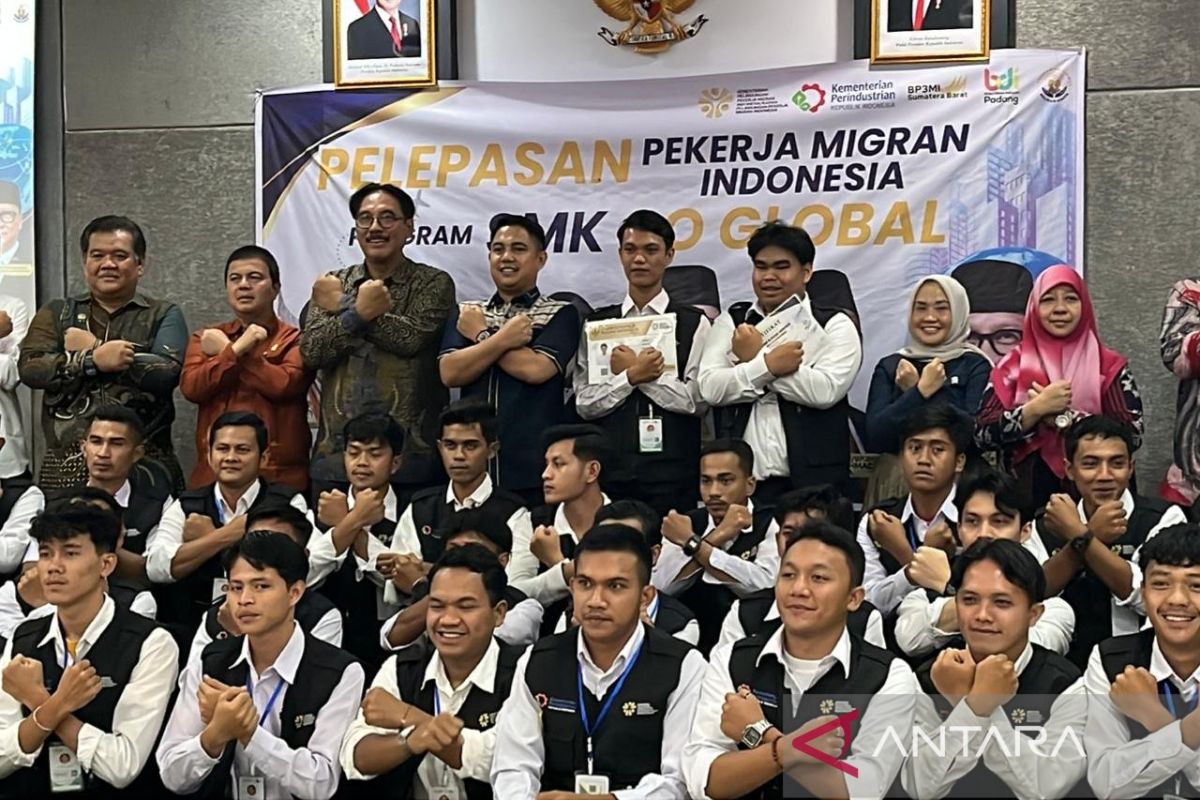
This shift in approach is already visible through the ‘SMK Go Global’ initiative. As of 17 September 2026, 18,110 participants have registered and 4,601 have undergone training, with a target of 40,000 participants by 2026. Training includes language skills, technical skills, and certifications tailored to the needs of destination countries.
The Minister for the Protection of Indonesian Migrant Workers, Mukhtaruddin, stated that curricula and training must be designed based on labour market demand data rather than estimates. Mapping includes sectors, positions, destination countries, qualifications, and required competencies.
The premise of this policy is clear. If labour needs form the basis of competency preparation, then subsequent results must also be traceable back to those needs. For every labour request, it should be possible to know how many candidates were prepared, how many met the qualifications, and how many were actually placed.
Such a sequence of data is vital because it reveals exactly where the process stalls. If participants have met the competency requirements but have not departed, the obstacle may no longer be training.
If vacancies are available but candidates do not meet the requirements, the issue lies in labour readiness. If both requirements are met but placement is delayed, administrative factors or destination country regulations become the determining factors.
In this way, the 216,236 unfilled vacancies are not merely missed opportunities. That figure can serve as a gateway to identifying which parts of the process, from demand to placement, still require improvement.