
From Trees to Wildlife: Children in South Solok Learn to Protect Nature
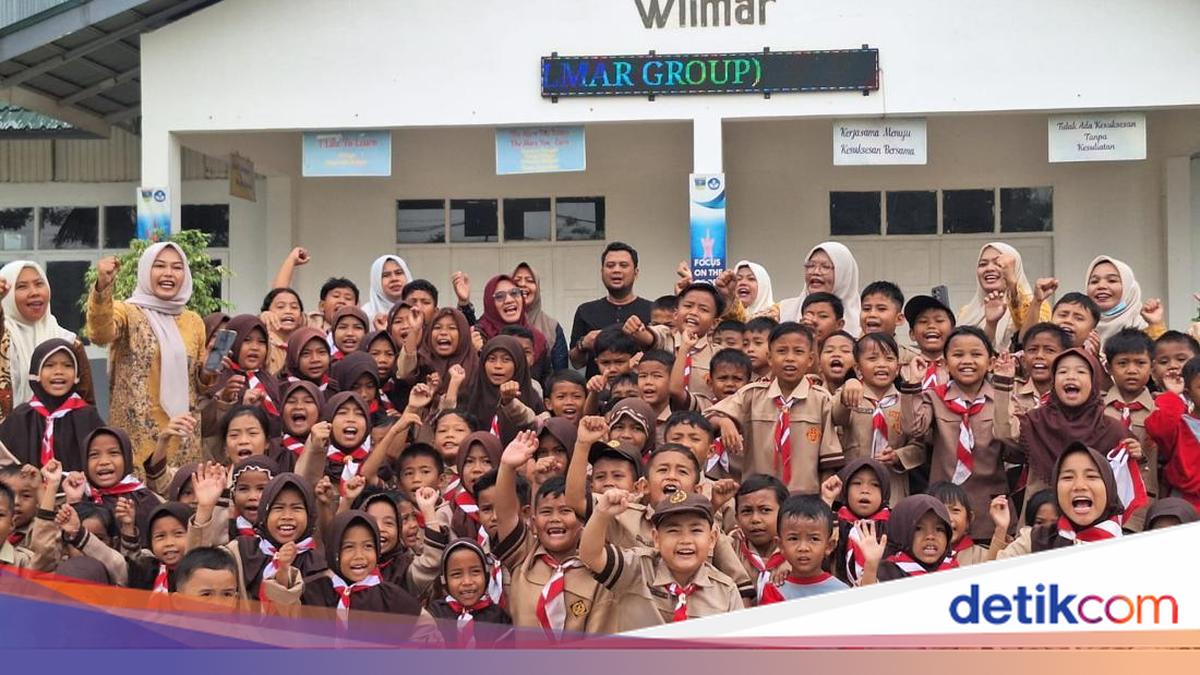
That morning, the atmosphere at a school in South Solok felt more lively than usual. Children gathered with curiosity. On this day, they were not just learning inside a classroom, but were taken outdoors to encounter nature directly.
There were trees to be planted, seedlings to be watered, and stories about wildlife that they had previously only seen in books or on television screens.
The presence of Panji Petualang made the activity even more engaging. Known as a wildlife enthusiast, Panji invited the children to discuss plants and wild animals in a simple manner. He began the session with questions.
“Which tree has a beard?” Panlen asked.
“Rambutan,” the children replied.
“Correct, today we are going to plant rambutan trees,” said Panji.
The questioning continued regarding the benefits of the trees they were planting.
“What is the function of the trees we planted today for the future?” Panji asked.
“So that living creatures can breathe,” one child answered.
The answer sounded simple. However, from that point, the children began to understand that planting trees is not just about putting seedlings into the soil. There are benefits that living creatures will experience when those trees grow and are cared for.
The children then took turns planting and watering the seedlings. They learned that plants require attention to grow.
Their curiosity about Panji did not end there. Some children then asked about his experiences facing wild animals, including how he catches snakes.
Panji shared that his closeness to animals began in childhood. At that time, he admitted he did not have many friends, so he chose to befriend snakes.
This closeness has continued to the present day. Furthermore, Panji’s experiences with wildlife have not always been safe; he has been bitten by both snakes and crocodiles.
These stories made the children even more enthusiastic. They listened to Panji’s experiences while learning that knowing wildlife does not mean one must capture or disturb it.
Learning from the Forest
The activity with Panji was a unique experience for the students of SD PT KSI YPTSS, South Solok. They had the opportunity to learn directly about plants and animals within the environment of the forest conservation and palm oil plantation area owned by PT Kencana Sawit Indonesia, part of the Wilmar Group.
The Headmaster of SD PT KSI YPTSS, Giva Anis Gia, stated that the students were very happy to participate in this environmental education activity. The children learned to plant, water, and care for trees so they can grow well.
“The children seemed very happy and enthusiastic to join Panji and the team in this environmental education activity. Through today’s activities, they now know how to plant, water, and care for trees properly so they remain sustainable and beneficial to the environment,” said Giva.
According to Giva, learning from nature provides lessons that are different from classroom activities. Children were also introduced to types of animals that fall under conservation or protected categories.
They are expected to understand that wildlife has its own habitat. If they encounter such animals in the future, they should not disturb or kill them.
“In school, lessons usually follow the official curriculum, but in this forest, the children receive direct lessons that are not available in school. One of them is practising how to plant trees properly and care for them. Additionally, the children now know which types of animals are categorised as protected or under conservation,” he said.
It is hoped that these lessons will be carried home by the children. They can share what they have learned with their parents, siblings, and friends.
“We sincerely hope that the arrival of Panji and his team can serve as a great motivation for the children so that in the future, they become more caring and active in looking after the environment around them, including nature, plants, and the surrounding ecosystem,” said Giva.
Tree Planting as a Habit
Tree planting is not an activity performed only during special visits. The school has a tree-planting agenda involving Year 1 students every few months.
Forest fruit seedlings are prepared to be planted alongside the students. The children are taught how to plant and care for them.
As a result of these activities, the school environment now features several trees, such as mango, durust, and Jamaican jambu. Some trees have even grown to approximately 2-3 metres.
Children are also encouraged to manage the school’s vegetable garden. They learn to plant, maintain, and harvest vegetables, with the harvests being taken home.
These activities ensure that children do not just learn about plants through theory, but see the process themselves, from the seedling being planted to producing something useful.
Children Growing Close to Nature
SD PT KSI YPTSS has 452 students for the 2026 academic year. The students are children of plantation workers living around the area.
The significant number of students requires the school to implement two teaching shifts. Twenty-two study groups are divided into 11 groups in the morning and 11 groups in the afternoon.
The school’s location, far from urban areas, provides the children with a different experience. Giva observed that the students are very enthusiastic when engaging in outdoor activities.
“The students here are very enthusiastic and spirited whenever new things are taught, especially because our school location is far from urban areas. Interestingly, the children’s enthusiasm for gadgets is not as high as children living in the city. They are far more enthusiastic and eager to perform direct activities in the open air like this,” said Giva.
To support student mobility, six school buses are provided free of charge to transport and collect children from their homes to the school.
Source: jawawa.id (https://jawawa.id/newsitem/from-trees-to-wildlife-children-in-south-solok-learn-to-protect-nature-1789527690)
Originally published by detikcom (https://news.detik.com/berita/d-8664708/dari-pohon-hingga-satwa-anak-solok-selatan-belajar-menjaga-alam), translated from Indonesian