
From Tradition, Nyobeng Becomes a Border Tourism Potential
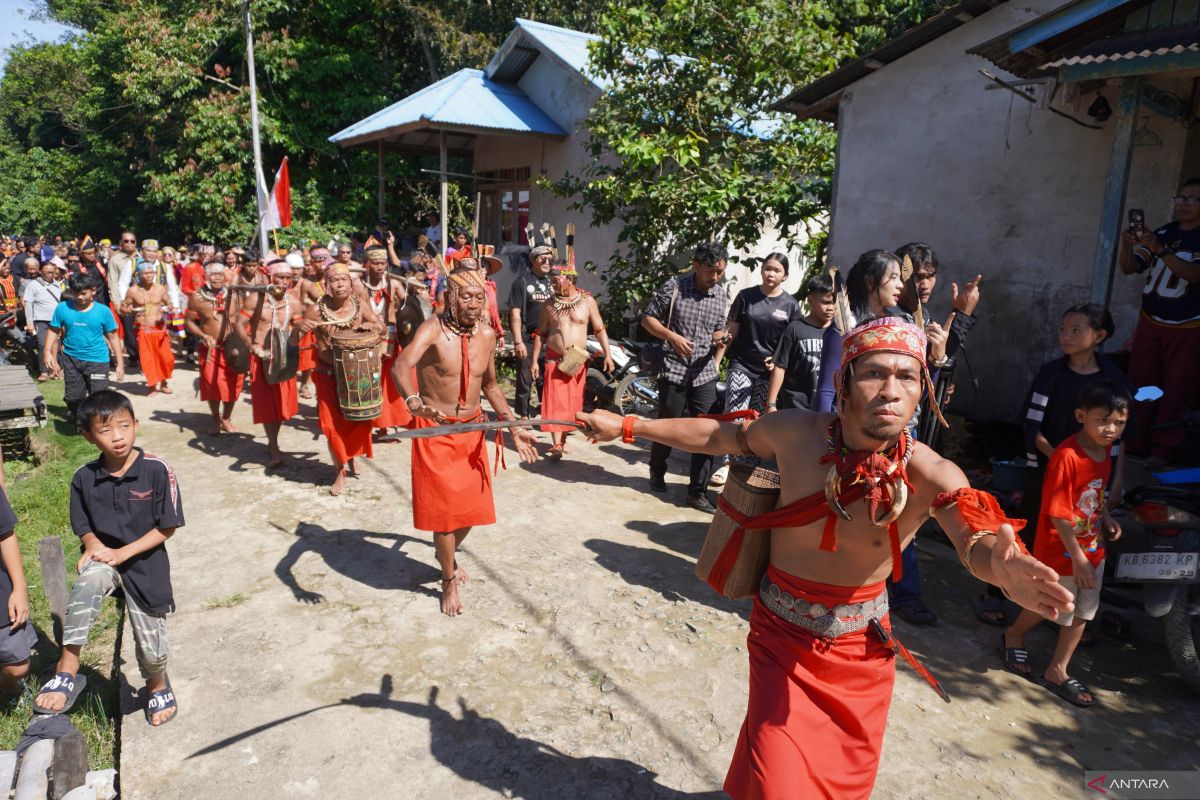
In the middle of the village stands the Rumah Balok, a traditional longhouse that serves as the centre for various Nyobeng rituals. The scent of dew still lingers among the green hills surrounding Sebujit Baru Hamlet, Hlibuei Village, Siding District, Bengkayang Regency, West Kalimantan. The cool morning air enveloped the small settlement in the Indonesia-Malaysia border region as residents began leaving their homes one by one. Some villagers were seen carrying farming tools, walking along footpaths towards fields that stretch across the hillsides. For the Dayak Bidayuh community in this area, life still follows the rhythm of nature passed down through generations. The fields are not merely places to grow crops; they are where identity and cultural values are cultivated and preserved across generations. Paddy planted in these fields is the community’s main source of life, but more than that, the harvest also marks the end of one life cycle and the beginning of the largest cultural celebration of the Dayak Bidayuh people: Nyobeng. Located just a few kilometres from Sarawak, Malaysia, this tradition did not emerge as a contrived tourist attraction. Nyobeng grew naturally from the agrarian life of a community that has depended on farming for hundreds of years. When the harvest season ends and the paddy is safely stored in barns, the community enters a period of gratitude expressed through a traditional ritual known as gawai, during which Nyobeng is performed. Novel Andika, the head of Sebujit Baru Hamlet, explained that Nyobeng is always closely tied to the end of the harvest season. ‘Nyobeng is held after the community finishes harvesting. It is a form of gratitude for the harvest given by God and a tribute to the ancestors who have protected the village and the people’s lives,’ he said. For the Dayak Bidayuh, a successful harvest is not solely the result of human effort but also part of a harmonious relationship between humans, nature, and the ancestors believed to maintain life’s balance. Therefore, gratitude is not celebrated individually but as a collective community event. At the heart of the village stands the Rumah Balok, a traditional house that serves as the focal point for various Nyobeng rituals. The decades-old wooden structure bears witness to the long history of the Dayak Bidayuh community in Sebujit Baru. Inside, elders lead a series of meaningful processions. The rhythmic sound of gongs accompanies traditional dances. The younger generation wears full traditional attire, while the elders gather to recount ancestral stories to their children and grandchildren. It is here that Nyobeng plays its role as a bridge between generations. The tradition provides a collective space to strengthen social bonds, preserve cultural memory, and ensure that ancestral values remain alive amid the currents of modernisation reaching even this border region.