
From trackside shacks to new homes, Jakarta families weigh what comes next
From trackside shacks to new homes, Jakarta families weigh what comes next
Indonesia wants to relocate families living beside railway tracks to newly built housing, starting with Jakarta before expanding the programme nationwide.
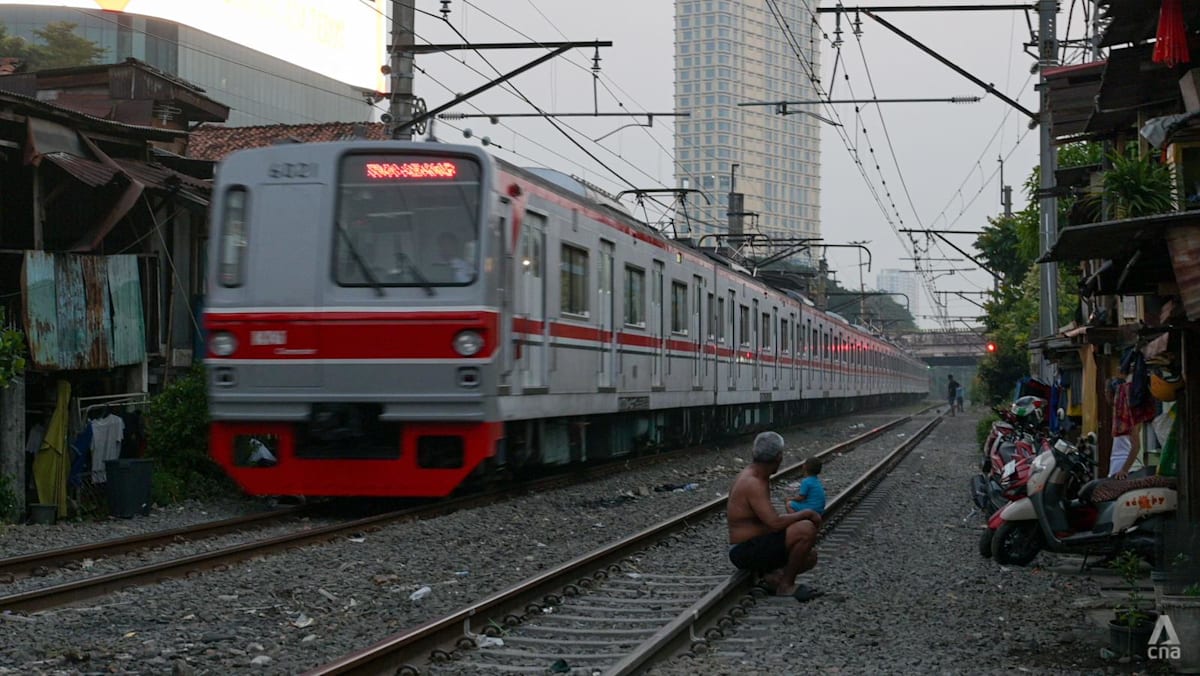
JAKARTA: For years, families living in shack houses beside active railway tracks in Central Jakarta’s Tanah Abang district timed their lives around passing trains.
Conversations in their homes - most of which are built less than 5m from railway lines - are interrupted by the rumble of carriages, which during rush hour can be as frequent as every five to 10 minutes.
Children playing near crossings or on tracks against the backdrop of Jakarta’s skyscrapers know to step aside every time they hear a distant rumbling noise - a signal that a train is about to pass.
Residents whom CNA spoke to said they have become accustomed to the noise and danger of living next to active railway tracks.
Drink seller Tuti Lestari, who has lived beside the tracks since birth, said she does not mind her current living situation.
But the 47-year-old acknowledged that accidents do happen, especially among those unfamiliar with the area and train schedules.
“There are … accidents. If someone doesn’t know the routes and just walks (across the tracks),” said Tuti.
She added that there is about one accident per year, resulting in a person being killed while crossing the railway tracks.
The issue of people living next to active railway tracks gained national attention after President Prabowo Subianto visited railside settlements in Pasar Senen, Central Jakarta in March.
During his visit, Prabowo listened to the residents’ aspirations and pledged to quickly provide proper housing for them.
“This afternoon, I walked around the residential area along the railway tracks in the Senen area, Central Jakarta. It’s located about 3km from downtown Jakarta,” Prabowo said on his social media account then.
“Having heard the aspirations of the local community, God willing, we will quickly build decent housing for the people in that area.”
The following day, an official from the state-owned Indonesian Railway Company (KAI) said that Prabowo had instructed it to compile an inventory of residential areas that sit along the railway tracks.
“Starting in the Pasar Senen area and expanding to all KAI-managed lines with similar conditions as a basis for targeted development,” said Bobby Rasyidin, who is president director of the firm.
The government has estimated that thousands of Indonesians live along these railway tracks, though no official figure is available. Trains are among the main modes of transportation on Indonesia’s most populous island of Java, as well as in parts of Sumatra and Sulawesi.
By the end of June, dozens of households from Pasar Senen had started moving to a new government-built settlement nearby, and the railside area they had previously occupied had been cleaned up, said Franoto Wibowo, Jakarta’s operational manager for KAI.
NEW HOUSING AND RELOCATION PROGRAMME
The relocation programme, so far available only in the Senen area of Central Jakarta, is intended to improve residents’ safety and quality of life, said Jakarta’s governor spokesperson Chico Hakim.
There are plans to include those from other railside settlements in the future, he noted, adding that the programme is a joint priority between the central and regional governments.
“New housing is not only a place to live, but also part of urban planning that is more humane, inclusive and sustainable,” he said.
The first relocation phase in Senen provides 324 landed units at Hunian Senen, located on a 1.61ha land on Kramat Raya street in Central Jakarta. It is situated about 2.5km from the residents’ original railside settlements.
Each replacement unit is equipped with two single beds, a wardrobe and a fan. The units measure 16 sq m each and meet the criteria for a habitable home.
Environmental property expert Syarifah Syaukat from property consultant Knight Frank said that under Indonesian law, a habitable home or dwelling is defined as a residence that meets the minimum building area requirements, building safety requirements, and the health and safety of its occupants.
This includes criteria such as building durability and safety with qualified materials, a minimum dwelling area of 7.2 sq m per person, access to drinking water and proper sanitation as well as adequate lighting and ventilation.
Residents at the relocated flats are exempted from rent, electricity and water bills for the first six months of occupancy to help them adapt, said Chico. These terms and conditions will be evaluated thereafter, he added.
The main programme is funded by the central government through the housing and settlement areas ministry and state-owned enterprises, while the Jakarta administration supports related infrastructure development.
As of mid-July, Pasar Senen has been cleared of railside settlements, and all 69 families from the area have moved to Hunian Senen, Chico told CNA.
There are still over 250 units available at the new settlement and are meant for other relocation programmes in the near future, he added.
Chico said that those who have moved from Pasar Senen accepted the government’s offer for new housing voluntarily, adding that the relocation programme will continue into 2027 for residents living next to other railway tracks.
CURRENT SITUATION
When CNA visited Hunian Senen in mid-July, residents said they were happy with their new homes.
The settlement complex is equipped with supporting facilities, including shared public toilets and bathrooms, prayer rooms, public kitchens, communal spaces, children’s playgrounds and parking areas.
The atmosphere was markedly different from the railside settlement where residents used to live in packed housing against the tracks and had to pay for water.
At the old site, only a small number of residents had access to running water. Those who did not have to pay each time they needed water for daily li