
From Tokyo to Taipei: New Anxieties in East Asia
Two articles in The Economist issue of 23–29 May 2026, namely “The Sino-Japanese Spat: No End in Sight” and “Trump and Taiwan: Thinking Twice”, demonstrate the increasing strategic anxieties in East Asia. Taiwan is no longer merely a Beijing–Taipei bilateral issue, but has become part of Japan’s security calculations and a source of new uncertainty in the United States’ relations with its regional allies.
China-Japan relations themselves have entered a new phase marked by coldness and suspicion. According to The Economist, both nations have been locked in a bitter stand-off for more than six months, particularly over Taiwan. China’s government has expressed anger after Japanese Prime Minister Takaichi Sanae stated that a Taiwan conflict could become a “survival-threatening situation” for Japan. For Beijing, Taiwan constitutes part of what Xi Jinping describes as “the core of China’s core interests”. Consequently, any signal of Japanese involvement in the Taiwan issue is immediately viewed as highly sensitive.
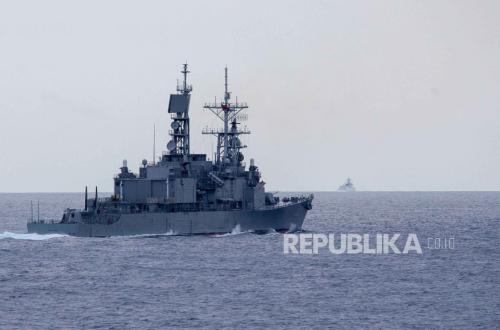
Tensions escalated further when Japanese warships transited the Taiwan Strait in April, coinciding with the commemoration of the Treaty of Shimonoseki on 17 April 1895, which formerly ceded Taiwan to Japan. For Beijing, this event carries strong historical and symbolic sensitivity.
However, for China, the real issue is not merely the passage of these vessels, but rather Tokyo’s shifting strategic perspective on Taiwan itself. When Takaichi described the threat to Taiwan as a “survival-threatening situation” for Japan, China interpreted this as an indication that Japan was beginning to move beyond its traditionally cautious position on the Taiwan issue. In other words, Beijing is beginning to view Tokyo not simply as an American ally in Asia, but also as an increasingly active player in Taiwan’s security calculations.
Prospects for improved China-Japan relations appear unlikely in the near term. Beijing appears intent on making Japan an example for other parties deemed to have crossed its “red line” regarding Taiwan. Meanwhile, the personal relationships that once helped maintain communication between senior Liberal Democratic Party (LDP) elite in Japan and China’s leaders have also become increasingly obstructed. Many senior-generation politicians with historical ties to Beijing have retired or lost influence.
Behind these mounting tensions, however, a more significant shift in East Asia’s strategic psychology is occurring. Japan is beginning to view Taiwan not merely as a strait-crossing issue between Beijing and Taipei, but as a direct component of Japan’s own national security.
Geographically, Taiwan holds immense strategic significance for Japan. Much of Japan’s trade and energy routes pass through the waters around Taiwan and the South China Sea. The majority of Japan’s energy imports from the Middle East traverse these routes. Should China ever gain complete control of Taiwan, Beijing would possess far greater leverage over the maritime routes vital to Japan’s economy.
Taiwan also lies extremely close to Okinawa, Japan’s southernmost prefecture. In military terms, PLA (People’s Liberation Army) control of Taiwan would position China’s military pressure on Japan far closer than previously. Furthermore, Taiwan forms an essential part of what is known as the “first island chain”—the strategic chain of islands linking Japan, Taiwan, and the Philippines that has historically helped contain Chinese naval expansion into the Pacific Ocean.
Should Taiwan fall completely under Beijing’s control, China’s strategic position in the Pacific would increase dramatically. Chinese submarines, aircraft carriers, and military aircraft would enjoy far greater freedom of movement towards the Pacific with minimal geographical obstacles. Japan also fears increased pressure on Okinawa and intensified disputes over the Senkaku Islands.
Beyond security considerations, Taiwan is also crucial for Japan’s technology industry. Taiwan Semiconductor Manufacturing Company (TSMC) and Taiwan’s semiconductor ecosystem occupy a central position in the global technology supply chain. Major disruption to Taiwan would have direct consequences for Japanese industry and the global economy.
When certain Japanese politicians assert that “a Taiwan contingency is a Japan contingency”, they are fundamentally conveying that shocks to Taiwan would directly affect Japan’s own security.
Amidst this shift in Japan’s strategic calculations, the United States factor introduces further uncertainty. For several decades, Japan and Taiwan essentially operated under the assumption that the United States would ultimately maintain the strategic balance in East Asia. However, Donald Trump’s return to the White House has cast doubt on some long-held assumptions.
Trump is perceived as more transactional in his approach to international relations. Taiwan is not always viewed simply as a strategic democratic partner, but also as an economic competitor. Trump has even renewed accusations that Taiwan has “stolen” America’s chip industry. Such statements generate anxiety in Taipei, as Taiwan’s semiconductor prowess has historically been regarded as a “silicon shield”—a factor rendering Taiwan important to the global economy and therefore worth preserving.
Concerns also arise because Trump has repeatedly given the impression that the Taiwan issue could become part of broader bargaining with China. In certain contexts, Beijing may even view Trump as a more transactional leader open to pragmatic deals. Consequently, China appears to see no urgent need to improve its relations with Japan.
All of this raises increasingly pressing questions about the future stability of East Asia.