
From Ticket Scalper to Airline Empire Builder
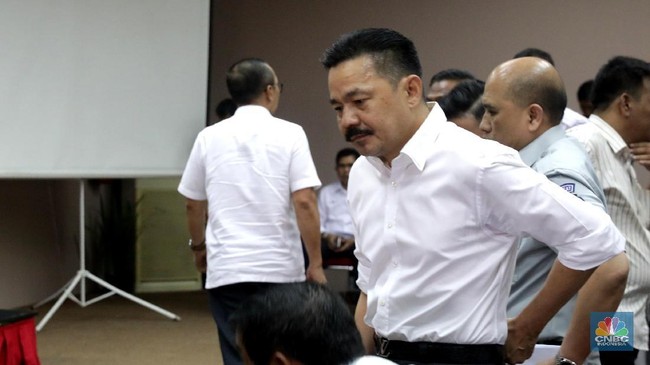
Before the year 2000, air travel was only accessible to the wealthy due to its very high cost. This situation sparked Rusdi Kirana’s desire to provide a low-cost flight service that could be reached by everyone.
The idea emerged while Rusdi was still studying at Pancasila University and working part-time as a ticket scalper at Soekarno-Hatta Airport. His experience at the airport gave him an understanding of the ins and outs of the aviation business as well as the capital to start developing his own venture.
In the 1990s, Rusdi and his brother, Kusnan Kirana, eventually founded a travel agency called Lion Tour. The name “Lion” was chosen because both of them have the Leo zodiac sign. It was through this business that they began to spread their wings in the air transport industry.
Citing Warta Ekonomi magazine (2006), the business was run for 13 years before it expanded further in 1999. In that year, as the establishment of new private airlines in Indonesia was permitted, the Kirana brothers founded “Lion Air”.
According to Gatra magazine (13/11/2004), with two leased aircraft, the airline’s permit was finally issued in 1999. However, citing Lion Air’s official website, the airline could only begin operating on 30 June 2000.
Lion Air’s first route was Jakarta-Pontianak at a price of Rp 300,000. That price fell below competitors who charged Rp 1.1 million. Soon afterwards, the Jakarta-Manado route was also opened, with the usual price of Rp 2.1 million reduced to Rp 400,000.
Initially many suspected the business would go bankrupt, but in reality it did not. Instead, Lion Air became increasingly successful because it became an alternative for the public to be able to fly.
By 2004 Lion Air was already operating 23 aircraft. Each day Lion Air served 130 flights in Indonesia, Singapore, Malaysia, and Vietnam. The number of aircraft then continued to grow.
Before the pandemic, Lion Air’s aircraft dominated Terminal 1 at Soekarno-Hatta Airport. This is because Lion Air also oversees several airlines such as Wings Air, Batik Air, Lion Bizjet, Malindo Air (Malaysia), and Thai Lion Air (Thailand).
This success led Lion Air to call itself a low-cost carrier. Its slogan is “We Make People Fly.” In fact, in 2018 the airline was recorded as having carried 36.8 million passengers. In percentage terms, it was the choice of 35% of passengers wanting to travel from island to island, from city to city.
Today, Lion Air has a new airline business, namely Super Air Jet. Interestingly, this new airline was established at a time when the pandemic was hitting and many other airlines were at a standstill.
Super Air Jet made its maiden flight on 6 August 2021, with the Jakarta-Kualanamu and Jakarta-Batam routes. Quoting from its official website, Super Air Jet offers a low-cost carrier concept with direct point-to-point intercity flights in the domestic market, and the company hopes to eventually expand to international routes.
In 2017, Rusdi himself was ranked 33rd among the 50 richest people in Indonesia according to Forbes. Their wealth at that time reached US$ 970 million. However, in 2022, Rusdi’s position fell to 38th with a fortune of US$ 835 million.
Despite being a pioneer of low-cost flights, we all know that Lion Air sacrificed something expensive that passengers had to pay for, namely schedule delays.
Source: jawawa.id (https://jawawa.id/newsitem/from-ticket-scalper-to-airline-empire-builder-1787395865)
Originally published by CNBC Indonesia (https://www.cnbcindonesia.com/market/20260822152113-17-761495/berawal-dari-calo-tiket-sosok-ini-sukses-bangun-kerajaan-maskapai), translated from Indonesian