
From the Middle East to the People's Kitchen: The Fragility of Indonesia's Energy Resilience
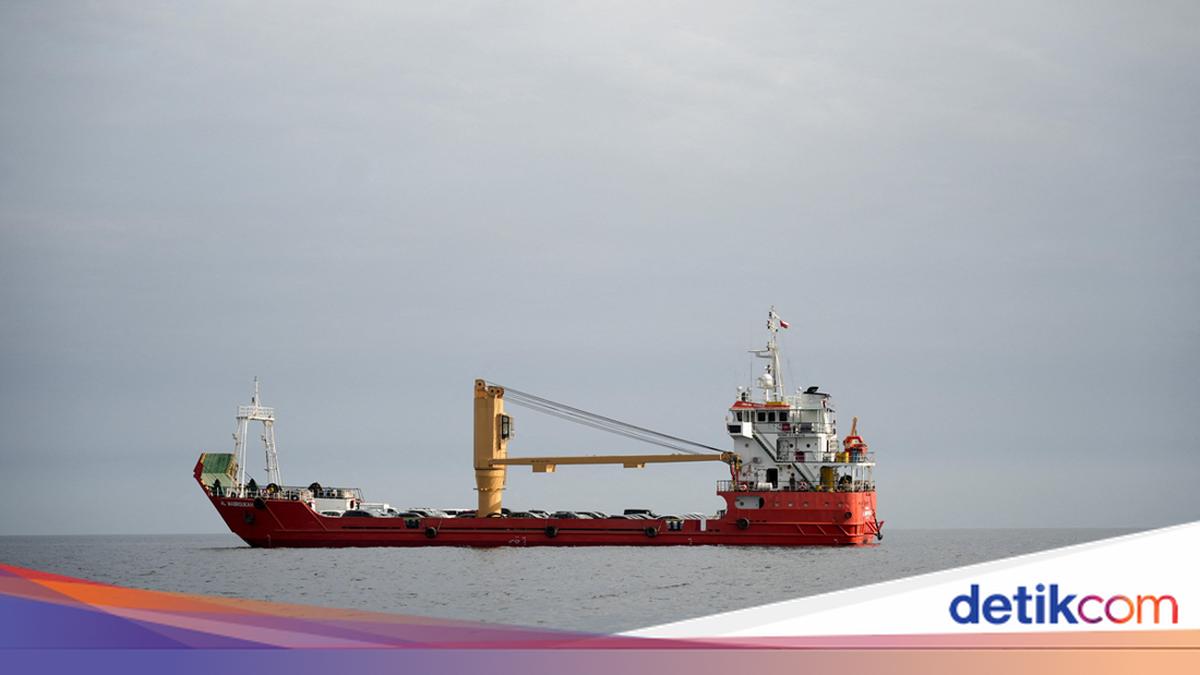
The region dominates strategic global energy distribution routes, including the Strait of Hormuz, through which about a third of the world’s oil trade passes. Any disruption at this point almost certainly triggers market panic and price surges.
Indonesia, although geographically distant from the epicentre of conflict, is never truly beyond the reach of its impacts. In the interconnected global energy system, turmoil in the Middle East quickly spreads domestically, pressuring state budgets, shaking energy price stability, and ultimately burdening society.
This is where global conflict transforms into a domestic issue. The problem is that Indonesia does not face this situation with a solid foundation. The national energy resilience, long touted, instead reveals its fragile side when tested by global dynamics.
Apparent Resilience Amid Import Dependence
Indonesia’s current energy structure is supported by a major paradox: rapidly increasing energy needs, but continuously declining domestic production capacity. National oil consumption stands at around 1.6 million barrels per day, while production is only about half of that. This large gap must be filled through imports.
In one year, data from Indonesia’s Ministry of Energy and Mineral Resources shows imports of more than 300 million barrels of oil to meet domestic needs of around 500 million barrels. This means more than half of oil-based energy consumption depends on foreign supplies.
From an economic value perspective, these energy imports drain foreign exchange reserves by around Rp500 trillion per year—a figure equivalent to a significant portion of state spending on strategic sectors.
This trend shows no signs of improvement. The volume of crude oil and oil product imports has continued to rise in recent years, indicating deepening dependence. In normal situations, this condition might still be manageable. But in a global crisis, such as the Middle East conflict, this dependence turns into serious vulnerability.
A rise in global oil prices directly increases import costs. In a short time, pressure on the state budget grows, especially since the government must maintain domestic energy price stability through subsidies. In extreme conditions, global price fluctuations can force the government to take unpopular policies, such as adjusting fuel prices. Here, it is evident that Indonesia’s energy resilience remains apparent.
Supply is available, but not independent. Price stability is maintained, but dependent on fiscal intervention. In other words, the existing resilience more closely resembles “administrative resilience” rather than structural resilience.
The Middle East conflict clarifies that energy is not merely an economic commodity, but a geopolitical instrument. Producer countries wield significant influence over prices and supplies, while importer nations like Indonesia are in a vulnerable position. When markets are turbulent, domestic policy space becomes severely limited.
Real Impacts: From Geopolitics to the People’s Kitchen
Energy issues are often framed as technical matters far removed from people’s lives. Yet, the impacts are very concrete. A rise in global oil prices due to Middle East conflicts will spread to various sectors: fuel prices, electricity tariffs, transportation costs, and even staple goods prices. This chain effect leads to inflation. When distribution costs rise, goods prices are pushed up accordingly.
In this context, energy becomes a key variable determining everyday economic stability. Low-income groups are the most vulnerable. They have limited purchasing power and are highly sensitive to price increases. For these groups, energy price hikes are not just statistics, but realities that reduce access to basic needs.
The government has relied on energy subsidies as a social buffer. However, this policy has serious limitations. On one hand, subsidies keep prices affordable. On the other, they burden the state budget, especially when global oil prices surge.
A dilemma arises. If subsidies are maintained, fiscal space narrows and could disrupt other development programmes. If subsidies are reduced, society bears a greater burden. In such conditions, energy policy becomes a tug-of-war between economic stability and fiscal sustainability.
This situation shows that Indonesia’s energy resilience remains reactive. New policies are taken when crises occur, rather than as long-term anticipatory efforts. The Middle East conflict should serve as a warning that this approach is no longer adequate.
True energy resilience should protect society from external shocks without relying on continuous large subsidies.
Energy Transition: An Opportunity Continuously Delayed
Global energy crises are often cited as momentum to accelerate the transition to renewable energy. Logically, when fossil fuel prices rise, alternative energy becomes more attractive. However, in practice, Indonesia has not been able to capitalise on this momentum optimally. Indonesia’s renewable energy potential is vast, from solar to geothermal.
Yet, its contribution to the national energy mix remains relatively small. Regulatory barriers, investment limitations, and the dominance of fossil fuels in energy policy are the main factors slowing the transition.
In crisis situations, the government tends to choose short-term solutions to maintain stability, such as sustaining fossil fuel use. As a result, crises that should be turning points instead risk reinforcing old dependencies.
In fact, the Middle East conflict provides an important lesson: dependence on fossil fuels is not just an environmental issue, but also a matter of national security. Countries reliant on energy imports will always be in a