
From the Laboratory to the Home Yard
Jakarta (ANTARA) — Take a look at what is in your kitchen bin this week: onion skins, leftover rice, sachet coffee wrappers and used shopping bags. It may seem insignificant, and is rarely thought about again once the bin is sealed.
Yet much of the country’s waste comes from kitchens like these. Data from the National Waste Management Information System (SIPSN) for 2025 show that reporting regencies and municipalities generate 24.8 million tonnes of waste a year, with households accounting for 56.7 per cent, or around 7.2 million tonnes.
Only 34.55 per cent of all that waste is properly managed, while 63.76 per cent of waste entering landfill sites is openly dumped.
These figures explain why waste management is now expected to begin at the point closest to the kitchen.
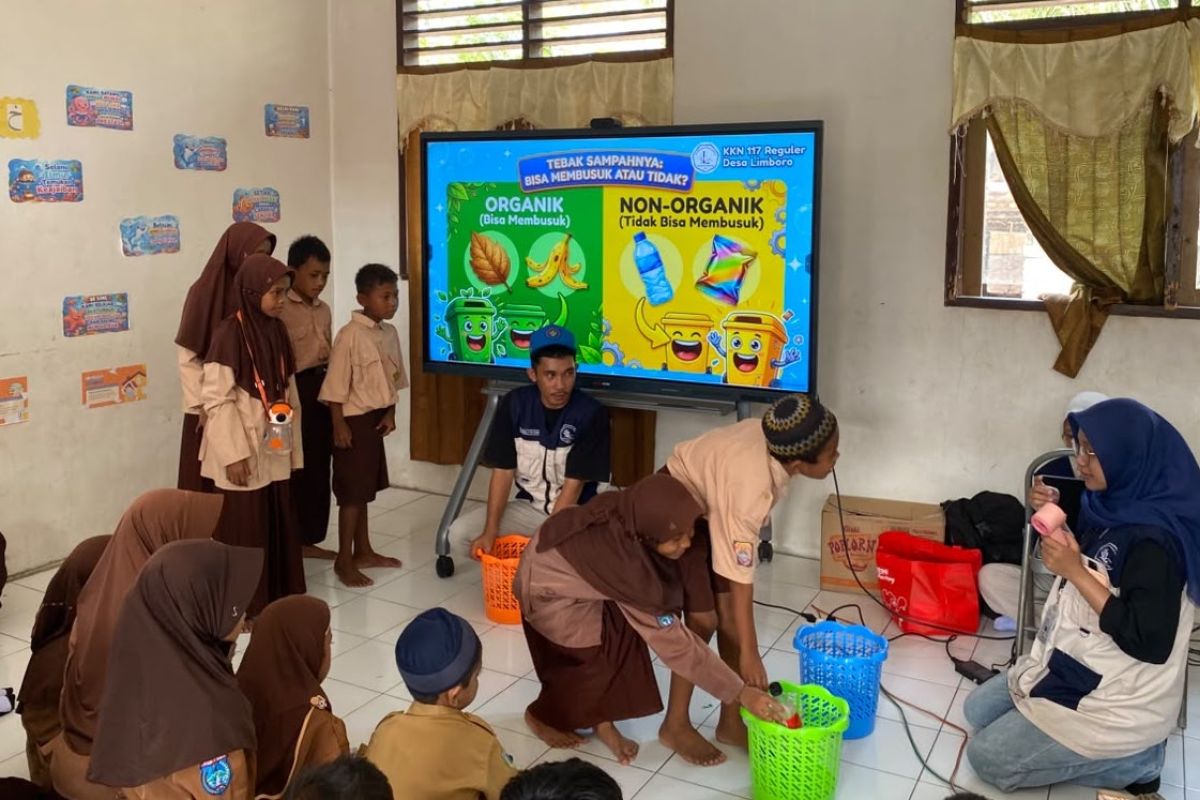
On Tuesday (27 October), National Research and Innovation Agency (BRIN) head Arif Satria said President Prabowo Subianto had asked the agency to work with the Ministry of Higher Education, Science and Technology to bring universities into villages.
Their resources include waste-processing technologies developed by BRIN and universities. Household- and village-scale technologies are intended to be put to use by residents as soon as possible.
The problem is not a lack of technology. BRIN offers waste technologies at four scales: household, village, sub-district and city. According to BRIN, household-level systems cost less than Rp1 million.
Fast pyrolysis technology (Faspol), which converts plastic waste into fuel, has been deployed in 84 regencies, although its capacity remains small. One kilogramme of plastic produces about one litre of fuel. At city scale, BRIN operates the Merah Putih waste-to-energy plant in Bantargebang as a pilot facility with capacity to process 100 tonnes of waste a day.
Arif stressed that BRIN is not a mass producer of equipment that converts waste into fuel. Its role ends at the prototype stage. But that is precisely where the problem lies: the distance between a prototype and residents’ everyday habits is the hardest to bridge.
In logistics, this distance is known as the last mile—the final leg of delivery, often the most expensive and slowest. Research has its own last mile: from the laboratory bench to the home yard.
BRIN researchers warn that waste technology is not simply a matter of buying equipment. Success depends on whether it suits the characteristics of local waste, the quality of its operation and maintenance, operators’ skills, monitoring, and certainty about where the products and residues will go.
Almost all of these requirements concern people, and none can be delivered in the same box as the machinery. That is why universities’ involvement, as called for by the President, will be decisive.
The policy direction has been moving this way for some time. The government has long recognised that waste-to-energy plants in dozens of cities will not reach villages, so BRIN and universities have been asked to find technologies for the smallest-scale settings.
Universities