
From the Holy Land, Hajj Pilgrims Brought Home the Spirit to Resist Colonialism
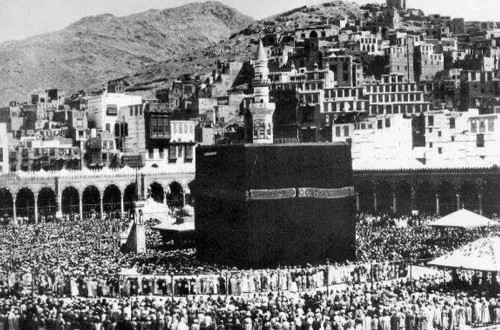
For Muslims in the Nusantara during the colonial period, the Hajj pilgrimage did not stop at being a spiritual journey to fulfil one of the pillars of Islam. The journey to the Holy Land also became a space for encounter, the exchange of knowledge and ideas, and the growth of shared awareness about the condition of Muslims in various parts of the world. From Mecca, some Nusantara pilgrims brought home a spirit of renewal and an awareness to resist colonialism and imperialism, which subsequently influenced resistance movements against the colonial rulers in the homeland.
The Hajj was not merely a matter of ritual obligation in Islam, nor solely an economic aspect, nor just a scholarly connection between the Nusantara and the Middle East. The Hajj also served as a medium for transmitting reform movements and consolidating resistance against the Dutch colonial government in the Nusantara. Beyond all this, the Hajj clearly demonstrated a function of societal transformation.
Hajj travel has existed since the early days of Islam’s arrival in the Nusantara. This means the history of the Hajj in the Nusantara is as old as the history of Islam itself, because once a person embraced Islam, they were faced with five basic obligations known as the pillars of Islam (arkan al-Islam), and performing the Hajj to Mecca is one of them.
Among the many transformative functions of the Hajj, one was its role in unifying national consciousness in the Nusantara. National consciousness was not only formed within Indonesia but also grew abroad, especially in Mecca, within the atmosphere of the Hajj, as pilgrims from various regions of Indonesia arrived each Hajj season. Those who had settled in Mecca were free to hold meetings.
In Mecca, long before the Youth Pledge, the Malay language already functioned as a unifying bond for the people of the Nusantara. Imagine, in Mecca people from Java, Nusa Tenggara, Maluku, South Sulawesi, Kalimantan, the Malay Peninsula, Minangkabau and Aceh freely socialised for five months, exchanging experiences and thoughts.
Snouck Hurgronje recorded how people from across the Nusantara discussed the Acehnese resistance against the Dutch, and how their eyes were opened regarding the colonisation of Muslim peoples by the Dutch, British and French. In Mecca, long before the Youth Pledge, the Malay language already functioned as a unifying bond for the people of the Nusantara.
Source: jawawa.id (https://jawawa.id/newsitem/from-the-holy-land-hajj-pilgrims-brought-home-the-spirit-to-resist-colonialism-1787760059)
Originally published by Republika (https://khazanah.republika.co.id/berita/tjwlk0430/dari-tanah-suci-para-haji-membawa-pulang-semangat-melawan-penjajahan-dan-kolonialisme), translated from Indonesian