
From 'Thank You Money' to a Culture of Corruption
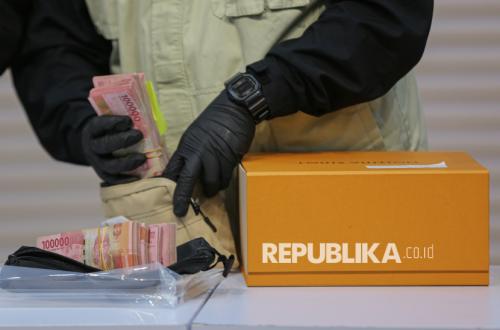
Public attention has barely subsided over alleged corruption in the management of the Free Nutritious Meal Programme when society was shocked again the following day by a case within the immigration service. In the first case, a programme bearing the name of child nutrition was allegedly turned into a space for conflicts of interest and problematic procurement. In the second matter, the authority to issue residence permits for foreign nationals was allegedly transformed into a means of extortion. The two cases involve different institutions and targets, but they reveal the same problem: a public service position can become a tool for obtaining personal gain.
Corruption does not always start with transactions worth billions of rupiah. It often grows from something initially considered small and polite: cigarette money, fatigue money, gifts, coordination fees, or thank you money. When gratuities are received repeatedly, come from interested parties, and create an expectation of special treatment, the boundary between courtesy and corruption begins to disappear. It is there that thank you money can develop into a culture of corruption.
Humans do not form their behaviour in a vacuum. Through social learning theory, Albert Bandura explained that behaviour is learned by observing the actions of others and their consequences. A new employee might enter an office with idealism. However, they then witness senior employees accepting gratuities, improperly using facilities, or helping certain parties bypass procedures. When these behaviours receive no sanctions, and even yield money, position, and group acceptance, the new employee learns that deviance can be performed and reinforced. They learn not only the methods but also the language to disguise it. Bribery is symbolised as thank you money for services rendered. Extortion of the public is disguised as an administrative fee. Conflicts of interest are called partnerships, and cost mark-ups are considered price adjustments. In these cases, language is often shrouded in morality, making deviance feel more appropriate.
Corrupt behaviour then undergoes normalisation. Something originally considered wrong and sinful, when done continuously and involving many people, turns into a habit. Employees who refuse can even be judged as strange and deviant, holier-than-thou, or not understanding office culture. At that stage, the environment no longer merely condones corruption; it helps produce and sustain it.
Most perpetrators of corruption know that taking advantage of their position is wrong. To keep doing so without constant guilt, a person uses a mechanism psychology calls moral disengagement. In this condition, the perpetrator builds justifications. Some frequently heard expressions include: the salary received is not proportional to the responsibility; the gratuity does not harm anyone; or everyone does it. There are also those who compare their actions to larger corruption, thinking, ‘I only received a little, I did not steal billions of rupiah.’ This comparison makes one’s own violation seem trivial. The perpetrator’s personal responsibility can sometimes also be shifted to a superior or the group. A person feels they are only carrying out orders, following the system, or continuing established customs. In large organisations, responsibility is dispersed across many desks, so everyone feels their contribution to the deviance is very small. Victims are rendered invisible. In the alleged deviance of the children’s food programme, the loss might be viewed merely as a budget figure. Yet, every rupiah lost potentially reduces food quality, kitchen safety, and children’s rights. In immigration services, applicants may be viewed merely as foreigners needing permits. However, extortion remains an abuse of power, regardless of the victim.
Local culture plays a significant role in shaping behaviour. In a healthy organisation, employees feel ashamed to receive gratuities. In a permissive organisation, employees feel odd if they do not participate. If an agency has a culture of corruption, it can be suspected that the institution is indeed permissive. Group pressure does not always manifest as a direct order. It can emerge through sarcasm, ostracism, restricted access, or the notion that the proceeds must be shared. Employees ultimately follow the group not only because they want profit but also because they fear losing social acceptance in the work environment.
This is why individual integrity education alone is insufficient. Employees can be sent to anti-corruption seminars, but when they return to the old environment, the old behaviour receives reinforcement once more. The formal message says do not accept gratuities, while daily practice shows that receiving them is considered ordinary. Leaders have a decisive position in shaping organisational culture. Subordinates not only listen to what leaders say but also observe what they do and what they allow. If a leader accepts facilities from vendors, entrusts family interests, or intervenes in partner selection processes, subordinates get the message that rules are negotiable. Conversely, a leader who is open about conflicts of interest, refuses gifts, and dares to discipline their inner circle shapes the norm that integrity is not merely a slogan. From an Islamic perspective, a position is a trust (amanah), not a personal possession. Allah SWT reminds, ‘Indeed, Allah commands you to render trusts to whom they are due’ (QS an-Nisa: 58).