
From Textual Literacy to Multimodal Literacy
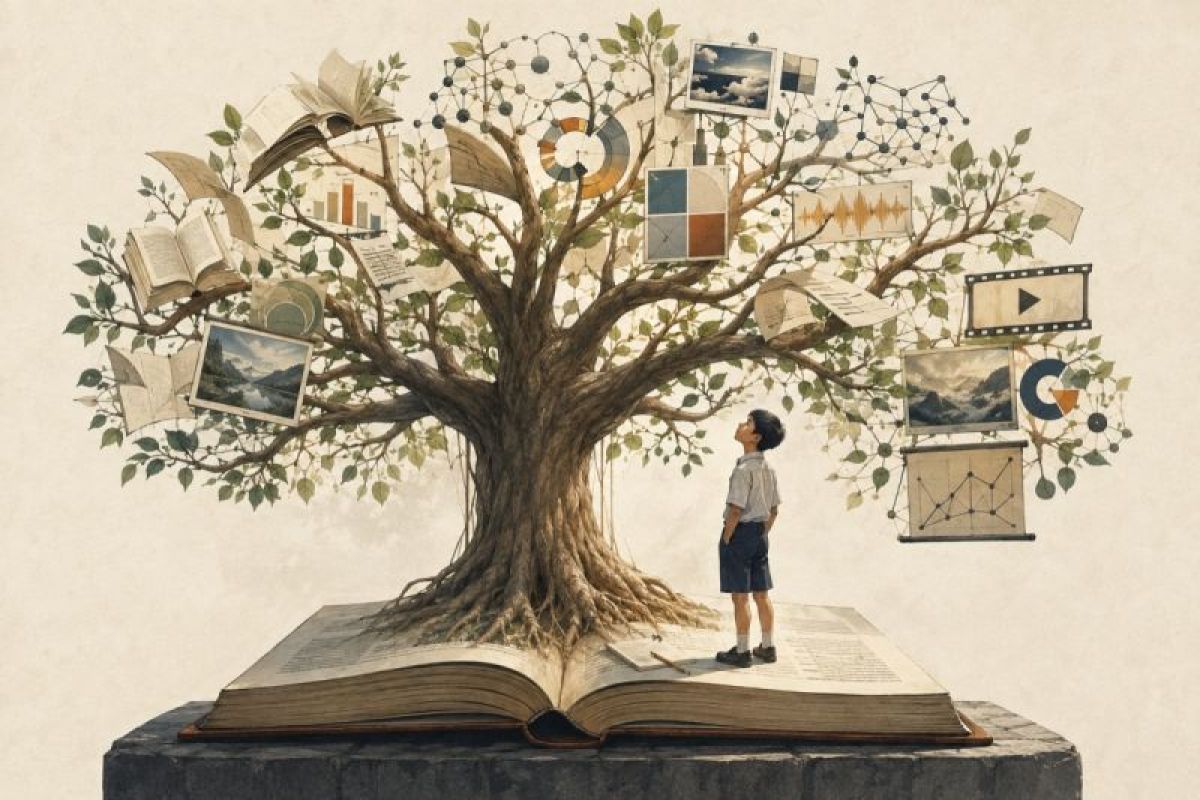
Jakarta (ANTARA) - A teacher asks students to explain the impact of climate change. Twenty years ago, they would likely have opened a book, read a few pages, and then written their answer in the form of an essay. Today, the situation is different. Many students first search for videos on YouTube, read infographics on social media, observe weather data visualisations, or ask artificial intelligence (AI) applications about the issue. They then compare and assemble the information obtained from these various sources before composing their answer. They are not just reading text, but also reading images, graphics, animations, and videos, as well as interacting with AI systems that automatically generate text, images, or explanations. In many cases, the challenge for today’s students is no longer a lack of information, but the ability to evaluate the accuracy, credibility, and relevance of the information obtained, including information generated by AI. This simple change illustrates a major transformation in the world of literacy. So far, literacy has almost always been associated with the ability to read and write text. This view is not entirely wrong because reading and writing are indeed the main foundations of education. The term multimodal refers to the use of various modes or channels of communication to build meaning. In everyday life, we rarely deal with text alone. An online news article usually combines writing, photos, graphics, videos, and links to other sources. A presentation combines spoken language, text, images, and animation. Even conversations on social media often combine words with emojis, photos, or short videos. In this context, the ability to read is no longer sufficiently understood as the ability to understand written text. A person must also be able to understand messages conveyed through images, diagrams, graphs, videos, and other visual forms.