
From Tambling, Titiek Soeharto Encourages Science and Nature Collaboration for Future Conservation
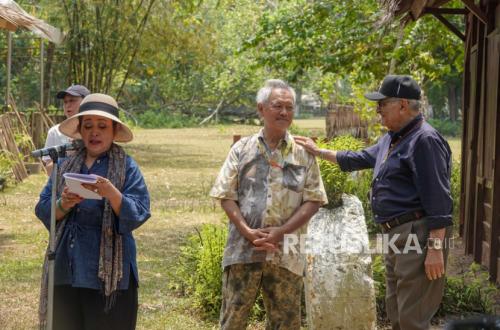
Twenty-one Nobel laureates, Turing Award winners, scientists, academics and world figures visited Tambling Wildlife Nature Conservation (TWNC) in Lampung on 27–28 August 2026. The visit served as a moment to introduce Indonesia’s biodiversity wealth and to bring together global thinkers with the conservation experience that has been ongoing in Tambling for three decades.
The honoured guests were received by the Chair of Commission IV of the Indonesian House of Representatives, Siti Hediati Soeharto, who also hosted the event.
TWNC was chosen as the venue because it has a diverse landscape and a long track record in conservation efforts. Managed by Artha Graha Peduli since 1996, TWNC became part of the AGP environmental programme through cooperation with the Ministry of Forestry in 2008.
With an area of 48,153 hectares of forest and 14,089 hectares of marine area, TWNC encompasses lowland tropical rainforest, coastal forest, mangroves, lakes, freshwater swamps and secondary forest.
Siti Hediati Soeharto, familiarly known as Titiek Soeharto, said Tambling is a space that brings together Indonesia’s natural wealth with science and global collaboration. Three decades of TWNC conservation experience shows that protecting nature requires strong commitment and an orientation towards future generations.
“Tambling introduces something very important. Conservation is not a short project, but a long-term commitment for future generations. Today, I believe Tambling can become something greater. Tambling can become a living laboratory, where nature meets science, technology, education and international relations,” Titiek said.
This opportunity can be used to build broad relationships between Indonesia’s conservation experience and the global community. “We are here not only for Tambling, but also to learn, to help develop new ideas, to help research how science and technology can strengthen biodiversity protection, climate, resilience and sustainable development. Welcome to President Ramos and all the Nobel laureates in Tambling,” she said.
Nobel Peace Prize laureate and President of Timor-Leste José Ramos-Horta saw the leadership of Tomy Winata as one of the things that can be learned from the conservation experience in the area.
“One thing that can be learned is leadership. This is Tomy Winata’s leadership. It is wonderful that the government and the community have given the responsibility to manage this area for 30 years,” Ramos-Horta said.
Ramos-Horta also stressed that conservation efforts need to pay attention to relationships with local communities. “You cannot do anything without collaborating with the people who live here. They must feel it, believe in it, and then they create a great experience. They are not spectators,” he said.
The conservation experience also includes wildlife protection efforts, especially the Sumatran tiger (Panthera tigris sumatrae), which is a critically endangered species. The Sumatran Tiger Rehabilitation Centre at TWNC handles and recovers tigers that have experienced conflict before returning them to their natural habitat.
Protecting the forest at the same time means maintaining environmental balance and reducing various pressures on nature, including the risk of forest and land fires.
Well-maintained forests not only serve as habitat for wildlife, but also act as carbon storage, water regulators and life support for surrounding communities.
In a broader context, Ramos-Horta sees Indonesia’s experience in protecting nature as a lesson for the world. Indonesia also faces various environmental challenges, from forest fires to natural disasters.
“Indonesia itself is an example for the entire world,” he said.
The presence of Nobel laureates and world figures in Tambling was an opportunity to see first-hand the relationship between science, conservation and sustainability. With different backgrounds, the world figures could provide diverse perspectives at the meeting.
“Tambling is a very unique place. It is not a zoo or a park, but a natural ecosystem where animals, birds, fish and all life within it still runs in balance. The challenge is to maintain this uniqueness without losing its authenticity. I believe every country needs a place like this, so that we appreciate what we have before losing it, because restoring it is far more difficult than protecting it from the start,” said Laura Anne, a representative of one of the Nobel laureates.
The visit is expected to become an opportunity to strengthen collaboration between Indonesia and the global scientific community in conservation and sustainable development.