
From subsidies to rationing: How Southeast Asia is coping with the energy crisis
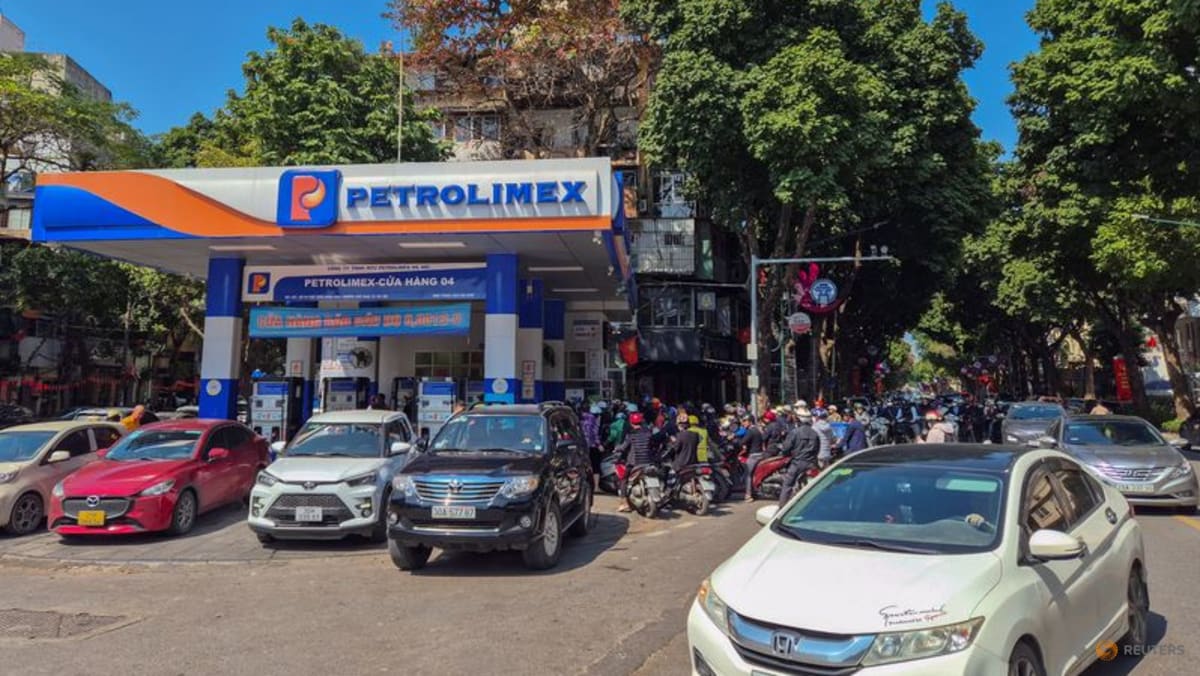
From subsidies to rationing: How Southeast Asia is coping with energy crisis
As the Iran war drags on into its sixth week, CNA takes a look at how some Southeast Asian states are responding to the energy crisis and skyrocketing costs.
SINGAPORE: A global energy crisis sparked by the closure of the Strait of Hormuz amid the Iran-Israel-US war has disrupted lives across vast segments of Southeast Asia’s populations.
Of the crude oil and liquefied natural gas (LNG) passing through the strait, 84 per cent of crude and 83 per cent of LNG are bound for Asian markets, according to 2025 data from the US Energy Information Administration.
As a result, oil prices have fluctuated rapidly since Iran’s effective closure of the strait. Brent crude has surged past US$100 per barrel for the first time in years as the closure of the Strait of Hormuz chokes off nearly a fifth of the world’s oil supply.
As of Monday (Apr 6) afternoon, Brent crude futures traded at US$110 per barrel while West Texas Intermediate (WTI) crude traded at US$111 per barrel. This is well above the levels seen for most of the past two years, when prices generally hovered between US$70 and US$85.
Asian LNG prices have jumped 85 per cent since the war, peaking from end-2022 highs, though prices have declined in the past two weeks.
Much of Southeast Asia is feeling the strain of the energy crisis, as governments scramble to ration energy supplies, implement work-from-home (WFH) policies and diversify energy sources.
Meanwhile, businesses in the region have also seen market capitalisation shrink by at least US$216.9 billion, with the closure of the Strait of Hormuz cited as a major factor, reported Japanese news outlet Nikkei Asia.
Indonesia has been hit hardest, with US$115.5 billion wiped off market value, followed by Thailand with US$48.9 billion. The Philippines and Vietnam each lost more than US$16 billion, it further reported.
In Singapore, Prime Minister Lawrence Wong warned on Apr 2 of “severe consequences” if Middle Eastern energy sources and supply routes see prolonged disruptions.
He said that the government has so far managed immediate disruptions, with refineries scaling back production and firms sourcing supplies beyond the Middle East.
Singapore is also strengthening long-term resilience by deepening energy partnerships including with Australia, which already supplies more than one-third of Singapore’s LNG, and working closely with New Zealand to secure supply lines for food and essential goods during crises.
As the war drags on into its sixth week, CNA takes a look at how other Southeast Asian states are responding to the energy crisis and skyrocketing costs.
MALAYSIA
Compared to its Southeast Asian counterparts, Malaysia has been more insulated from the energy crisis as an oil-producing country and net energy exporter, but the federal government’s pledge to maintain fuel subsidies has raised concerns about its sustainability.
Amid soaring prices, it has kept fuel prices low through national subsidies, maintaining a RM1.99 (US$0.50) per litre ceiling price for subsidised RON95 petrol. It has, however, temporarily capped the individual limit for RON95 petrol at 200 litres from Apr 1, down from 300 litres.
On Mar 26, Malaysia’s Finance Ministry warned that monthly petrol and diesel subsidies could hit RM4 billion as global oil prices spike.
Experts previously told CNA that sustained petrol and diesel subsidies may burden the country’s fiscal position and may add to national debt. Malaysia’s fiscal deficit was 3.7 per cent in 2025, continuing a decline from a peak of 6.4 per cent in 2020. It was 4.1 per cent in 2024.
Prime Minister Anwar Ibrahim said that the government is actively diversifying Malaysia’s energy sources to ensure that fuel and power supplies remain secure despite global supply chain disruptions.
About half of Malaysia’s total oil supply has been stranded or delayed following the Strait’s closure, he added.
On Mar 27, Anwar announced that the country’s ships will be allowed to pass through the strait - among a handful of other countries granted toll-free safe passage - easing some supply pressures.
Malaysia will also introduce a WFH policy for ministries, agencies, statutory bodies and government-linked companies from Apr 15. Civil servants who live more than 8km from their office will be afforded a three-day WFH arrangement, the Public Service Department announced.
Sectors like tourism have also been hit following fuel price hikes, with tour buses and van operators given the green light to raise prices by up to 80 per cent, the Malaysian Association of Tour and Travel Agents announced on Mar 30.
INDONESIA
Around 25 per cent of Indonesia’s oil imports come from the Middle East and pass through the Strait of Hormuz, according to Minister of Energy and Mineral Resources Bahlil Lahadalia.
In a press conference on Apr 6, Chief Economic Affairs Minister Airlangga Hartarto said the government has increased aviation fuel surcharges by 28 percentage points to 38 per cent, up from the current 10 per cent.
It is also allowing domestic airfare price hikes to around nine to 13 per cent, while reducing import duties on spare aircraft parts to 0 per cent to lower airline operating costs.
The Indonesian government previously announced sweeping austerity measures on Mar 31 including fuel restrictions, cuts to official travel and a mandatory WFH policy.
These are aimed at saving up to 243.4 trillion rupiah (US$14.3 billion) in state expenses amid soaring energy costs, reported local news outlet Jakarta Globe.
Airlangga said at a Mar 31 press conference that the government will ration subsidised fuel through daily purchase limits starting Apr 1, such as limiting gasoline purchases for private vehicles to 50 litres a day. Previously, there was no nationwide cap on purchase limits.
Subsidised gasoline sold under state energy firm Pertamina including fuel from Pertalite Brand and diesel marketed as Biosolar will also be capped