
From style to utility: why Indonesians increasingly cannot part with their smartwatches
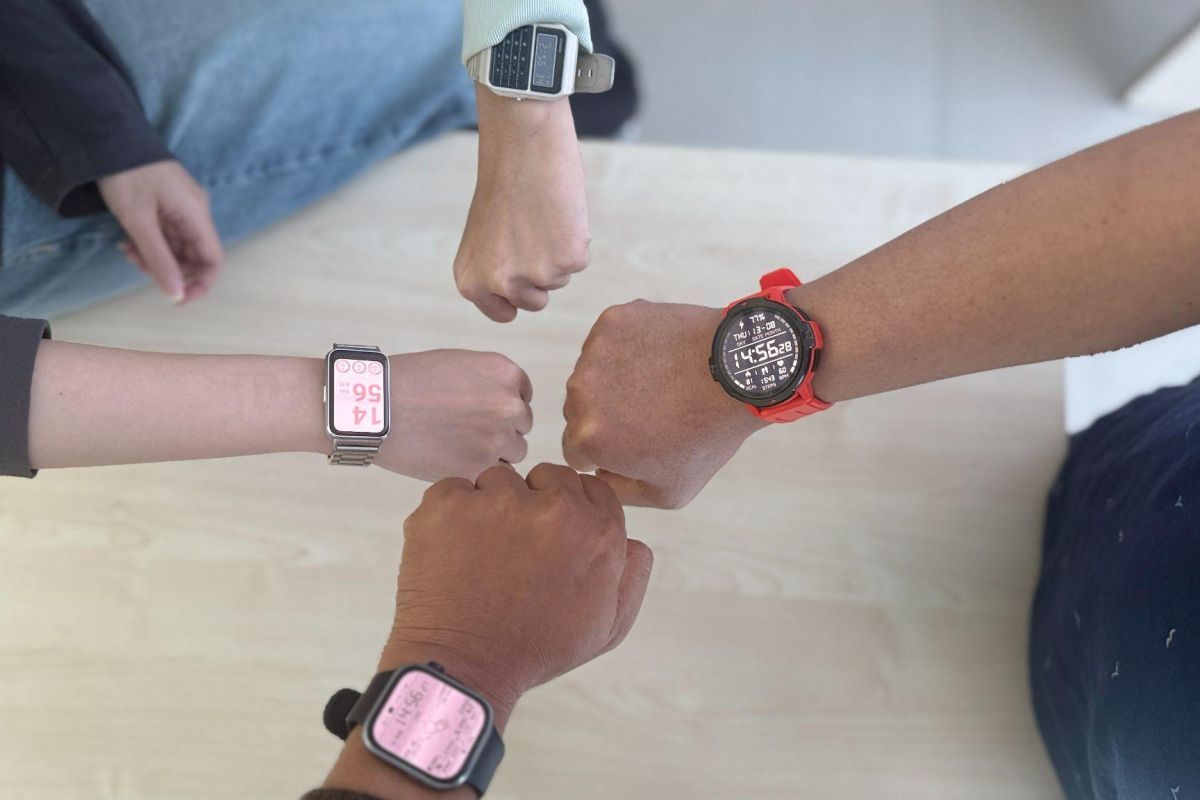
Smartwatches are no longer merely a style accessory. Across the country, from commuter train carriages to coffee shops, the wrists of modern society are now adorned with digital screens that remain lit. This trend is not just a local phenomenon, but a reflection of a global lifestyle shift towards greater health awareness and practicality.
Globally, the smartwatch market continues to show a positive trend. According to a Counterpoint Research report in the first quarter of 2026, smartwatch shipments worldwide grew by 4 percent year on year. This growth was driven by adoption of premium devices with advanced health tracking capabilities, with Apple still leading with a 23 percent market share, followed by Huawei with 17 percent through ecosystem innovation and product variants.
In line with the global trend, the smartwatch market in Indonesia is also continuing to grow alongside rising consumer interest in devices for monitoring health, exercise and daily activity. However, market dynamics in the country have their own uniqueness, especially in the mid-range price segment.
Based on data released by market research platform and e-commerce analytics provider Markethac in March, although total gross merchandise value of the smartwatch market reached around Rp1.26 trillion, the Rp2-3 million price segment, which contributed 14.43 percent, has become a highly competitive arena with a winner-takes-most pattern. In this price range, the market is dominated by two giants, namely Huawei and Garmin.
Huawei leads with a market share of 44.77 percent and sales of 32,400 units, proving its success in building a perception of premium value at a rational price for consumers. Meanwhile, Garmin is close behind in second place with a market share of 38.8 percent and sales of 26,800 units, cementing its position in the segment of users with specific needs such as sports and outdoor activities.
Combined, Huawei and Garmin control more than 80 percent of the GMV market share in the Rp2-3 million segment, while other brands such as Xiaomi, Samsung and Apple are fighting over the remaining market share, each below 6 percent.
In Indonesia, functional reasons are the main driver of the shift from conventional watches to smartwatches. Annisa Ayu, 35, a translator residing in Bekasi, West Java Province, said she is greatly helped by the presence of her smartwatch.
“I chose to use a smartwatch because it can help monitor my step count and daily activity,” she said when met by Xinhua in Jakarta on Tuesday.
For Nisa, who regularly uses public transport, practicality is key. She relies heavily on the media controller feature because it makes it easy to manage music without having to take out her phone in crowded places, and helps her quickly view notifications from WhatsApp and LINE. Given this practicality, Nisa consistently wears the device whenever she is out and about.
A similar view was expressed by Rai, 31, a private sector employee in South Jakarta. He said the deciding factors that made him switch were the rechargeable battery of the smartwatch, seamless connectivity with a smartphone, and a screen that is easy to read even in dark places.
“Having health management features such as sleep quality, GPS, and notifications connected to a smartphone is very useful,” he told Xinhua via WhatsApp message on Tuesday.
In choosing a product, Rai carefully considers the combination of price, completeness of features, model and battery life. For him, the alarm feature, activity reminders and daily step targets have become a crucial part of supporting his routine during about eight hours of use per day.
This shift in public habits was also observed by Aditya, 37, a technology media journalist from Bekasi. According to him, smartwatches have now evolved into a must-have accessory for many people in Indonesia. This trend is supported by relentless innovation from manufacturers presenting more advanced features, as well as growing public awareness of health and an active lifestyle.
“Users are more disciplined in exercising, more concerned about sleep patterns, and have a higher awareness of body health,” Aditya explained when asked about the positive impact of this trend. He added that the presence of reminder features and gamification elements has proven effective in increasing consistency of use for many users.
The psychological satisfaction when users can monitor their body metrics in real time, such as heart rate, calories burned and daily step achievements, makes the device no longer just a timekeeper. According to Aditya, this confirms that the smartwatch has transformed into a “data-based lifestyle symbol” thanks to intrinsic motivation to maintain health combined with extrinsic motivation from social trends.
Despite bringing a host of positive impacts, Aditya highlighted that the industry still has challenges to overcome, particularly regarding the validity and accuracy of health data. Currently, the level of precision between sensors sometimes still varies depending on the brand and product class used.
Going forward, he hopes that smartwatches will not stop at being merely a seasonal lifestyle trend, but will also transition into a real solution for sustainable health support.
“This requires good synergy between technology developers, medical personnel and policymakers to ensure that smartwatch utilisation runs effectively, safely and inclusively,” Aditya told Xinhua via email on Monday.
This trend ultimately presents a new paradigm, namely that society is no longer just seeking devices.