
From Strawberry Farms to a Driver of the Village Economy: Endang Shows the Sweet Results of BRI’s Empowerment
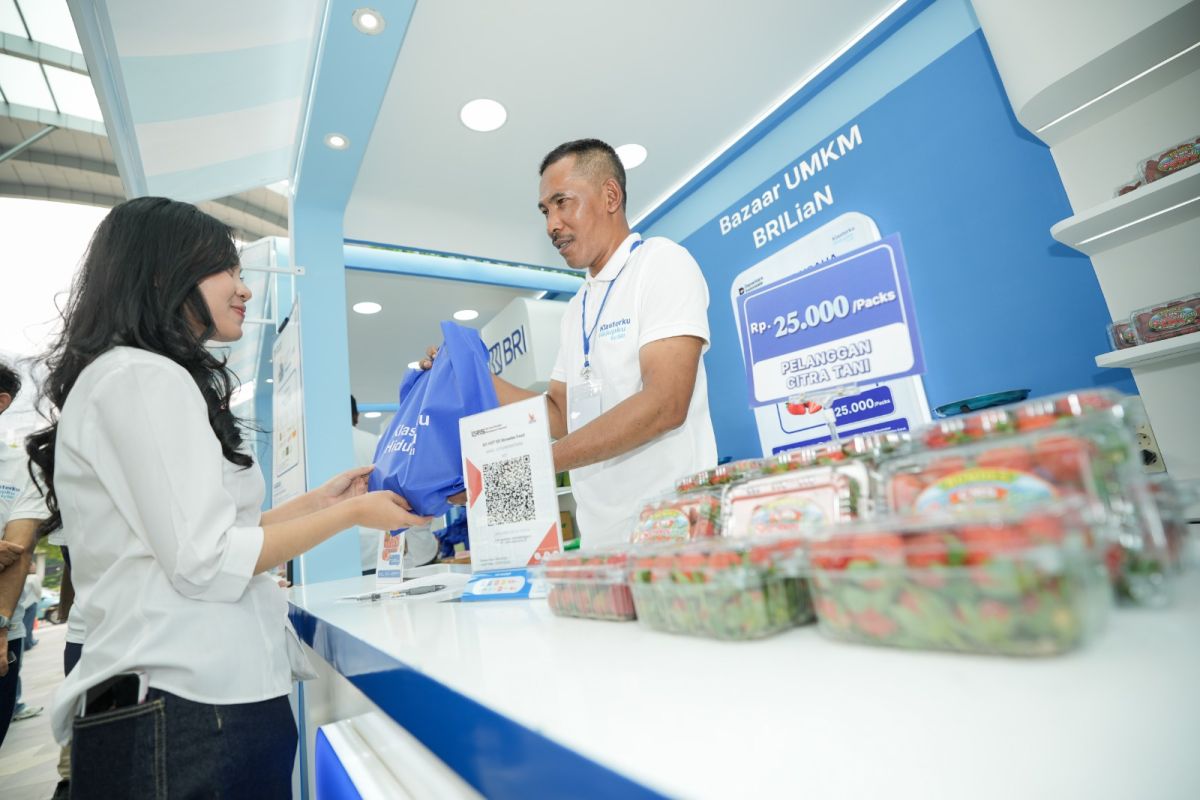
As well as serving as village head, Endang is an active farmer and produce collector who buys the community’s harvest. Around 70% of residents in Baru Dua village now grow strawberries, with total village production reaching approximately 6–10 tonnes a day.
The journey began when many residents of Baru Dua still relied on rice farming, including upland rice. Yields were not optimal, and pest problems prompted residents to seek an alternative crop they considered more promising.
The development of strawberries as a village commodity began in 2001, when residents started looking for a more promising agricultural business. Rice yields were considered insufficient because of various challenges, including pest attacks that affected productivity. This prompted several farmers, including Endang, to try growing strawberries as a new source of income.
As one of the farmers who pioneered strawberry cultivation, Endang started the business with her family, relying on limited capital and expertise. In the early years, she did not know that banks could provide financing to expand the business. Cultivation therefore proceeded gradually, while other people helped market the harvest and open up access to buyers for farmers.
Over time, strawberries began to show strong economic potential. Unlike some other agricultural commodities, they can be harvested every day, generating a relatively steady flow of economic activity. Cultivation has also created jobs in plant care, picking, transport and marketing. The growth of the strawberry ecosystem in Baru Dua has even drawn workers and business operators from four other villages.
“With strawberries, you can harvest every day, so the economic activity is felt every day too. It is not only the farmers who benefit; people also work tending the fields, picking and transporting the fruit, and helping to market it. In Baru Dua, this activity eventually became too large for one village to manage alone. Workers and business operators from four other villages have joined the strawberry ecosystem,” Endang said.
Nevertheless, the development of the strawberry industry has faced various challenges. One of the hardest periods came in February 2016, when strawberry plants in Baru Dua died almost simultaneously over the course of about a week. The episode placed considerable pressure on farmers, directly threatening their businesses and the community’s source of income.
In response, farmers who had obtained financing from BRI coordinated to find a solution. BRI then eased the terms relating to their capital, giving them room to restore their businesses. This support was one of the factors that helped the community through the crisis and gradually resume strawberry cultivation.
“2016 was one of the hardest periods for us. The strawberry plants died almost all at once, within roughly a week, and the farmers were understandably devastated because the plants were their source of income. We then coordinated with BRI. Thankfully, BRI eased the terms relating to our capital, giving the community room to recover and start again,” Endang recalled.
Drawing on that experience, the community did not give up and continued rebuilding its agricultural businesses. Farmers began changing strawberry varieties and gradually improving cultivation techniques, including with support from the agriculture agency in managing seedlings. These efforts reflect the resilience of Baru Dua’s farmers and demonstrate the importance of financing and guidance in sustaining community businesses. Today, strawberries from Baru Dua are sold not only fresh but also processed into dodol, jam and strawberry crackers.
BRI Corporate Secretary Dhanny said Baru Dua’s experience shows that strengthening the community economy requires ongoing support, from access to capital to capacity-building and market access.
“BRI recognises that the economic potential of village communities often begins with something very simple, such as a commodity grown and developed by local residents. Our support therefore does not stop at providing access to finance; it is also intended to strengthen business operators’ ability to manage, develop and market their products, enabling them to generate greater added value,” Dhanny said.
The support has expanded through the Desa BRILiaN and Klasterku Hidupku programmes. Residents have received training in production, marketing and branding, as well as opportunities to take part in bazaars to widen their market access.
Dhanny added that BRI would continue to promote the empowerment of business operators across the country so that local potential could grow into an economic force benefiting wider communities.
“We hope Baru Dua’s story can show that when local potential and community spirit work together with access to finance, empowerment and market access, a commodity can develop into an economic ecosystem that creates jobs and improves people’s welfare,” Dhanny said.
Source: jawawa.id (https://jawawa.id/newsitem/from-strawberry-farms-to-a-driver-of-the-village-economy-endang-shows-the-sweet-results-of-bris-empowerment-1794635580)
Originally published by Antara (Indonesian) (https://www.antaranews.com/berita/5853591/dari-kebun-stroberi-menjadi-penggerak-ekonomi-desa-endang-buktikan-hasil-manis-pemberdayaan-bri), translated from Indonesian