
From Solar to SMR: Which Renewable Energy Technology Best Suits Indonesia?
In every discussion about energy transition, the same question arises: which technology is most suitable for Indonesia? Frankly, the answer isn’t simple. It’s not due to complex technology, but because the best choice depends on location. What works in Java may not suit Papua. What’s economical today might not be appealing in five years. Here’s why:
Solar Power Plant (PLTS)
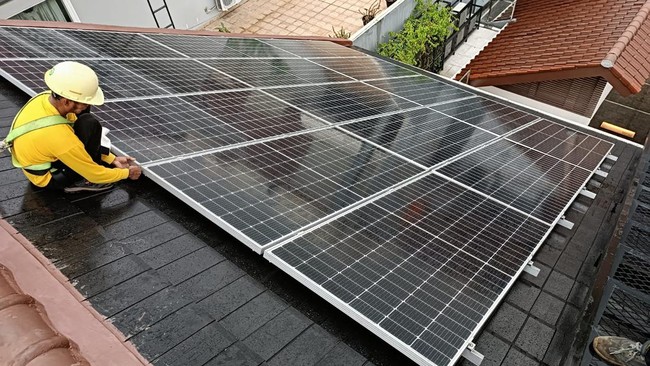
Solar energy is frequently discussed as Indonesia lies on the equator, receiving sunlight year-round. Theoretically, solar power offers advantages such as consistent sunlight, modular technology, simpler maintenance, and suitability for distributed energy models and residential prosumers.
For instance, the 100 MWp Purwakarta Solar Plant, currently Indonesia’s largest solar facility, demonstrates the feasibility of domestic solar implementation.
However, a fundamental drawback is that PLTS operates optimally only during daylight hours, with output dropping sharply during cloudy or rainy conditions. This intermittency is a major challenge. Common solutions like battery storage remain relatively expensive.
Considering these pros and cons, PLTS is better suited as a supplementary energy source rather than a primary one. It is ideal for remote areas without grid access or for rooftop installations aiming to reduce reliance on conventional electricity.
Wind Power Plant (PLTB)
Beyond solar, wind energy (PLTB) has potential, albeit unevenly distributed across Indonesia and less competitive than solar or geothermal.
Eastern regions such as South Sulawesi, Nusa Tenggara, and Maluku have consistently good wind speeds.
The Sidrap Wind Farm in South Sulawesi is a concrete example. With an average wind speed of 6.43 metres per second, it generates 75 MW—smaller than the Purwakarta Solar Plant but still significant for clean energy supply.
Challenges include Indonesia’s equatorial wind speeds being lower than in Germany or Denmark, seasonal and fluctuating wind patterns leading to unstable output and lower capacity factors. Additionally, optimal wind sites are often far from demand centres, requiring extra transmission infrastructure.
PLTB’s main advantage is low operational costs post-construction. However, like PLTS, it faces intermittency issues as wind isn’t constant, causing irregular electricity production.
PLTB is best developed in specific regions with consistent wind speeds. Regrettably, this potential remains underutilised despite the vast opportunities in eastern Indonesia.
Small Modular Reactor (SMR)
This topic is the most sensitive among all technology options. Mentioning ‘nuclear’ immediately brings Chernobyl or Fukushima to mind for many. Indonesia currently operates three non-power nuclear reactors (Kartini, Triga, and GA Siwabessy) for health, food, agriculture, and environmental purposes. To date, it has no nuclear power plants (PLTN). Nuclear technology for power generation has advanced significantly.
SMRs are fourth-generation reactors designed for more efficient nuclear energy production with a maximum capacity of 300 MWe. They offer advantages such as greater flexibility than conventional reactors, lower maintenance costs, shorter development times, and proven reliability in countries like Russia and China.
The first commercial SMR began operation in Russia in May 2020 with a 35 MWe capacity and is now deployed in China. With a Net Zero target by 2060, Indonesia needs all available low-carbon energy options.
SMRs’ key advantage is weather-independent, stable power supply. What’s needed now is thorough analysis and honest public discussion on SMR’s potential and comprehensive risk mitigation.
Hydrogen
Hydrogen is increasingly discussed in energy forums. Indonesia has significant potential for various hydrogen types. Green hydrogen from renewable sources has a potential capacity of 3,689 GW. Blue hydrogen from natural gas is supported by reserves of 41.62 TCF, while brown hydrogen from coal amounts to 38.84 billion tonnes. Hydrogen is a solution for hard-to-abate sectors such as cement, steel, and petrochemical industries, as well as heavy transport like long-haul trucks and ships.
Current hydrogen supply is dominated by coal and natural gas. Key challenges include uncompetitive green hydrogen production costs, infrastructure limitations, technological constraints, investment access, payment issues, and policy support opportunities to make hydrogen commercially viable.
However, global trends clearly indicate a shift towards green hydrogen. Indon