
From Shenzhen, Indonesia Seeks an Industrial Leap
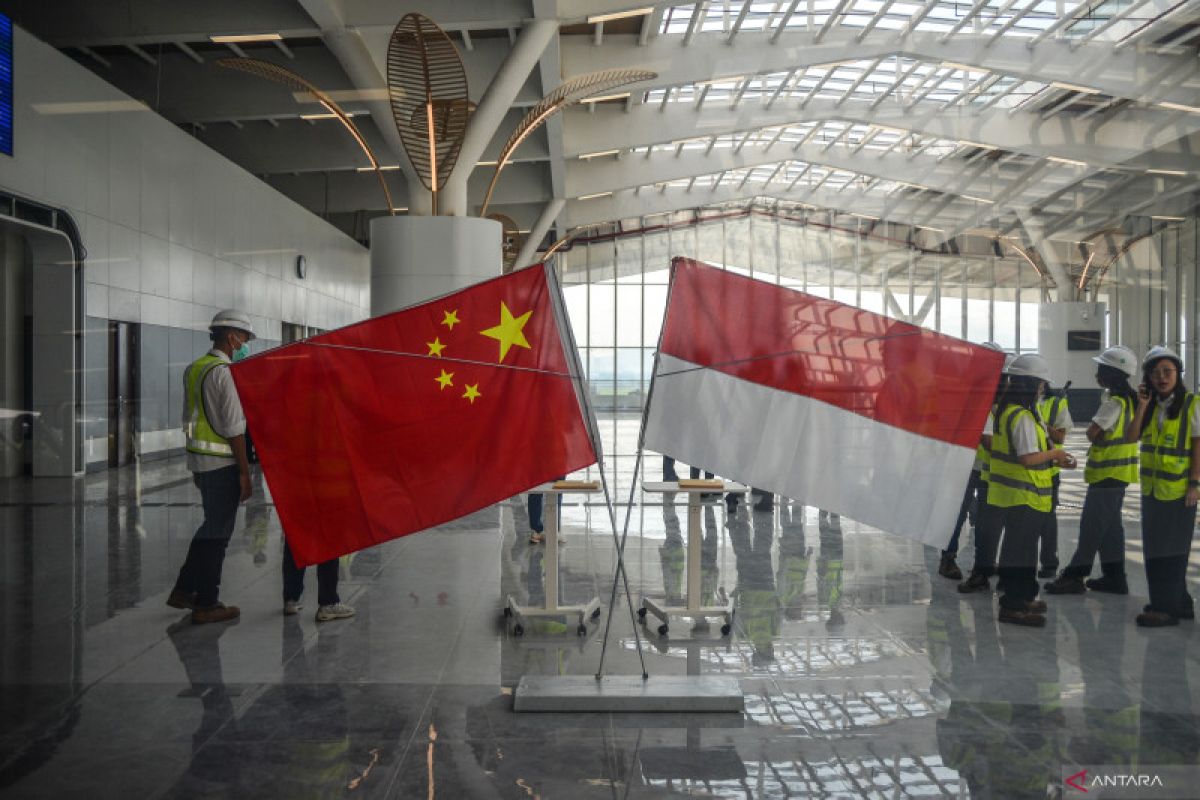
Jakarta (ANTARA) – President Prabowo Subianto’s visit to Shenzhen, Guangdong Province, China, from 18 to 20 November 2026, as part of the 33rd Asia-Pacific Economic Cooperation (APEC) Summit and efforts to strengthen Indonesia-China relations, resulted in a number of strategic and business agreements.
The agreements offer opportunities to expand production capacity, develop technology and strengthen Indonesia’s position in global supply chains.
However, the benefits will depend on the government’s ability to ensure that investment boosts the capabilities of domestic industry, expands the involvement of local companies and produces higher-value goods.
On 18 November, Indonesia and China announced four strategic agreements involving investment and cooperation commitments worth around US$71.8 billion.
They included the development of the first 10 future-city sites, worth around US$50 billion, and Hisense’s investment commitment of around US$10 billion to build a joint research and development centre, develop talent and manufacture household appliances.
The other two agreements covered an infrastructure financing partnership between Danantara and a consortium led by the State Development and Investment Corporation (SDIC), worth around US$10 billion, and cooperation on coal-to-ethanol conversion technology, with an investment value of around US$1.8 billion.
The projects to be financed and the funding arrangements still need to be clarified before the financing partnership can be considered ready for implementation.
On 20 November, the Indonesia-China Business Forum produced 35 business agreements involving planned investment of around US$15.76 billion and an estimated 30,461 jobs.
Thirty of the agreements were memorandums of understanding (MoUs) involving planned investment of US$12.50 billion, while the other five covered projects already under construction, worth US$3.26 billion.
The sectors included integrated industrial estates, chemicals and petrochemicals, energy, manufacturing, healthcare, the digital economy and mineral downstream processing.
The two announcements represent commitments and investment plans at different stages of implementation. Their stated values therefore cannot be treated as investment already realised.
Chinese investment has already built up a substantial track record in Indonesia. Data from the Investment Coordinating Board (BKPM) show that realised investment from mainland China between 2021 and the first half of 2026 reached US$38.34 billion and employed 553,492 local workers.
Basic metals received the largest share, at US$17.2 billion, followed by transport, warehousing and telecommunications, at US$5 billion, and chemicals and pharmaceuticals, at US$3.9 billion.
The scale of investment in basic metals highlights the role of Chinese capital in developing mineral-processing industries. Future partnerships should extend that development into manufacturing and supporting industries.
Seeking greater added value
The direction of investment is relevant to the structure of trade between Indonesia and China.
Total trade between the two countries from January to September 2026 reached US$132.13 billion. Indonesia’s exports were valued at US$55.47 billion, while imports reached US$76.67 billion. Indonesia recorded a trade deficit of US$21.20 billion with China.
Indonesia’s exports to China include ferro-alloys, nickel matte, lignite, coal, and copper ores and concentrates.
Imports from China include telephone equipment, automatic data-processing machines, passenger vehicles, chemicals for the electronics industry, and heavy equipment such as bulldozers and excavators.
Some imports, including data-processing machines and heavy equipment, can support domestic production. However, the export mix shows scope to increase shipments of processed products and manufactured goods.
Investment should be used to strengthen Indonesia’s capacity to produce these goods, so exports do not remain reliant on commodities and early-stage processed products.
Integrated industrial estates can support this development by bringing production facilities, infrastructure and logistics services together in one area. Having facilities close to one another could reduce costs and speed up production.
National companies should also have opportunities to supply materials, components and industrial services, allowing them to connect with production activities in these estates.
Hisense’s investment commitment to manufacturing, research and development, and workforce training could strengthen the technical capabilities of domestic industry.
Involving universities and local experts in research will be important to support product development and engineering. Workforce training should also be tailored to the requirements of the facilities being built.
The planned coal-to-ethanol technology should be assessed for its economic and technical viability. The availability of feedstock, process efficiency, environmental impact and certainty of demand must all be considered before a facility is built. These factors will determine both the product’s competitiveness and the project’s sustainability.
Indonesia already has a foothold in developing the renewable-energy components industry. PT Trina Mas Agra Indonesia (TMAI), for example, inaugurated an integrated solar-cell and module factory at the Kendal Industrial Estate in Central Java in 2025.
The facility has production capacity of up to 1 gigawatt per year. Developing similar industries could strengthen manufacturing capacity to support solar-energy needs.
The next step is to ensure that investment commitments are delivered. On 24 November 2026, President Prabowo instructed his officials to follow up promptly on investment agreements worth around US$15 billion from Shenzhen.
Investment and Downstreaming Minister, BKPM head and Danantara Indonesia chief executive Rosan Roeslani said the projects had received approval from the relevant Chinese authorities, including the National Development and Reform Commission (NDRC), as well as approval for outbound direct investment (ODI).
Approval from an investor’s home-country authorities does not by itself mean that a project is ready to be built and operated in Indonesia. The President also asked the government to calculate the projects’ impact on employment.
On the same day, Coordinating Minister for Downstreaming and Energy Transition and Energy and Mineral Resources Minister Bahlil Lahadalia said implementation of investment commitments made during the APEC meetings was expected to begin in 2027.
That forecast provides an initial benchmark for tracking each project’s progress and ensuring it is ready for implementation.
Readiness will also depend on the domestic business climate. Deputy Investment and Downstreaming Minister and deputy head of BKPM Todotua Pasaribu said on 12 August 2026 that an investment cycle in Indonesia still took around 4.5 to five years. He said complicated licensing procedures contributed to the delay.
The introduction of a deemed-approval mechanism for business permits through the Online Single Submission (OSS) system is one measure intended to speed up services. On 9 November 2026, Todotua said the mechanism had been applied to 287 of around 560 types of permit.
Under this mechanism, an application that meets the requirements may be deemed approved if it is not processed within the service deadline. Its application still requires oversight to ensure faster services do not compromise technical requirements, safety, spatial planning or environmental protection.
The need to reform the business climate is also reflected in the Indonesia Country Private Sector Diagnostic published by the World Bank Group in October 2026.
The study estimates that reforms in solar energy, data centres and cold-chain logistics could mobilise up to US$15 billion in private investment and create as many as 300,000 jobs over the medium term.
Those figures represent potential dependent on the implementation of reforms, not investment already realised.
Each of the three sectors requires different improvements. Solar energy needs regulatory certainty and market access; data centres require simpler licensing and clear rules for data management; and cold-chain logistics depend on connected transport networks and storage facilities.
Improvements in these sectors could widen opportunities for private investment while raising productivity across economic activity.
The government should set measurable targets and milestones for each project, from completing financing to starting commercial operations. Monitoring should cover construction progress, job creation, domestic supplier participation and production outcomes.
Regular reporting would help the public distinguish between commitments, projects under construction and investment that is already operating.
The success of Indonesia-China partnerships will be evident when investment strengthens national industry, improves the capacity to produce higher-value manufactured goods and expands Indonesia’s competitiveness in global markets.
Source: jawawa.id (https://jawawa.id/newsitem/from-shenzhen-indonesia-seeks-an-industrial-leap-1795603824)
Originally published by m.antaranews.com (https://m.antaranews.com/amp/berita/5876987/dari-shenzhen-indonesia-bidik-lompatan-industri), translated from Indonesian