
From Schroders to Morgan Stanley: Why Are Global Financial Giants Looking to Exit Indonesia?
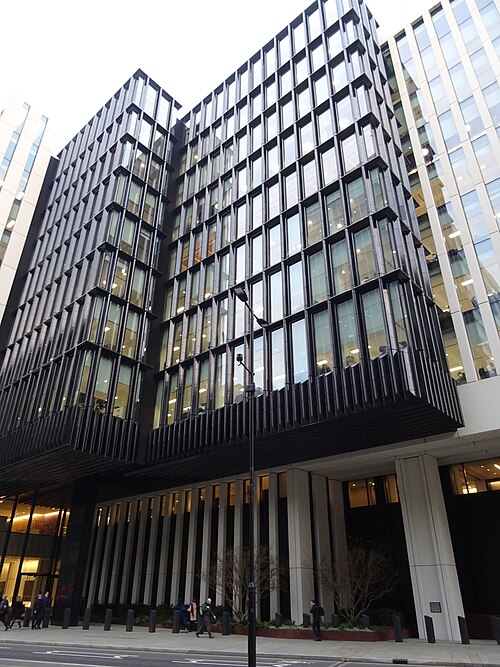
JAKARTA — In recent years, several global financial firms have reduced or ended some of their activities in Indonesia’s capital market. Morgan Stanley closed its domestic share-trading business, while Schroders, the UK-based investment manager, has reportedly been seeking a buyer for its Indonesian operation.
The trend raises questions about the appeal of Indonesia’s capital market to international financial firms. Are these decisions simply part of global restructuring strategies, or do they also reflect challenges in developing investment businesses in the domestic market?
Schroders, an investment management company with a history spanning more than two centuries, is reportedly planning to sell its Indonesian business, which has around US$4 billion in assets under management. The plan was reported by The Business Times and Yahoo Finance in December 2024.
According to two sources familiar with the matter, the move came as Schroders considered exiting several markets deemed underdeveloped under its new chief executive, Richard Oldfield.
Oldfield, who took up the post in November 2024, is said to be seeking to cut underperforming business units to improve the company’s performance after a series of disappointing earnings reports.
The pressure on the company was also reflected in Schroders’ share price, which the reports said had fallen to its lowest level in 11 years.
A Schroders Indonesia spokesperson said the company continued to speak with prospective partners to ensure that services and value for clients were maintained. The company declined to comment on specific market speculation.
Schroders seeks a buyer as several companies are reportedly interested
The Business Times reported that Schroders had appointed several advisers, including UBS, to explore a possible sale of its Indonesian business.
At least four companies are reportedly interested. They include HSBC’s asset management division, Allianz and Bank Negara Indonesia (BNI).
BNI Corporate Secretary Okki Rushartomo said the bank was open to various options to strengthen its business group as part of its transformation. However, he declined to comment specifically on the possibility of a transaction.
The value of a sale of Schroders Indonesia has not been established.
The planned divestment follows around three decades of efforts by the company to grow its business in Indonesia. Sources quoted in the reports said pressure on Schroders’ shares had also raised investor expectations for a change in the company’s strategy.
Schroders Indonesia is understood to manage around US$4 billion in assets, equivalent to about 1.6 per cent of the company’s total assets under management in Asia-Pacific. The region is Schroders’ second-largest market by assets managed.
One challenge facing active investment managers such as Schroders is competition from passive fund managers and providers of alternative investment strategies in attracting new inflows globally. Some Asian markets are also considered yet to have fully realised their potential for sustained asset growth.
Nevertheless, seeking a buyer does not necessarily mean that all investments managed by Schroders will leave Indonesia. A sale of the business could involve transferring ownership of the company or handing management of the assets to another party.
Morgan Stanley had already ended its domestic share-trading business
Before news of Schroders emerged, Morgan Stanley had taken steps to end its domestic stockbroking activities in Indonesia in 2021.
In a report carried by Business Recorder in May 2021, the US investment bank said it intended to discontinue its domestic broker-dealer activities in Indonesia.
Morgan Stanley nevertheless reaffirmed its commitment to Indonesia and said it would continue to provide global clients with access to the stock market through partnerships with local securities firms.
A source familiar with the decision said it affected around 10 jobs. Sales, trading and research functions were subsequently to be carried out from Singapore, Morgan Stanley’s operational hub in South-east Asia.
Morgan Stanley’s domestic share-trading business in Indonesia had only opened in 2012. Earlier, in November 2011, then chief executive James Gorman had said that developing the company’s business in Indonesia was a priority and an important strategic commitment.
The decision to end its domestic brokerage activities did not mean that all Morgan Stanley services in Indonesia were being discontinued.
The company said equity research coverage would be provided from abroad, namely Singapore. Meanwhile, PT Morgan Stanley Sekuritas Indonesia would continue serving domestic investment-banking clients.
Morgan Stanley’s move should therefore be understood as ending share-trading through its domestic unit, rather than withdrawing all of its operations from Indonesia.
Global restructuring and challenges in the domestic market
The Schroders and Morgan Stanley cases show that global financial firms’ decisions to scale back activities in Indonesia do not necessarily have the same causes.
In Schroders’ case, the planned sale of its Indonesian unit has been linked to the new management’s efforts to cut businesses considered underdeveloped and improve company performance. Morgan Stanley, meanwhile, explicitly said it would continue serving global clients through local partners after ending its domestic brokerage business.
Even so, both decisions are relevant to assessing the competitiveness of Indonesia’s capital market. For global financial firms, a large pool of investors alone may not be enough to ensure a sustainable business.
Trading liquidity, the potential for asset growth, operating costs, regulatory certainty, the quality of listed companies and revenue opportunities are among the factors that may shape decisions on how to allocate resources.
At the same time, parent companies’ decisions to streamline operations globally can affect their businesses in Indonesia, regardless of developments in the domestic market.
The departure or reduction of activity by some global firms therefore cannot immediately be taken as proof that Indonesia’s capital market has lost its appeal. Further assessment is needed to distinguish decisions driven by companies’ internal strategies from those related to local market conditions.
For regulators and industry players, these developments are a reminder of the importance of strengthening the capital-market ecosystem, from improving the quality of listed companies and deepening liquidity to enhancing disclosure and strengthening investor protection.
Ultimately, Indonesia’s challenge is not only to attract international financial firms, but also to ensure that the domestic market offers competitive business conditions and strong reasons for them to remain and expand over the long term.