
From safety nets to economic growth
Looking further ahead to 2027, the government’s policy direction is becoming broader as it enters the design phase for next year’s economic programmes.
Jakarta (ANTARA) - Maintaining purchasing power is one of the government’s primary pillars heading into the end of 2026. The government’s efforts do not stop at economic policies aimed at curbing pressure on consumption; they go much further.
The government has begun drafting policy continuity so that social protection, through various social assistance programmes, can be developed into an increase in the economic capacity of the community by 2027.
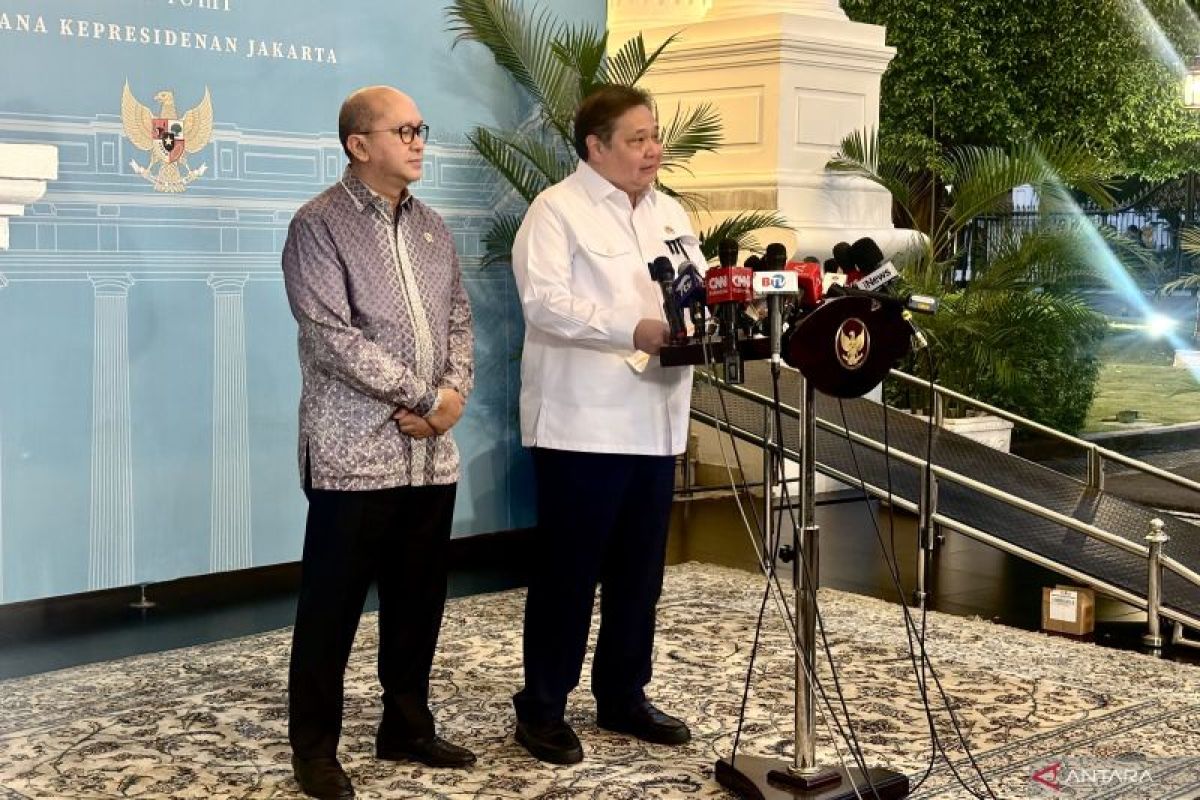
Coordinating Minister for Economic Affairs Airlangga Hartarto stated on 30 September, at the State Palace, that the government is preparing several programmes for the fourth quarter of 2026. These include 10kg monthly rice food assistance for 33.24 million beneficiary families, as well as Wage Subsidy Assistance (BSU) of Rp300,000 per month for three months for approximately 13.3 million workers.
These aid packages serve as a cushion as the government faces the need to maintain household consumption at the end of the year. Food assistance can reduce household expenditure pressure, while the BSU provides direct additional income to eligible workers.
The government is also preparing to facilitate bank account openings for citizens over the age of 17, specifically targeting deciles 1 to 4. From these three aid-oriented economic policies, it is evident that social protection is being implemented alongside efforts to expand public access to the financial system.
However, looking further ahead to 2027, the government’s policy direction becomes broader as it enters the design of economic programmes for next year. The purchasing power cushions provided in late 2026 are not intended to stand alone; rather, they are expected to evolve when linked with various other government programmes related to employment, skills, labour protection, taxation, and housing.
In 2027, the government plans to continue internship programmes for 150,000 participants and vocational programmes for 300,000 people. These two policies aim to begin untangling labour issues, such as unemployment rates.
Once the public has been assisted in facing economic pressures, their capacity to enter or remain in the labour market must be strengthened through skills that better align with business needs.
Regarding worker income, the government is preparing a reduction in Article 21 Income Tax (PPh 21) for workers earning below Rp10 million per month, which is estimated to cover around 7.5 million people. Adjustments to non-taxable income thresholds are also on the agenda.
Tax instruments, therefore, are not viewed solely from the perspective of state revenue. In the design of this policy package, ensuring that more disposable income remains in the hands of workers is part of the effort to maintain public consumption.
The series of policies then moves towards longer-term needs, namely housing. The government is preparing to continue VAT incentives borne by the government for the housing sector, as well as a subsidized mortgage scheme with a six per cent interest rate.
This six per cent fixed-rate mortgage is aimed at fixed-income groups with monthly earnings of approximately Rp17 million and houses valued up to Rp500 million. This policy expands access for those whose income exceeds the limit for the five per cent interest Housing Financing Liquidity Facility (FLPP), which is capped at Rp14 million.
Housing is linked to two sides of the economy simultaneously. For the public, homeownership is a basic need and a means of asset formation. For the economy, the housing sector is connected to construction, building materials, finance, labour, and various business activities throughout its supply chain.
Labour protection.