
From Rp420 Trillion Microcredit to Social Assistance: Prabowo's Strategies to Boost the Economy in Q4
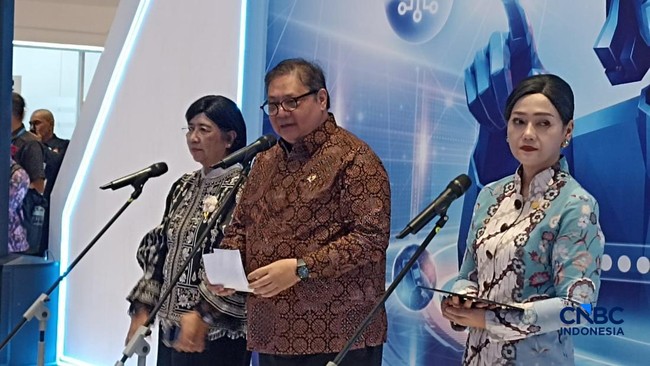
The Coordinating Minister for Economic Affairs, Airlangga Hartarto, has revealed a range of government strategies designed to maintain Indonesia’s economic growth momentum through the end of 2026. These policies encompass social assistance, food subsidies, business credit, transport incentives, and the development of biodiesel.
Airlangga stated that the Indonesian economy remained relatively solid during the first semester of 2026. This stability is reflected in inflation rates, which remain within the government and Bank Indonesia (BI) target of 2.5% plus or minus 1%.
“Our economy in the first semester was relatively solid. I would say inflation is within the range of 2.5% plus or minus 1%. This also shows that our economy is moving,” Airlangga said during the FEKDI x IFSE 2026 event on Thursday (24/09/2026).
According to him, inflation movements also indicate active consumer demand. The government, therefore, needs to maintain this momentum to prevent disruptions.
One factor Airlangga noted as influencing economic dynamics is the increasing public interest in gold. This trend is one of the reasons the government is encouraging the development of bullion banking.
“We need to maintain this because one factor for the increase is that the public is storing gold. This is one of the policies to encourage bullion banking,” he said.
Airlangga emphasised the importance of synchronising fiscal, monetary, and real sector policies to sustain economic growth. He noted that coordination between these three pillars is essential to drive exports and strengthen the real sector.
The government is also preparing several programmes to maintain public purchasing power and support economic activity in the fourth quarter of 2026. One such initiative is the Family Hope Programme (PKH), with a budget of Rp20.44 trillion aimed at 27.3 million beneficiaries.
Furthermore, the government has prepared rice assistance of 10 kilograms per month for the October–December 2026 period for 33.2 million recipients. In terms of food security, the distribution of Stabilisation of Food Supply and Price (SPHP) rice has reached 817,000 tonnes as of 20 September 2026.
The government is also implementing low-cost food programmes in collaboration with Bank Indonesia through inter-regional cooperation. Airlangga mentioned that as of July 2026, this programme has operated in 208 regions.
“This is to control inflation and boost the economy in the fourth quarter,” he said.
Regarding financing, the government has prepared People’s Business Credit (KUR) with a ceiling of Rp420 trillion. To date, realisation has reached Rp234.17 trillion. Airlangga noted that credit distribution also targets the agricultural and fisheries sectors, including support for the procurement of agricultural tools and machinery.
The government is also increasing financial support for the housing sector, with housing credit amounts raised to Rp50 trillion.
In the energy sector, the government continues to push the implementation of B50 biodiesel. As of September 2026, the use of biodiesel has reached approximately 11 million kilolitres (KL).
The government is also providing various incentives to manage production costs and support the industrial sector. These include price incentives for plastics and their derivatives, as well as import duty exemptions for several necessities, including LPG and aircraft spare parts. Meanwhile, the government has provided transport and holiday incentives valued at Rp349.4 billion.
Airlangga stated that these various stimuli are directed at maintaining price stability while preserving economic growth momentum in the fourth quarter.
Despite the relatively solid economic conditions, Airlangga warned that the government must anticipate future inflation risks, particularly those resulting from weather changes and natural disasters.
“Moving forward, inflation needs to be anticipated due to El Niño and natural disasters,” he said.
To mitigate these risks, the government will strengthen the food sector through the optimisation of irrigation, accelerated development, regulated planting patterns, and the utilisation of early warning systems.
Source: jawawa.id (https://jawawa.id/newsitem/from-rp420-trillion-microcredit-to-social-assistance-prabowos-strategies-to-boost-the-economy-in-q4-1790229220)
Originally published by CNBC Indonesia (https://www.cnbcindonesia.com/news/20260924105247-4-770488/kur-rp420-t-hingga-bansos-ini-jurus-prabowo-genjot-ekonomi-di-q4), translated from Indonesian