
From Rp 600,000 Capital, Dewi Brings Garutan Batik to the US Market
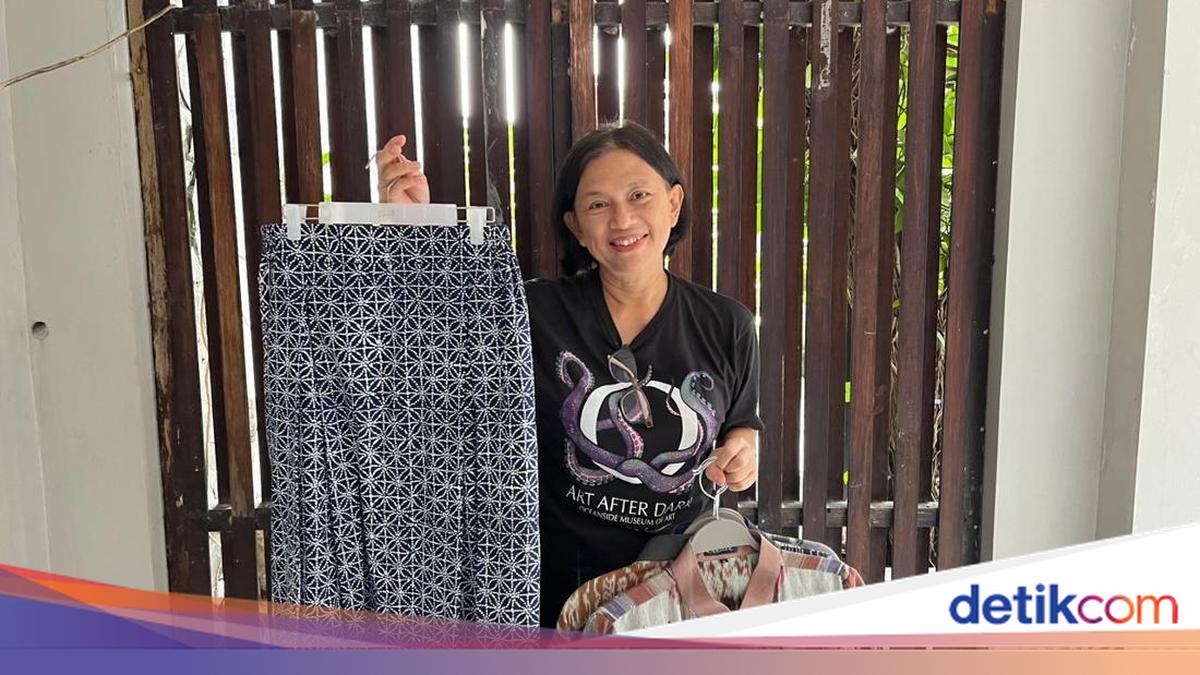
A simple desire to maintain an income into old age was the starting point for Dewi Agustiati’s journey in establishing a batik business. The 59-year-old woman never imagined that a venture starting with just 600,000 Rupiah in capital would lead her to penetrate the United States market.
In Tanjung Barat, South Jakarta, the site of her home, Dewi began building her batik business, known as Kaaseeh Apparel, from scratch, despite having no prior experience in fashion. Reflecting on her journey, Dewi recalled that she initially only attempted to send Indonesian batik to America due to requests from family and friends.
“My main intention was actually as a housewife, but I wanted to ensure that by the time I reach 70, I still have an income. I didn’t want to be solely dependent on my husband’s income, as his entrepreneurial work has its ups and downs. So, it started very simply,” Dewi said during a recent conversation.
At the time, Dewi only intended to run a small-scale business. Subsequently, she conducted extensive research to determine which types of batik would be accepted in the American market. She discovered that not all batik she sent received a positive response.
From her research, Dewi concluded that the American market’s character differs from Indonesia’s. Certain colours were unpopular, as were overly intricate motifs.
“There were certain colours that didn’t sell; that required lengthy research,” Dewi noted.
After testing various types of batik, she finally found the most suitable variety for the California market: Garutan batik. Beyond motifs, Dewi also had to adapt the fabric to California’s climate, which differs from Indonesia. She chose materials such as cotton and rayon, which are more comfortable for that region.
As her products gained acceptance, Dewi realised that relying solely on the American market would limit her business growth. “After a few years, starting from 2019, I thought that if I only sent goods there, it would be limited. The demand and my income would be capped. Therefore, I decided I had to enter the Jakarta market,” she explained.
Entering the Jakarta market presented new challenges, as many batik entrepreneurs were already established there. “Entering Jakarta felt like entering a jungle because the competition is extraordinary, especially since I was bringing batik designed for a different market,” Dewi said.
She initially attempted to sell the batik intended for America in the local market, but the products were not immediately accepted. Dewi conducted further research to understand Jakarta consumers’ preferences. She found that while the American market prefers simple motifs, Jakarta consumers are more attracted to bold patterns and striking colours.
“It was completely different. Consequently, I needed new capital. I started from absolute zero,” she said.
She subsequently joined the Jakpreneur programme. Initially unaware of the programme, she sought information from her local community and eventually registered via her sub-district office. This led to professional mentoring. Her business story caught attention, leading her to participate in a product curation process at the Jakarta Creative Hub. Initially, she did not realise this process was linked to international exhibition opportunities.
She submitted several products for evaluation, covering stitching quality, neatness, motif combinations, and packaging. Unexpectedly, her products received an ‘A’ grade. This opened doors to various exhibitions, ranging from City Hall to Grand Indonesia.
Her journey continued with Rumah BUMN Jakarta. After sharing her business story, she learned about the BRI incubator programme. She participated in the selection process and was chosen as a participant in BRIncubator. For three months, she underwent online training regarding business development. Through this journey, Dewi realised that opportunities for business expansion do not simply appear; one must actively seek them.
In addition to training, Dewi required capital to expand production. At that point, she applied for the BRI People’s Business Credit (KUR). Following a survey, she received a loan of 70 million Rupiah. She noted that the disbursement process was swift because her business was deemed high-potential.
Thanks to these efforts, Dewi now routinely ships batik products to America. She can ship up to twice a month, with weights of approximately 25 kilograms per shipment. In San Diego, her products are accepted by three clients, including Krafis, which distributes her products to a wider market. Dewi does not sell directly to end consumers; she prefers a wholesale system to focus on production.
From these shipments, Dewi mentioned that her gross monthly income can reach approximately 50 million Rupiah, though this figure fluctuates based on order volume. Currently, she is expanding the impact of her business by employing tailors. She has three people assisting with production, including two tailors in Cijantung whom she supported by providing sewing machines.
Source: jawawa.id (https://jawawa.id/newsitem/from-rp-600-000-capital-dewi-brings-garutan-batik-to-the-us-market-1782841927)
Originally published by detikcom (https://news.detik.com/berita/d-8554588/dari-modal-rp-600-ribu-dewi-bawa-batik-garutan-tembus-pasar-amerika), translated from Indonesian