
From Ritual Worship to Total Devotion
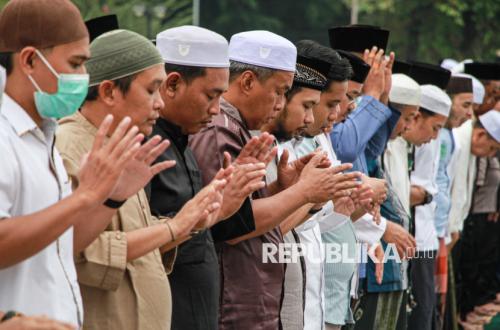
There is a paradox in human life, including among Muslims. In the mosque, people acknowledge Allah as the one God, bow in prostration, pray and seek His guidance. Yet when they enter the market, office, parliament or palace, they often use standards, values and rules that differ from Allah’s guidance, or even disregard and contradict it. It is as though Allah has authority only over worship and the afterlife, while worldly life is entirely a human concern.
The Qur’an teaches, however, that Allah is Rabbul ’alamin, Lord of all the worlds. Human beings were created not merely to live, seek wealth and enjoy the world, but to serve Him. Such service is expressed not only through rituals, but across every aspect of life.
Allah, Ruler of All the Worlds
Surah Al-Fatihah, verse 2, states, Alhamdulillahi rabbil ’alamin: praise be to Allah, Lord of all the worlds. Allah is the Creator, Sustainer, Regulator and Ruler of the universe. QS. Al-Jumu’ah: 1 and QS. Ash-Shaff: 1 affirm that everything in the heavens and on earth glorifies Him. QS. Ali Imran: 190–191 invites people to reflect on the creation of the heavens and the earth, and the alternation of night and day, as signs of His greatness.
The universe submits to Allah’s decrees. Human beings, too, are part of that creation. It is therefore paradoxical for people to acknowledge Allah as Creator while feeling free to order their lives without considering the Creator’s guidance.
The Qur’an describes Allah as Rabb, Malik and Ilah: Lord and Sustainer, possessor of sovereignty, and the only God worthy of worship. QS. Ali Imran: 26 affirms that sovereignty rests in Allah’s hands. Human authority is a trust, not an absolute possession.
Worship Is More Than Ritual
Why were human beings created? QS. Adh-Dhariyat: 56 provides the answer: Wa ma khalaqtul jinna wal insa illa liya’budun—I did not create jinn and humankind except to worship Me.
Worship means serving, submitting to and obeying Allah. Prayer, fasting, zakat and the hajj are important parts of worship. But devotion must also be practised in every aspect of daily life.
In family life, people should follow Allah’s provisions on marriage and family responsibilities. In trade, they should be honest and avoid fraud and usury. In social life, they should uphold justice and safeguard trust. In politics and government, power should be used to serve the public, not to enrich oneself or one’s group.
QS. Al-An’am: 162 offers a broad formulation: Inna shalati wa nusuki wa mahyaya wa mamati lillahi rabbil ’alamin—my prayer, my acts of worship, my life and my death are all for Allah, Lord of all the worlds.
It is therefore strange for someone to pray regularly yet commit corruption, or to fast regularly yet cheat in business. Devotion demands consistency between belief, words and actions.
The Unity of the Prophets’ Message
The message of devotion to God is not found only in the Qur’an. The Qur’an explains that all the prophets brought the same essential message. QS. Al-Anbiya: 25 states that every messenger before Prophet Muhammad received the revelation that there is no god but Allah and that people are to worship Him. QS. An-Nahl: 36 likewise explains that every community was given a messenger who called people to worship Allah and shun taghut.
A similar message can be found in other holy books. The Torah, in Deuteronomy 6:4–5, states that God is one and that people should love Him with all their heart, soul and strength. Deuteronomy 10:12–13 commands people to fear God, walk in His ways and worship Him.
In the Gospel of Mark 12:29–31, Jesus cites the Torah’s statement on the oneness of God and commands people to love God with all their heart, soul, mind and strength, and to love their neighbours as themselves. Matthew 6:10 also includes the prayer, “Thy will be done on earth as it is in heaven.”
The Bhagavad Gita 9:27, too, teaches that all human actions, offerings and activities should be dedicated to God.
These testimonies point to a shared central theme: devotion to God, obedience and human moral responsibility.
The Qur’an itself explains that Allah prescribed for Prophet Muhammad the religion He had enjoined upon Noah, Abraham, Moses and Jesus (QS. Ash-Shura: 13). QS. Al-Ma’idah: 48 states that every community has its own law and way. This means that the foundational principles of the messages are continuous, even though their specific religious laws differ.
The Straight Path and Dienul Islam
Every day, Muslims pray in QS. Al-Fatihah: 6, Ihdinash shirathal mustaqim: guide us to the straight path. This path is described as that of those who have received Allah’s favour: the prophets, the steadfast, the martyrs and the righteous (QS. An-Nisa: 69).
Shirathal mustaqim is not an abstraction, but the path of devotion and obedience to Allah in daily life. QS. Al-A’raf: 96 explains that if the people of a land believe and are mindful of God, Allah will bestow blessings upon them from heaven and earth.
In this context, it is important to understand the word dien. Its meaning is not limited to religious identity or ritual; it is also connected to submission, obedience and accountability. Abul A’la Maududi, in The Four Key Concepts of the Qur’an, discusses dien as a concept encompassing authority, obedience and the ordering of life.
QS. Ali Imran: 19 states, Innaddina ’indallahil Islam: truly, the dien in Allah’s sight is Islam. Islam, therefore, is not an identity or religious symbol, but a guide to devotion encompassing faith, worship, ethics, law, the economy and social life. This was revealed not only to Prophet Muhammad, but also to all the prophets before him.
Islam’s Distinction and the Challenges of Modern Life
The modern world has various ideologies and systems of life, including liberalism, secularism, capitalism, materialism and socialism. Each offers a perspective on humanity, power, freedom, ownership and welfare.
The fundamental question posed by all these ideologies is: what is the source of the values and rules that guide and order human life? Is it the interests of the market, state power, the majority’s will or Allah’s guidance?
QS. An-Nisa: 59 commands believers to obey Allah, the Messenger and those in authority, and to refer disputes back to Allah and His Messenger. QS. An-Nisa: 58 commands that trusts be given to those entitled to them and that judgement be made with justice.
In Indonesia, these principles are relevant to the management of natural resources, economic policy, anti-corruption efforts, law enforcement and governance. Is the country’s wealth truly being used for the public good? Is power regarded as a trust to serve, or as an opportunity for self-enrichment?
QS. Ash-Shaff: 9 sets out the mission of prophethood: Allah sent His Messenger with guidance and the true dien, and made it prevail over all other ways of life. Islam’s distinction lies not primarily in economic, political or military terms. It is reflected in the truth of its creed, moral excellence, justice under the law and its ability to foster a life that brings mercy to humanity.
Ultimately, the human question is one of devotion: to whom does a person dedicate their life—to Allah, or to money, position, power and desire?
Allah is Lord of all the worlds. Human beings should serve Him. The messengers were sent to show the way of such devotion. That is shirathal mustaqim, while dienul Islam is the guide to life that leads people along it.
This issue feels particularly relevant in Indonesia today. Debates over anti-corruption efforts, the management of national wealth, freedom to voice criticism and environmental protection show that the nation’s problem is not necessarily a lack of rules. The rules may be flawed because they follow the wishes of an oligarchy or a majority consensus that departs from Allah’s commands. Alternatively, the rules may accord with divine guidance, while officials’ morality and orientation towards power have gone astray.
Globally, the humanitarian tragedy in Gaza and conflicts elsewhere show how the pursuit of power can override human values and justice. The article argues that “democracy”, celebrated for more than two centuries, has instead brought widespread conflict and war.
This is where Islam’s teaching—understood in the sense outlined above—of total devotion finds its social and political relevance. Acknowledging Allah as Rabbul ’alamin should mean placing justice, trustworthiness, the protection of life and human welfare above personal or group interests. Power is not a right to dominate others, but a trust to administer life in accordance with His guidance.
Tawhid is devotion. Devotion leads people to shirathal mustaqim, which should be expressed in personal life, society, the economy, politics and government. People should not acknowledge Allah as Lord in the mosque, only to disregard His guidance in the market, office, parliament and palace.
Source: jawawa.id (https://jawawa.id/newsitem/from-ritual-worship-to-total-devotion-1795503181)
Originally published by Republika (https://opini.republika.co.id/berita/tozt0o393/dari-ibadah-ritual-menuju-penghambaan-total), translated from Indonesian