
From Rice Fields to Global Markets, BNI Weaves Indonesia's Economic Self-Reliance
Every morning, the pulse of Indonesia’s economy does not revolve around luxurious skyscrapers. The wheels begin turning in the rice fields before sunrise, in the seas where fishermen cast their nets, and in market stalls just opening their doors. In these modest places, millions of people work without the spotlight. Their daily activities are the strongest foundation keeping the nation’s economy standing firm. A strong country is not just about large investment figures, but about its people being able to move their own economy.
This mindset aligns closely with President Prabowo Subianto’s Asta Cita development direction. Food security, downstream processing, and economic self-reliance are made the main pillars of national development. All three are deliberately locked in for one major goal: creating maximum added value domestically.
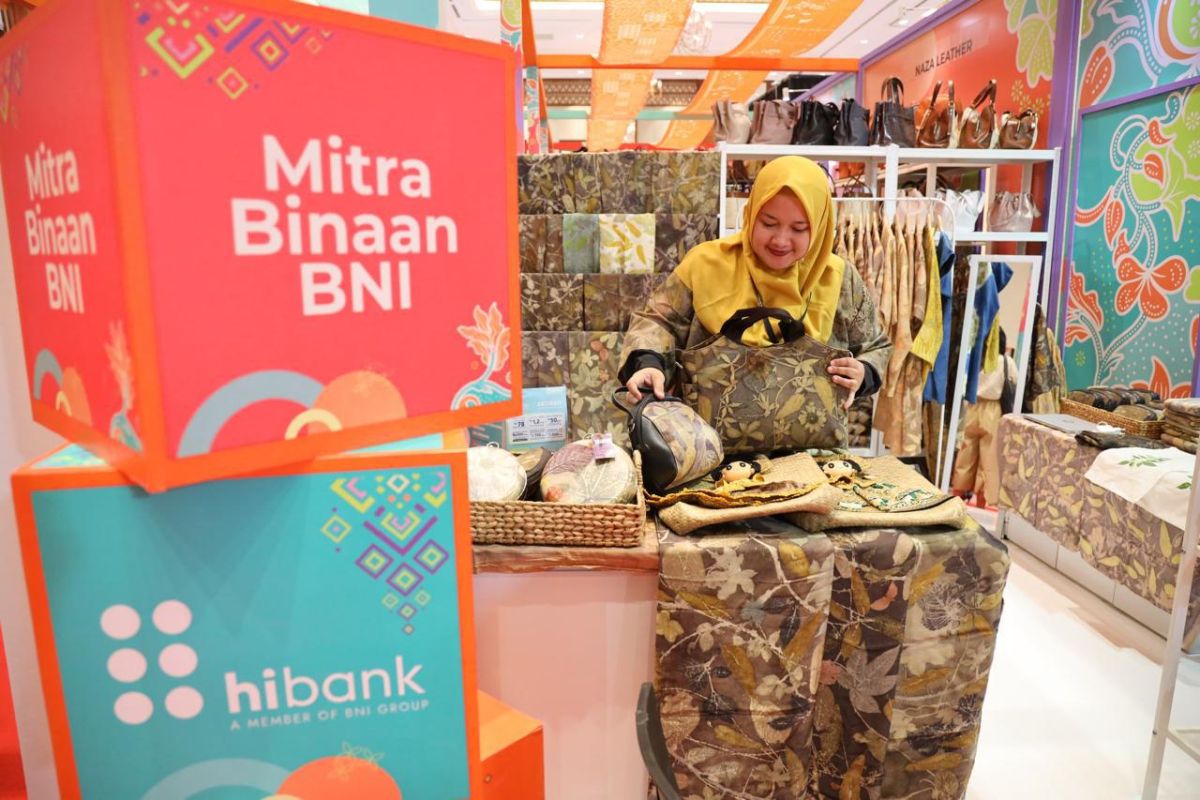
In this ecosystem, banks can no longer merely act as financing institutions. They must become bridges connecting capital, innovation, markets, and trust. This vital role has been taken up by PT Bank Negara Indonesia (Persero) Tbk, or BNI. They are not just disbursing credit, but weaving a chain of empowerment from upstream to downstream. Farmers, fishermen, cooperatives, and micro, small, and medium enterprises (MSMEs) are united in a mutually reinforcing ecosystem.
BNI’s strategy stems from realities on the ground. Many small businesses have good products but often collapse midway due to limited capital, minimal technology, and lack of market access. BNI stepped in with its Kredit Usaha Rakyat (KUR) programme as a tactical solution. The bank aggressively channels capital into productive sectors across the regions, including trade, agriculture, fisheries, industry, and services. These sectors were chosen because they absorb the most labour and have a significant domino effect on surrounding communities.
For farmers, this capital means being able to buy superior seeds, timely fertiliser, and more modern agricultural tools. As a result, productivity soars and harvests carry much higher economic value. For fishermen, fresh funds help repair boats, purchase catch cooling equipment, and develop marine aquaculture. For MSMEs, business capital is the main key to increasing production capacity to meet wider market demand.
BNI’s internal data speaks clearly about this impact. By the end of 2024, BNI’s KUR disbursement specifically for the food sector had penetrated Rp14.3 trillion. This figure is equivalent to nearly 43 percent of BNI’s total KUR portfolio, which reached Rp33.2 trillion. This capital injection has reached and assisted more than 128,000 debtors across all corners of Indonesia.
This positive trend continues to roll into 2025. By mid-2025, BNI had again channelled financing of Rp4.6 trillion, distributed to more than 20,000 MSME players in various productive sectors, ranging from trade, agriculture, and fisheries to services. Behind these figures lies a real impact felt by communities: growing businesses, newly created jobs, and gradually rising purchasing power in the regions.
However, the matter does not end with merely distributing capital. The next challenge is strengthening business institutions through cooperatives. As collective entities, cooperatives give farmers and fishermen stronger bargaining positions. BNI steps in through capital injections, service digitalisation, and financial transaction facilitation. With healthy cooperatives, small business actors can more easily purchase cheap raw materials and reach wider markets.
Once the institutional container is strong, the next stage is downstream processing. Selling raw commodities yields thin profits. BNI encourages its customers to start processing their own commodities. Coffee beans are no longer sold raw in sacks but processed into ready-to-brew coffee powder. Fishermen’s catches are not just sold fresh but processed into ready-to-eat food products with multiplied selling value. This downstream processing extends the money cycle and creates new jobs in the regions.
When products have moved up the value chain, it is time to expand the market. Through the BNI Xpora platform, local MSME players are encouraged to look towards international markets. On this platform, BNI does not just watch from the sidelines. They provide export training, business mentoring, overseas market information, business matching with international buyers, and export financing solutions. Products that once only circulated in subdistrict markets now have the opportunity to appear on global shelves.
BNI Corporate Secretary Okki Rushartomo Budiprabowo affirmed that MSMEs are the backbone of the Indonesian economy, and BNI is committed to being part of the solution by accompanying their business growth from zero. Remarkably, this alignment with the grassroots economy has not made BNI’s financial performance falter. On the contrary, the company’s business is growing healthier and more brilliantly. In the first quarter of 2026, BNI’s total credit recorded impressive growth of 20.1 percent year-on-year, reaching Rp919.3 trillion. At the same time, low-cost funds or current account saving accounts (CASA) also surged by 26.6 percent to Rp731.6 trillion. This growth successfully delivered a net profit of Rp5.6 trillion, with asset quality remaining secure as the non-performing loan (NPL) ratio was kept tight at 1.9 percent. This outstanding achievement is clear evidence on the ground that the social mission of helping the lower classes and maintaining business sustainability are not contradictory. Both can run in parallel and support each other through an inclusive economic system.
Source: jawawa.id (https://jawawa.id/newsitem/from-rice-fields-to-global-markets-bni-weaves-indonesias-economic-self-reliance-1782205087)
Originally published by Antara (Indonesian) (https://www.antaranews.com/berita/5619441/dari-sawah-ke-pasar-dunia-bni-rajut-kemandirian-ekonomi-ri), translated from Indonesian