
From Residents’ Homes to the World Stage: Mandalika’s New Energy
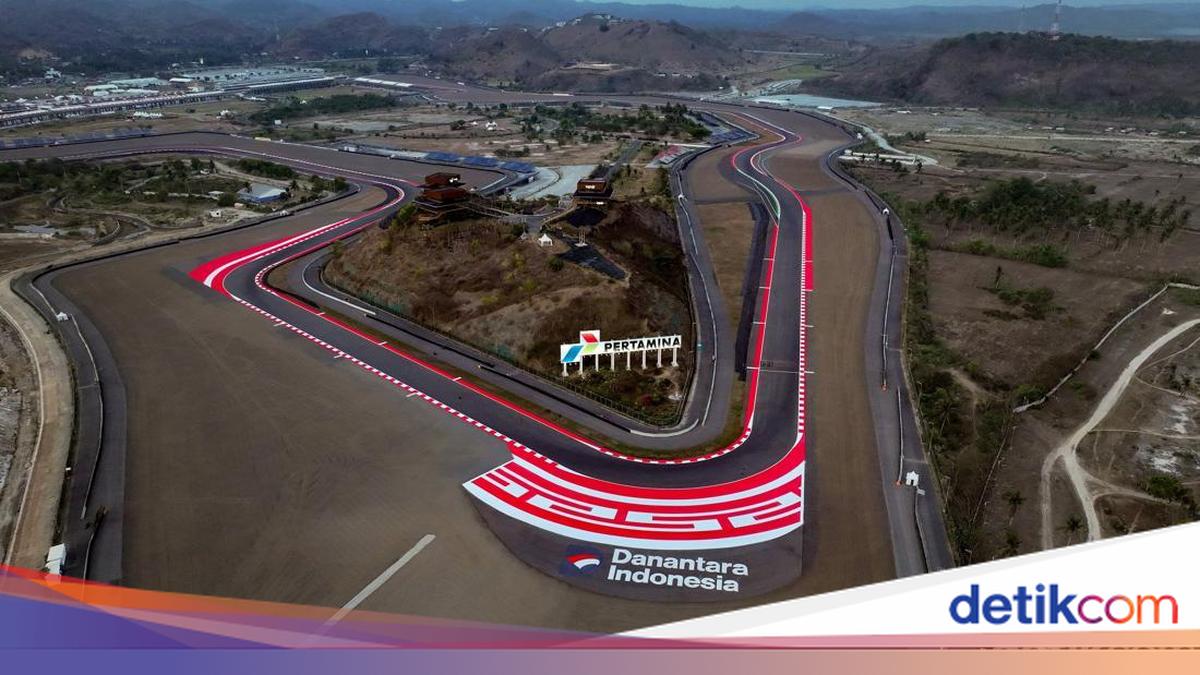
The house is no longer there. The land where Damar once lived with his family has become part of a world-class racing circuit. On it, 1,000cc motorbikes speed past, watched by thousands of spectators from around the world.
Damar still remembers the place. Before the roar of engines replaced the quiet of the village, and before black tarmac cut through hills and gardens, it was where his family led a simple life.
Since 2022, however, Damar and his family have moved to Mertak village, in Pujut sub-district, Central Lombok. The former homes of his family and dozens of others have been transformed into the paddock and premium grandstands of the Pertamina Mandalika International Street Circuit.
“It is now a premium area on the site of the homes that used to stand within the circuit,” Damar recalled on Saturday, 10 October 2026.
The change Damar experienced was more than a house move. It was part of the sweeping transformation of a coastal area in southern Lombok, West Nusa Tenggara (NTB), whose name now resonates around the world.
Mandalika, once better known for its dry land and hills, has become a magnet for tourism, investment and international motorsport. For some people outside NTB, the name Mandalika is now more familiar than that of the province itself.
In what is now the Mandalika Special Economic Zone (SEZ), most residents once relied on farming, livestock, coastal fishing or casual work. Life was simple, far removed from the prospect that their village would one day host a world motorbike-racing championship.
The transformation began to take shape with construction of the Pertamina Mandalika International Street Circuit. From the first World Superbike (WSBK) event in November 2021 to the fifth MotoGP meeting in October 2026, Mandalika has undergone a complete makeover.
But Mandalika’s story is about more than a 4.31-kilometre track, luxury hotels or thousands of tourists. Behind the spectacle are residents who have witnessed their living environment change and are trying to find their place in the new economy.
Sibawaih, 46, and Alus Darniah, 42, residents of Ebunut and Lauk hamlets in Kuta Mandalika village, are among them. They never imagined that the gardens and coastline where they grew up would be turned into a smooth asphalt circuit.
“This area used to be full of coconut trees and residents’ gardens. Even our ancestors’ graves were moved to make way for the paddock,” Sibawaih said on Wednesday, 14 October 2026.
“The footpath fishermen used to reach the sea has now become smooth tarmac, used by racers from all over the world.”
Sibawaih has witnessed the vast transformation of 300 hectares of land, part of a 1,035-hectare integrated development managed by PT InJourney Tourism Development Corporation (ITDC).
Even so, he still lives in his home just south of Turn 8 at the Mandalika Circuit. The house remains standing and has not been affected by circuit development.
Alus, meanwhile, still remembers the first time the roar of 1,000cc motorbikes rang out in her birthplace during WSBK 2021. Turkish rider Toprak Razgatlioglu clinched the world title that year.
Residents who had previously known little about motorsport flocked to the top of Batik Bantar Hill, near Turns 5 and 6, hoping to watch the race, even from a distance.
The scenery around the circuit is now very different. Residents are beginning to adapt to tourists and international races, and business opportunities are emerging.
“People are starting to adapt. Some sell souvenirs, open food stalls or rent out rooms in their homes as homestays,” Alus said.
When the first MotoGP was held in March 2022, Alus rented out two rooms in her house to spectators who could not find accommodation.
From a shortage of rooms to an investment boom
Alus’s experience illustrates one of the economic opportunities created by Mandalika’s growth. In the early years of the events, accommodation was a particular challenge.
During MotoGP 2022, Mandalika had only about 1,800 to 2,000 rooms available. Thousands of visitors had to seek lodging as far away as Praya, West Lombok regency, and Mataram, 45 kilometres away.
Investment growth has gradually addressed the shortfall.
Rata Wijaya, secretary of the Mandalika Hotel Association, said accommodation capacity in the Mandalika SEZ had risen sharply. From 2,000 rooms in 2022, the number increased to 3,000 in 2025 and reached 5,000 during MotoGP 2026.
Luxury hotels, including Pullman and Raja Hotel, now stand along the coast of Kuta Mandalika.
“Hotel capacity has nearly doubled in just three years. The roads have also been completely upgraded; they were still muddy during the first WSBK,” Rata said on Thursday, 8 October, the day before MotoGP Mandalika 2026.
The growth in facilities has gone hand in hand with a change in Mandalika’s image. Once closely associated with coastal community life, the area has become an international tourist destination.
From the legend of Princess Mandalika to a global tourism magnet
Mandalika is more than a geographical name. The area has deep historical and cultural roots in the memory of the Sasak people, through the legend of Princess Mandalika.
Lalu Putria, a cultural figure from Central Lombok, said the name Mandalika is associated with the story of a beautiful Sasak princess. According to the legend, Princess Mandalika chose to sacrifice herself by throwing herself into the sea rather than become the cause of conflict among the princes competing for her hand.
In the collective memory of the Sasak people, the princess is believed to have plunged into the sea and become a nyale, or sea worm.
“Princess Mandalika is said to have leapt into the sea and become a nyale because so many men in Lombok wanted her. Today, Mandalika has become a new favourite among people from around the world,” Putria said.
From a local legend, Mandalika has become a destination for international visitors. One of them is Gerard Mikel, a tourist from Perth, Australia.
He brought his partner to Lombok for a two-week holiday so they could watch Marc Marquez at the Mandalika Circuit.
As well as enjoying the race, Mikel took the opportunity to explore Indonesian cuisine and prepare for a trek up Mount Rinjani.
“The atmosphere is very enjoyable and the people are very friendly,” Mikel said.
The roar of engines brings business to local stalls
The arrival of tourists and international races has benefited more than the hotel industry. Outside the circuit gates, economic activity has also reached small traders’ stalls.
Samsul Kamarudin, a food vendor from East Lombok, is among those who have directly felt the surge in sales during MotoGP 2026.
In just two days, he made Rp500,000 in sales a day. He is aiming for total sales of Rp6 million, up from Rp4 million last year.
Small businesses have also had opportunities through their participation inside the circuit.
The NTB provincial Office of Cooperatives and SMEs recorded 114 small and medium-sized enterprises (SMEs) taking part inside the circuit during MotoGP 2026. Seventy per cent were in food and beverages, with the remainder in crafts.
NTB Cooperatives and SMEs Office head Wirawan Ahmad said transactions by just 50 SMEs supported by the provincial government reached Rp700 million over the three-day event, up from Rp550 million in 2025.
The scale of economic activity during MotoGP has also drawn the attention of Statistics Indonesia (BPS) in NTB. Nearly 40 survey officers were deployed to measure the impact more precisely.
NTB BPS head Wahyudin said the survey covered spectators’ spending, hotel performance, SME activity and passenger flows through ports and airports.
“Transport and accommodation are always the biggest components. In addition, distinctive souvenirs such as specially branded T-shirts and hats are among the most sought-after items,” Wahyudin said.
The comprehensive survey results are scheduled for release in early 2027.
Rp5.2 trillion in economic activity from MotoGP
The scale of Mandalika’s economic activity is reflected in the organisers’ claims about MotoGP 2026. Troy Reza Warokka, chairman of MotoGP Mandalika 2026, said this year’s event attracted 157,875 spectators, 12.5 per cent more than the average attendance for events from 2022 to 2025.
According to Troy, the presence of young Indonesian riders, including Veda Ega Pratama in Moto3 and Mario Aji in Moto2, provided a new draw for spectators.
“The economic impact reached Rp5.2 trillion, exceeding the initial target of Rp5 trillion,” Troy said.
The event also employed 3,900 local workers from NTB and prompted 66 additional flights to Lombok International Airport.
Maya Watono, president director of state-owned PT Aviasi Pariwisata Indonesia (InJourney), added that live broadcasts of MotoGP Mandalika were watched by 700 million people around the world, carried simultaneously by 200 media outlets.
Maya said the economic upturn had contributed directly to a fall in poverty in the Mandalika area, from 14 per cent to 11 per cent. NTB’s gross domestic product (GDP) growth also reached 10.42 per cent, above the national average.
The area’s considerable potential has prompted the government to pursue further development. Youth and Sports Minister Erick Thohir has asked ITDC to equip the Mandalika SEZ with integrated sports facilities.
The proposed facilities include a golf course, jogging track, tennis courts, padel courts and a bonded zone for racing vehicles.
“Mandalika should become a sports special economic zone. It needs a golf course, more hotels, a jogging track, tennis courts, padel courts and a bonded zone for racing cars,” Erick said in Mandalika on Sunday, 11 October 2026.
NTB Governor Lalu Muhamad Iqbal also said the provincial government plans to extend the programme of activities before and after the MotoGP event in 2027. The move is intended to ensure that the economic multiplier effect benefits residents for longer.
“Our shared task is to make use of this opportunity to develop tourism and put NTB on the world map, with international standards of service,” said the former Indonesian ambassador to Turkey on Monday, 12 October 2026.
The energy powering Mandalika
Behind the excitement of MotoGP lies a substantial need that spectators do not always see. The movement of tens of thousands of people, hotel and restaurant activity, operational vehicles and additional flights all require a reliable energy supply.
Tourism in Mandalika is also creating jobs for educated workers. Ali Muhtasom, director of Lombok Tourism Polytechnic, said nearly 50 per cent of the institution’s 1,700 graduates now work in the Mandalika SEZ, in fields ranging from hotel management to the food industry.
“Most investors coming to Mandalika work directly with our campus to recruit staff,” Ali said on Thursday, 22 October 2026.
At the same time, energy demand on Lombok has risen along with the increase in travel by residents and tourists.
PT Pertamina Patra Niaga’s Jatimbalinus regional office reported a 20 to 30 per cent increase in fuel supply between 8 and 15 October 2026. The figures included 8,216 kilolitres of Pertalite, 980 kilolitres of Pertamax and 2,704 kilolitres of diesel.
Ahad Rahedi, area manager for communications, relations and corporate social responsibility at the regional office, said LPG supplies on Lombok were increased to as much as 200 per cent of normal consumption. Meanwhile, aviation fuel stocks at Lombok International Airport were raised by 47 per cent.
“We kept petrol stations open around the clock along the bypass and provided a modular station with 5,000 litres of Pertamax Turbo inside the circuit for the vehicles operated by Dorna, racing teams and the safety car,” Ahad said on Tuesday, 27 October 2026.
Energy readiness is an important part of staging an international event. Behind the riders on the track, an entire chain of activity—from transport to operations across the area—must keep moving.
Pertamina’s contribution in Mandalika, however, goes beyond meeting energy needs. The company also brought dozens of SMEs it supports to take advantage of the influx of visitors from around the world.
Thirty Pertamina-supported SMEs took part in the 2026 Pertamina Energizing Indonesia Festival at Grandstand A. Combined transactions from the SMEs and official merchandise reached Rp4.2 billion.
The SME bazaar alone recorded Rp800 million in transactions, a 207 per cent increase on the previous year.
Sudiman, a textile craftsman from the Mina Tenun group supported by the Lombok Airport Aviation Fuel Terminal, has experienced the benefits of the programme first-hand.
“Pertamina’s support has helped not only with production but also with access to international markets, enabling local craftspeople to preserve their cultural heritage,” he said.
Big investment, a challenge for local communities
Amid rising investment and economic activity, one question remains: how much of Mandalika’s benefit actually stays and circulates in NTB?
Iwan Harsono, an economist and postgraduate lecturer at the Faculty of Economics and Business at Mataram University, said cumulative investment in Mandalika had reached about Rp6.018 trillion from 2022 to the end of 2025, with 27 businesses actively operating there.
MotoGP 2026 had also succeeded in drawing hundreds of thousands of spectators, Iwan said, with hotel occupancy in the Mandalika SEZ reaching 100 per cent.
“There is an impact, and it is quite significant. What we need to look at now is how much of that money actually stays and circulates in NTB,” Iwan said.
The University of New England graduate stressed the need to strengthen local supply chains in Mandalika. Hotels, restaurants and other businesses in the area should make much greater use of agricultural, livestock and fishery products, as well as SMEs’ goods and creative-sector products made in NTB.
The scale of the opportunity is evident in demand for fishery products. During MotoGP 2026, each hotel’s daily requirement for fishery products surged from 50 kilograms to 500–600 kilograms per order.
The increase demonstrates the considerable potential for linking Mandalika’s tourism industry with local producers.
“This kind of impact should not happen only during the three days of the MotoGP event. There needs to be a more permanent business relationship so that benefits continue to flow after MotoGP is over,” he stressed.
Iwan also raised concerns about socio-economic conditions in Pujut sub-district, Central Lombok, where the SEZ and Mandalika Circuit are located.
According to Central Lombok regency government data, Pujut remains one of the areas with a high concentration of poverty, at about 11.77 per cent, or 16,037 people.
Iwan said this did not mean Mandalika had failed. Rather, it indicated that the links between large-scale investment and the local economy were not yet strong enough.
“Investment can grow and tourist numbers can rise, but unless local people become more deeply involved in the business supply chain, the benefits will not be distributed evenly,” Iwan said.
For that reason, Pujut should be made a priority area for community empowerment. This could be achieved through employment, stronger food supply chains, transport services, homestay development and local creative industries.
Iwan also urged all policymakers to position Mandalika as a gateway for promoting NTB’s wider tourism offering.
“We should encourage visitors to explore the beauty of Sumbawa Island. There are several promising destinations, including…”
Source: jawawa.id (https://jawawa.id/newsitem/from-residents-homes-to-the-world-stage-mandalikas-new-energy-1793328668)
Originally published by detikBali (https://www.detik.com/bali/bisnis/d-8730504/dari-rumah-warga-ke-panggung-dunia-energi-baru-bernama-mandalika), translated from Indonesian