
From Rempeyek to a Warteg Serving Tokyo
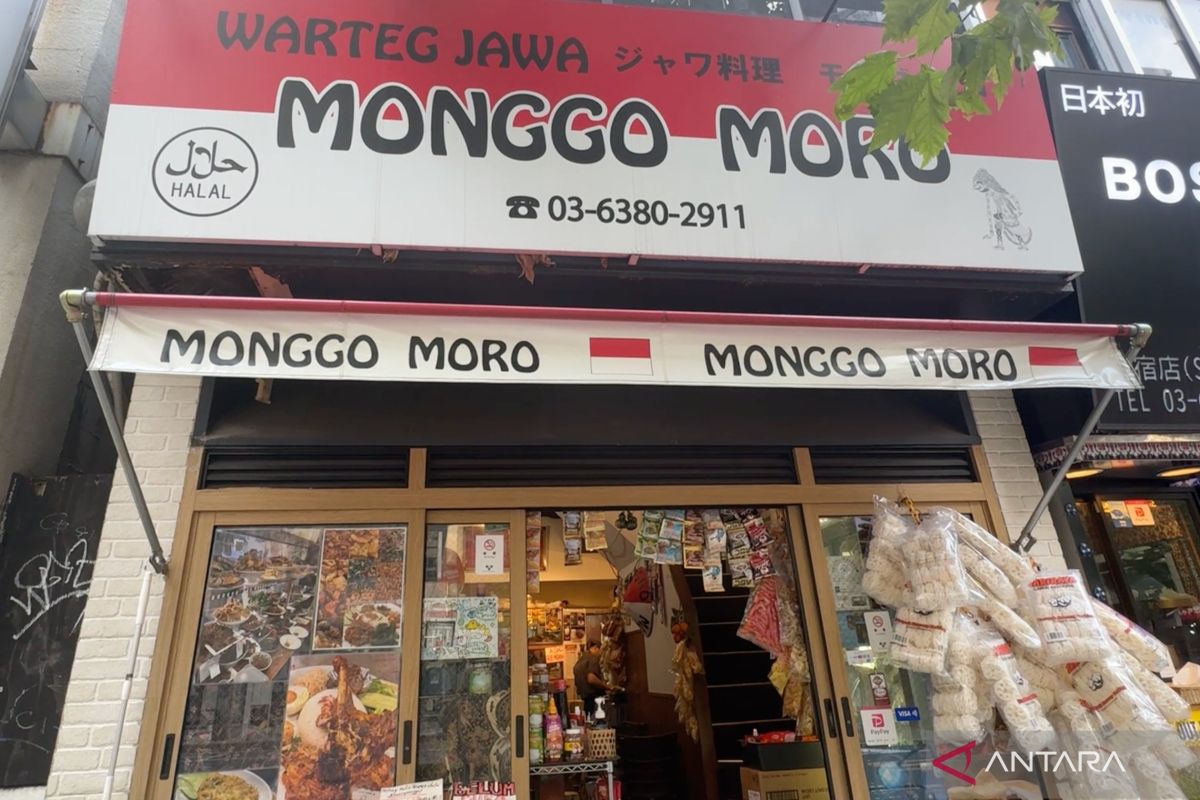
A Javanese-language song blares as you arrive outside Monggo Moro, a restaurant in Shinjuku, Tokyo, Japan.
Passers-by almost invariably turn to look, curious about where the music is coming from. The sound is not the only eye-catching feature: the restaurant’s exterior is styled like a warteg, a small Indonesian eatery.
The words “WARTEG JAWA” and “MONGGO MORO” stand out against a red-and-white background at the top. Plastic bags filled with garlic crackers hang outside. The other windows are just as busy, covered with photographs of Indonesian dishes. A glance inside feels like looking into an ordinary Indonesian shop or corner store.
Shelves neatly display an assortment of spices, sweet soy sauce and other sauces. Crackers made from cowhide are piled in one corner, while strips of packaged drinks decorate the wall. These snacks are not just for display; customers can buy them.
“How many people?” asks a member of staff wearing a batik-patterned uniform and traditional head covering.
The staff member invites visitors inside to see the counter, where plates are piled with warteg-style dishes: chicken, duck, squid and vegetables. Asked which dishes are spicy, the staff member replies, “Lots of them!”
It turns out that was no exaggeration.
As in a typical warteg, customers choose whichever dishes they want. The lunch set includes rice, vegetables and soup, with the price depending on the selected dishes. Prices start at 1,500 yen, or around Rp170,000.
There are tables and chairs on the ground floor, but the main dining area is upstairs, with room for more than 30 people. Some tables seat larger groups, others are set up for two, and there are also two floor-seating areas.
Indonesian decorations and notices for the Indonesian diaspora in Japan adorn the walls. As in many Japanese restaurants, drinking water is free. Nearby, a rice cooker is available for diners who would like a free second helping.
ANTARA’s lunch consisted of spicy salted squid with bacem tofu, urap and soup, along with petai beans and water spinach. The tray held more than food: there was also a bowl of water for washing one’s fingers.
“If you want to eat with your hands, this is for washing them,” said the staff member who brought the meal upstairs.
After a spoonful of warm rice and a piece of salted squid with red chilli sauce, the eyes widen. Salty and spicy! The authentic flavour makes it easy to forget that you are in Japan.
The other dishes need no further introduction. They taste much like—if not exactly like—food made in Indonesia. Each table has two chilli sauces. A closer look reveals green and red sambal. And the heat? As intense as it gets.
Retno Wahyuningsih, the owner of Monggo Moro, founded the restaurant with her Japanese husband. Asked whether Japanese diners can handle the authentic spice level of Indonesian food, she told ANTARA in Tokyo on Sunday (1 November):
“People who come into Monggo Moro have to follow Monggo Moro’s flavours. I don’t adapt them to Japanese tastes. Those who come here can enjoy the original flavour; this is what the original level of spiciness is like.”
It all began with rempeyek.
Source: jawawa.id (https://jawawa.id/newsitem/from-rempeyek-to-a-warteg-serving-tokyo-1793537465)
Originally published by Antara (Indonesian) (https://www.antaranews.com/berita/5825059/berawal-dari-rempeyek-warteg-monggo-moro-melayani-tokyo), translated from Indonesian