
From Recreation to Education: FLONA 2026 Brings Jakarta Residents Closer to Nature
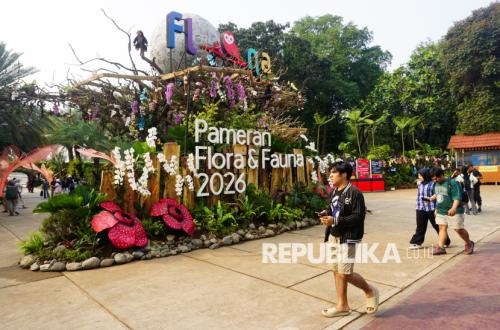
For Annisa, attending the 2026 Flora, Fauna, and Park Exhibition (FLONA) is more than just finding a place to stroll with her family. The 34-year-old resident of Kemang, South Jakarta, wants her toddler to see firsthand the various plants and animals she has previously only known through pictures.
“The decorations are great for photo spots for children, and kids can also learn about the various animals and plants on display,” she told reporters on Monday (31/8/2026).
Annisa noted that the open atmosphere at Taman Lapangan Banteng makes the exhibition feel family-friendly. She expressed hope that similar activities would be held more frequently in Jakarta’s green open spaces, so that parks serve not only as recreational areas but also as learning spaces.
Annisa’s experience reflects the vision of the Jakarta Provincial Government through FLONA 2026. Running from 28 August to 28 September 2026, the exhibition does not merely display plants, animals, and supporting products, but is also designed as an educational space regarding biodiversity.
The theme, “The Roots of the Archipelago Grow in Jakarta,” is implemented through the Nusantara Ecoregion concept. The exhibition area is divided into six zones: Sumatra, Java and Bali, Kalimantan, Sulawesi, Nusa Tenggara and Maluku, and Papua.
Visitors are presented not only with flora and fauna from various regions but also with the history, culture, and local wisdom related to each region’s ecosystem.
Afan Adriansyah Idris, Assistant for Development and Environment of the Jakarta Regional Secretary, stated that this concept was intentionally introduced so that the public does not view FLONA merely as a bazaar or an annual exhibition.
“We present FLONA not just as an exhibition, but as an educational space so that the community becomes more familiar with the richness of the archipelago’s flora and fauna and understands the importance of maintaining green spaces and biodiversity in Jakarta,” said Afan during the opening ceremony on Friday (28/8/2026).
This year, FLONA features 10 institutional booths and approximately 280 tenants. The exhibition is open to the public for free every day from 10:00 to 21:00 WIB.
However, the Jakarta Provincial Government is not relying solely on the attraction of the booths. A range of activities, such as school visits, Eco Tours, workshops, community activities, bird chirping competitions, and group sports, have been organised to encourage active visitor engagement.
This approach is vital as issues regarding green spaces and biodiversity often feel distant from the daily lives of residents. Through FLONA, environmental messages are delivered in a format that is more accessible to families and the younger generation.
“We want the public not only to come and enjoy the exhibition but also to take home the awareness that protecting the environment, green spaces, and biodiversity is a shared responsibility for the future of Jakarta,” said Afan.
The Head of the Jakarta Parks and City Forest Service, M. Fajar Sauri, stated that green open spaces can serve a much broader function than just places to relax.
Through activities like FLONA, parks can become places where residents learn about the environment, study flora and fauna, and interact with communities.
“We invite all residents of Jakarta and surrounding areas to visit FLONA 2026. Bring your families, children, communities, and friends to enjoy the green spaces, learn about the archipelago’s flora and fauna, and gain an experience that is both enjoyable and educational,” said Fajar.
The ecoregion concept ensures that each administrative region of Jakarta brings a different story.
North Jakarta, for instance, adopts the Kalimantan theme through the booth “Napas Nusantara Paru-Paru Dunia” (Breath of the Archipelago, Lungs of the World). In addition to showcasing Kalimantan’s biodiversity, the concept is used to convey messages regarding reforestation and the importance of maintaining environmental quality.
North Jakarta Mayor Hendra Hidayat hopes that visitors will gain new knowledge rather than just enjoying the booth displays.
“We hope the North Jakarta booth can provide an educational experience for visitors,” said Hendra.
South Jakarta brings a Papuan nuance through the theme “Papua–The Pristine Sahul Frontier.” Elements of traditional houses, flora, fauna, food, and Papuan traditions are presented to introduce the richness of Indonesia’s eastern region.
Meanwhile, East Jakarta highlights Java and Bali through the “Djagad Kawung” concept, while the Thousand Islands (Kepulauan Seribu) showcases the character of Nusa Tenggara and Maluku.
For Annisa, such diversity is a major draw for families. Children can gain experiences that go beyond a simple walk in the park.
She hopes that more open spaces in Jakarta will be filled with similar activities, providing residents with more options for recreation that simultaneously offer knowledge.