
From Railway Restaurants to Prama-Prami: The Long History of In-Train Customer Service
Jakarta (ANTARA) - There are stories that have unfolded inside trains for decades. When intercity journeys required many hours, passengers needed food and beverages during the trip. From these simple needs, onboard services have evolved, passing through various generations of rolling stock and personnel to arrive at the form known to customers today.
Official historical records from KAI Services indicate that railway restaurants began to take shape in the 1930s, when the Dutch East Indies Government recognised the need to provide food and drink services for passengers during journeys. This trace marks the beginning of the long journey of onboard consumption services on Indonesian railways.
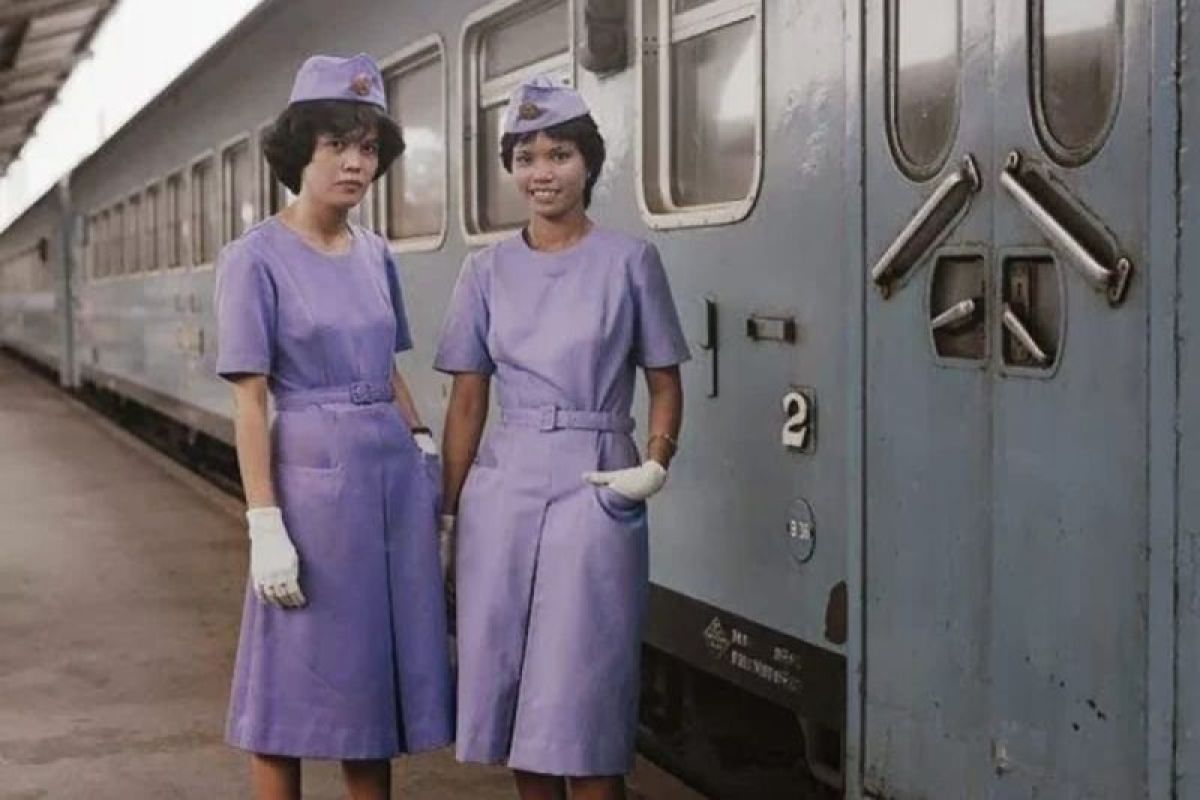
In the early days, service activities were centred around restoration cars or dining cars. Staff known as restoration waiters were tasked with serving passenger consumption needs. As railway travel developed, service became more accessible to passengers throughout the entire train consist. From this long-standing tradition, the profession of railway flight attendants evolved, now known as ‘prama’ (male) and ‘prami’ (female).
Vice President of Corporate Communication at KAI, Anne Purba, stated that these changes have progressed alongside the development of the railways and societal needs. “Onboard service has a long historical journey. Starting from the need to provide food and drink during journeys, the form of service has continued to evolve alongside changes in facilities and customer needs. Dining cars and the staff serving customers have been part of the travel experience from generation to generation,” said Anne.
RESTORKA and the Development of Onboard Services
The management of restoration services became more structured during the era of the Perusahaan Jawatan Kereta Api (PJKA). KAI notes the institutional changes in Indonesian railways from the Perusahaan Nasional Kereta Api (PNKA) in 1963 to PJKA in 1971. During that period, RESTORKA was part of the PJKA environment, headquartered at Jalan Stasiun Timur No. 6, Bandung. KAI Services’ historical records also mention that one of the well-known drinks during the early RESTORKA era was Es Siripit.
Organizational development continued a year later. Based on the PJKA Board of Directors Decree Number 4lar05/SK/72 dated 5 December 1972, RESTORKA was established as a special unit within the PJKA organisational structure. With this position, the implementation and management of railway restaurants gained their own dedicated platform.
This period also left behind culinary stories that endure in the memory of railway travel. One such example is Nasi Goreng Parahyangan, which is recorded in the history of RESTORKA and is now known as one of the legendary railway menus. “When we look at this journey, food clearly holds a special place in railway history. Some passengers remember their journeys through the trains, the scenery passed, and the food enjoyed while on board. These experiences help shape travel memories through the ages,” said Anne.
From Restoration Waiters to Prama-Prami
Changes in service are also evident in the personnel working within the train consists. While early services were centred on dining cars, service personnel have moved closer to the passengers. Flight attendants eventually became part of the railway travel service before the terms ‘prama’ and ‘prami’ became widely recognised as they are today.
Staff appearance has also changed following the evolution of corporate identity and service standards. Railway documentation shows changes in uniforms over time, aligning with the transitions from PJKA, Perumka, PT Kereta Api, to KAI. While KAI does not provide a specific chronology of colours and designs for every generation of uniforms in its current published history, in the modern era, the uniform serves as a key identity for prama-prami when interacting directly with customers.
Elements of Indonesian culture are also present on special occasions. For instance, during the 2025 National Batik Day commemorations, KAI Services’ prama-prami wore batik designed by Anne Avantie, featuring the Sawunggaling and Truntum motifs. Sawunggaling conveys strength and steadfastness, while Truntum represents sincere and consistent love. Changes in uniforms have progressed alongside changes in the workspace and methods of operation. Prama-primi now serve customer needs throughout the train consist and support the provision of food and beverages during the journey.
Dining Cars Have Also Changed
Almost a century after railway restaurants became known in the 1930s era, dining cars remain a vital part of long-distance train travel. However, the dining cars encountered by passengers today come from various generations of rolling stock. KAI continues to operate existing dining cars, performs upgrades through modification programmes, and is gradually receiving new dining cars as part of a rolling stock regeneration programme.
Functionally, dining cars are equipped with kitchens and serving areas to support the provision of food and beverages during the journey. Some dining cars also feature seating that allows passengers to enjoy meals and drinks while the journey is in progress.
Modernisation is being achieved, in part, through KAI’s internal capabilities at the Tegal Balai Yasa workshop. Throughout 2024–2025, 17 M1 Dining Cars have completed modification, consisting of four units in 2024 and 13 units in 2025. All are being returned to service to support long-distance train operations. This programme will continue in 2026, with 10 M1 Dining Cars scheduled for modification. The work involves various parts of the rolling stock, ranging from inspections of the base frame, wheel systems, braking, and electrical systems to improvements in lighting, spatial layout, and passenger facilities.
Source: jawawa.id (https://jawawa.id/newsitem/from-railway-restaurants-to-prama-prami-the-long-history-of-in-train-customer-service-1790517550)
Originally published by Antara (Indonesian) (https://www.antaranews.com/berita/5760817/dari-restoran-kereta-api-hingga-prama-prami-jejak-panjang-pelayanan-pelanggan-dalam-perjalanan), translated from Indonesian